
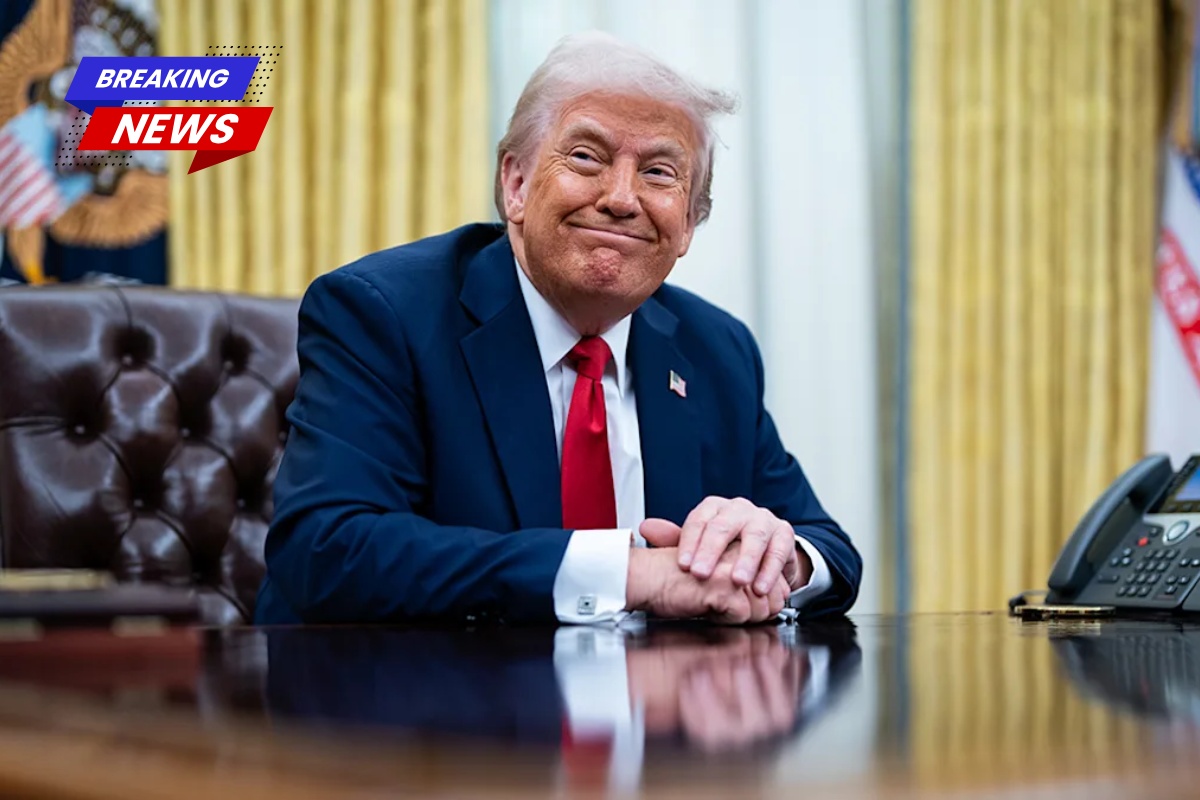
In a surprising move, President Donald Trump has suggested that oil-rich Venezuela could become the 51st state of the United States. Trump’s comments, which were made during a phone call with Fox News, have stirred both interest and controversy, particularly given the complex political dynamics surrounding Venezuela and its longstanding independence movement.
Trump Eyes Venezuela as the 51st U.S. State Amid Ongoing U.S. Intervention
Trump’s remarks come as the U.S. continues its efforts to stabilize Venezuela’s political landscape following the ousting of President Nicolás Maduro earlier this year. The U.S. military captured Maduro in January 2026, following his indictment on narco-terrorism charges.
Afterward, Trump indicated that the U.S. would manage Venezuela during its transitional period, working closely with Venezuelan Vice President Delcy Rodríguez.
Trump’s interest in Venezuela is driven by the country’s vast oil reserves, which are estimated to be worth around $40 trillion. “Venezuela loves Trump,” he said during the phone call, emphasizing his popularity with the country’s citizens. He also suggested that the United States could benefit from managing Venezuela’s oil sector, potentially transforming the country’s economic outlook.
A “Free and Fair” Approach to Oil and Democracy
Since the ousting of Maduro, Trump has pledged to revitalize Venezuela’s oil industry, with plans to bring major U.S. energy companies back into the country. This includes ExxonMobil and ConocoPhillips, both of which were expelled nearly two decades ago when former President Hugo Chávez nationalized the oil industry. Chevron remains the only major U.S. company still with operations in Venezuela.
In line with this vision, the Trump administration has facilitated meetings between White House energy advisors and executives from major oil companies to encourage investment in Venezuela’s oil industry. The administration claims this will help stabilize the country’s economy, which Trump argues is key to achieving a stable democracy in Venezuela.
Schumer Responds to Trump’s Statehood Idea
Trump’s comments on potentially granting Venezuela statehood have sparked significant backlash, especially from Democrats. Senate Minority Leader Chuck Schumer (D-N.Y.) dismissed the idea, calling it unrealistic and noting that any move to annex Venezuela would require the approval of both the U.S. Congress and the Venezuelan government.
Schumer and other Democrats also criticized Trump’s approach, accusing him of using such proposals to distract from more serious concerns surrounding election integrity and his political future.
Delcy Rodríguez, Venezuela’s acting president, quickly rejected Trump’s statehood proposal. “That would never have been considered,” she said in a press conference. “If there is one thing we Venezuelan men and women have, it is that we love our independence process. We love our heroes and heroines of independence.”
Legal and Political Barriers to Statehood
For a foreign country like Venezuela to become a U.S. state, it would require congressional approval, along with a formal request from the Venezuelan government. This is a highly unlikely scenario, given the strong nationalist sentiment in Venezuela and the long history of the country’s desire for sovereignty.
Trump’s proposal to annex Venezuela is not the first of its kind. In the past, he has suggested that other territories such as Greenland and parts of Canada could also be incorporated into the U.S. The broader political implications of such a proposal remain unclear, but they would involve enormous legal, diplomatic, and political hurdles.
Venezuela’s Oil and Economic Interests at the Forefront
Trump’s vision for Venezuela also revolves around securing its vast oil reserves, which are some of the largest in the world. The economic relationship between the U.S. and Venezuela has been a subject of contention for years, and Trump’s focus on the country’s oil wealth reflects his broader energy strategy.
By potentially integrating Venezuela into the U.S. system, Trump argues that the country’s economic stability could be restored, benefiting both the U.S. and Venezuelans alike.
Since the U.S. intervention and Maduro’s removal, Venezuela has seen its oil exports rise significantly. In April 2026, the country’s exports reached over 1 million barrels per day, the highest level in nearly a decade.
Public and Legal Reactions
While Trump’s comments have generated headlines, many remain skeptical of the feasibility of such an idea. For Venezuela to become a U.S. state, both sides would need to navigate a complex legal process, with significant opposition from Venezuela’s government and likely resistance in the U.S. Congress.
Despite the controversial nature of Trump’s suggestion, it has spurred discussions about U.S. foreign policy, energy security, and the future of international relations. As the situation unfolds, it remains unclear whether Trump’s proposal will gain any traction, or if it is simply a rhetorical maneuver to capture political attention.






