
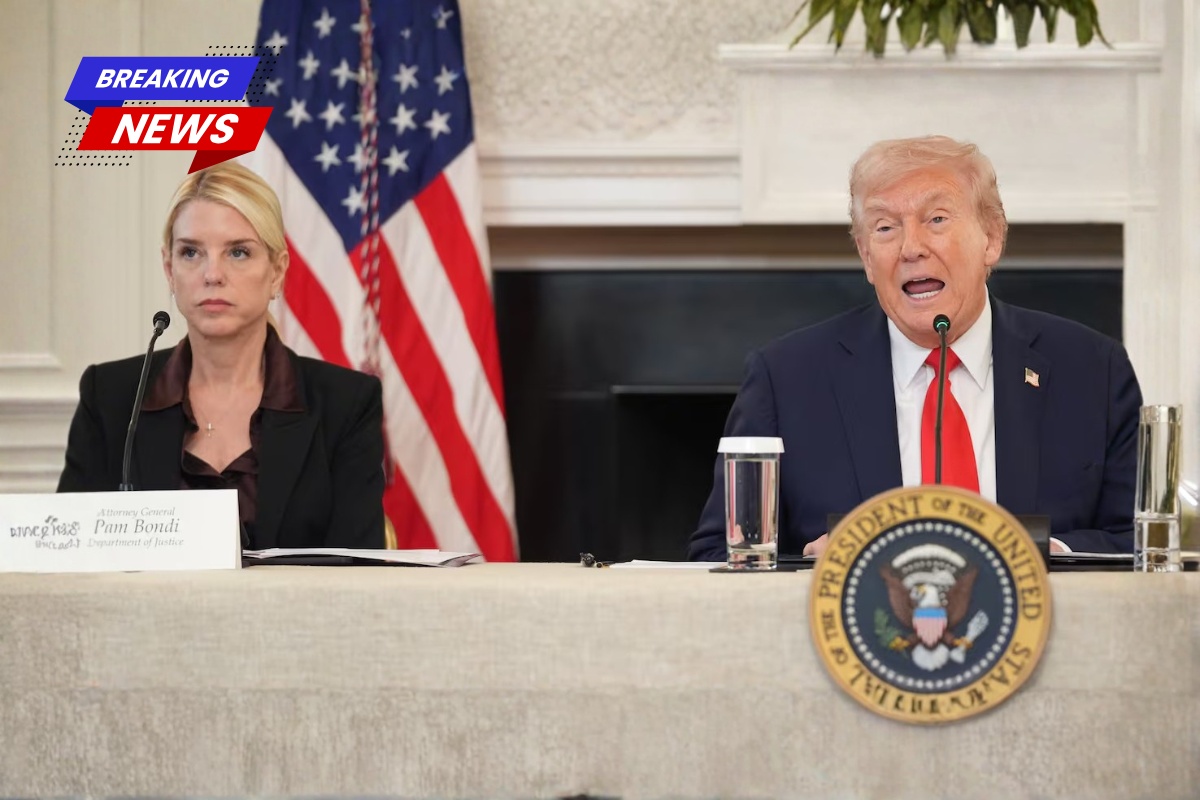
President Donald Trump has unveiled a revised counterterrorism strategy that emphasizes combatting ideological terrorist groups abroad and violent extremism at home. The 16-page document lays out a vision for addressing both international terror threats and domestic political violence, with a strong focus on rejecting the notion that the U.S. must act as the global “police officer.”
Trump’s Revised Counterterrorism Strategy Focuses on International and Domestic Extremism
The new strategy outlines a range of global threats, including groups such as Al Qaeda, which carried out the September 11 attacks; Al Qaeda in the Arabian Peninsula; ISIS and its Asian branch, ISIS-Khorasan; and the Muslim Brotherhood, which Trump ally Sebastian Gorka describes as the “ancestor of modern jihadi groups.”
According to Gorka, the goal is to “demoralize, degrade, and delegitimize” these organizations, emphasizing that the U.S. will no longer be passive in addressing ideological extremism.
In addition to international threats, the strategy also highlights the importance of combating political violence within the U.S. Trump cited incidents such as the shootings at Covenant School in Nashville, Annunciation Catholic School in Minneapolis, and the killing of Turning Point USA founder Charlie Kirk in Utah as examples of politically motivated violence. The document asserts that political violence is terrorism, regardless of the ideology behind it.
Silence on Far-Right Extremism Draws Criticism
While the strategy outlines a broad array of threats, including “narcoterrorists and transnational gangs,” “legacy Islamist terrorists,” and “violent left-wing extremists,” it has come under fire for its lack of focus on far-right extremism. Civil liberties organizations have criticized the omission of far-right or white supremacist groups, which have been consistently linked to incidents of domestic terrorism.
The strategy singles out “radically pro-transgender” and “anti-American” ideologies for what it describes as “neutralization,” but critics argue that it overlooks a significant and growing threat from far-right and white supremacist groups within the U.S. This omission has sparked concerns that the administration is ignoring or downplaying a real and present danger to public safety.
Concerns About Rhetoric and Enforcement Tactics
The strategy also addresses immigration, claiming that Europe’s current immigration policies have created an “incubator of terror threats” and calling on European allies to “halt its willful decline.” This stance has sparked alarm from critics, who say the rhetoric is “completely Trumpian” and a dangerous escalation in the U.S. government’s approach to both international relations and domestic law enforcement.
Nadia Ben-Youssef, advocacy director of the Center for Constitutional Rights, criticized the strategy, stating that it “openly embraces state violence and political repression” and normalizes policies such as military strikes, renditions, and digital surveillance.
She also accused the document of criminalizing dissent and marginalizing communities, particularly Muslim, immigrant, and transgender communities.
Building on Past Counterterrorism Policy
Some analysts have pointed out that Trump’s new strategy is not entirely new but instead builds upon elements of U.S. counterterrorism policy inherited from past administrations. Chip Gibbons, policy director at Defending Rights & Dissent, noted that while the language about “left-wing extremists” may seem shocking, it is part of a broader, longstanding approach to counterterrorism policy that has been in place for decades.
Public Backlash and Further Controversies
The release of the counterterrorism strategy has coincided with other controversial moments from the Trump administration, such as the White House sharing AI-generated artwork of Trump styled as the Mandalorian, which sparked backlash for a significant lore error pointed out by Star Wars fans.
Additionally, Trump has faced growing criticism from the public for claims made by his son, Donald Trump Jr., that the White House “belongs” to his father.
While Trump’s counterterrorism strategy continues to make waves in the political landscape, critics remain concerned about its implications for civil liberties and its ability to address the full spectrum of extremism in the U.S.






