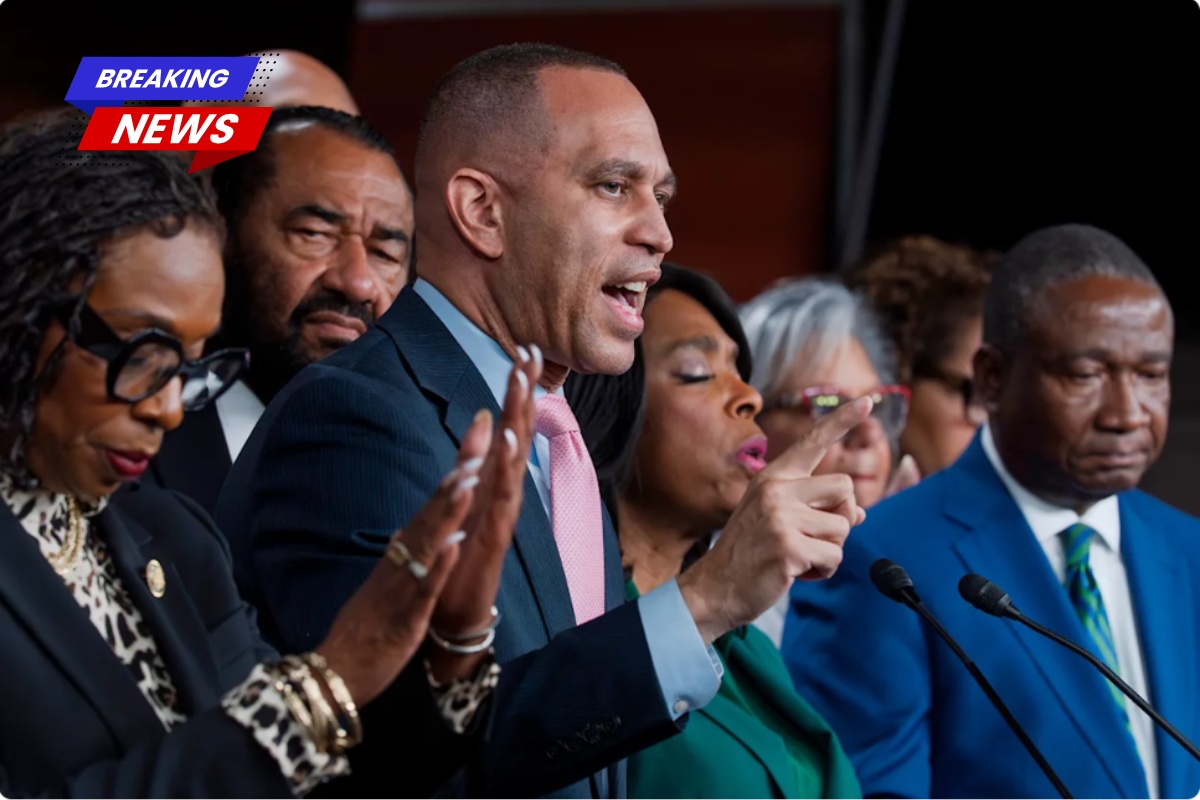
Just two weeks after House Minority Leader Hakeem Jeffries promised to launch “maximum warfare” in a bid to retake the House of Representatives, the Democratic Party has been forced into a defensive posture due to a series of court rulings that have tilted the redistricting battle in favor of the GOP.
With midterm elections just around the corner, Democrats find themselves grappling with new restrictions and hoping that anger over gerrymandering will drive voters to the polls.
Court Rulings Favor GOP, Impacting House Redistricting
The legal struggle over redistricting, particularly in Virginia, has placed Democrats on the defensive. The Virginia Supreme Court recently struck down a newly drawn Democratic map, while a decision from the U.S. Supreme Court last month weakened key provisions of the Voting Rights Act, which had previously been used to ensure fairer redistricting practices for minority communities.
In response to these setbacks, Democratic leaders have been attempting to channel their frustration into a rallying cry, hoping that voters will reject Republican efforts to redraw districts in their favor.
In his “Dear Colleague” letter, Jeffries, who had previously spoken of an aggressive fight for control of the House, now seems focused on turning the issue of gerrymandering into a motivating factor for voters, particularly voters of color. “Democratic enthusiasm and resolve have grown more intense,” Jeffries said, suggesting that Republicans’ efforts to undermine Black and Hispanic-majority districts in the South would backfire.
Focus on Southern States and Battleground Districts
Democrats are now pivoting to states like South Carolina, where GOP lawmakers are expected to redistrict and potentially create new battleground seats. Despite the challenges, the Democratic Congressional Campaign Committee (DCCC) is banking on the idea that Republicans might miscalculate and inadvertently create more competitive districts.
“Democrats are gonna be able to go into African American communities and say, ‘Republicans are doing everything they can to take away your political power,’” said Ian Russell, a Democratic strategist. This messaging is part of the party’s broader effort to turn the issue of gerrymandering into a clear call for action, especially among minority voters who might feel disenfranchised.
A Challenging Political Landscape for Democrats
While the party tries to frame gerrymandering as an opportunity to energize their base, the reality is that Democrats are now in a much worse position than they were less than a year ago. Republicans, particularly in Texas, have been busy implementing redistricting plans that shore up their advantage.
Although California Democrats managed to secure a few additional seats through their redistricting efforts, Democrats’ larger struggle has been visible in the wake of the courtroom defeat in Virginia.
Republicans are celebrating what many considered an unlikely victory just a few weeks ago. James Blair, a key political advisor for President Donald Trump, posted triumphantly on X (formerly Twitter) about the “16 net seat swing to GOP” achieved through redistricting.
Democratic Legal Efforts and Challenges Ahead
Despite their losses, Democrats are not giving up. Virginia Democrats have filed an emergency appeal with the U.S. Supreme Court, hoping for a temporary stay on the state court’s decision, and Jeffries highlighted ongoing legal battles in states like Missouri, Florida, and Wisconsin.
However, experts like John Bisignano, president of the National Democratic Redistricting Committee, are acknowledging that with the 2026 elections fast approaching, time is running out to make significant changes.
Virginia’s Struggle and Focus on Key Districts
In Virginia, the Democratic delegation has been trying to focus on existing battleground districts, such as those held by Republican Reps. Jen Kiggans and Rob Wittman. Despite frustrations, such as the push to lower the forced retirement age of Virginia’s Supreme Court judges to replace those making unfavorable rulings, the focus is now on defending and targeting key districts rather than attempting to change the map itself.
Internal Democratic discussions have also pointed to frustrations with redistricting efforts in states like Illinois and Maryland, where Democratic leaders failed to push forward new maps that could have secured a larger advantage for the party.
Republicans Accused of Rigging the System
In the wake of these setbacks, Democrats are looking to place the blame squarely on Republicans for what they see as a calculated effort to “rig the system.” DCCC Chair Suzan DelBene slammed Republicans in a recent podcast, accusing them of undermining democracy to maintain their grip on power. “The American people see that Republicans have been trying to rig the system because they know they are losing across the country,” DelBene said.
Looking Forward: Messaging and Strategy
Ultimately, the battle over redistricting in 2026 may not be won through legal channels, but rather through political messaging. Democrats are hoping that their focus on gerrymandering and voter suppression will resonate with voters, particularly in communities of color, and that it will drive turnout in crucial districts.
While the legal battles continue, and despite the political challenges, Democrats are attempting to reframe the redistricting fight as a key issue in the lead-up to the 2026 midterm elections, hoping to galvanize their base and shift the political momentum.