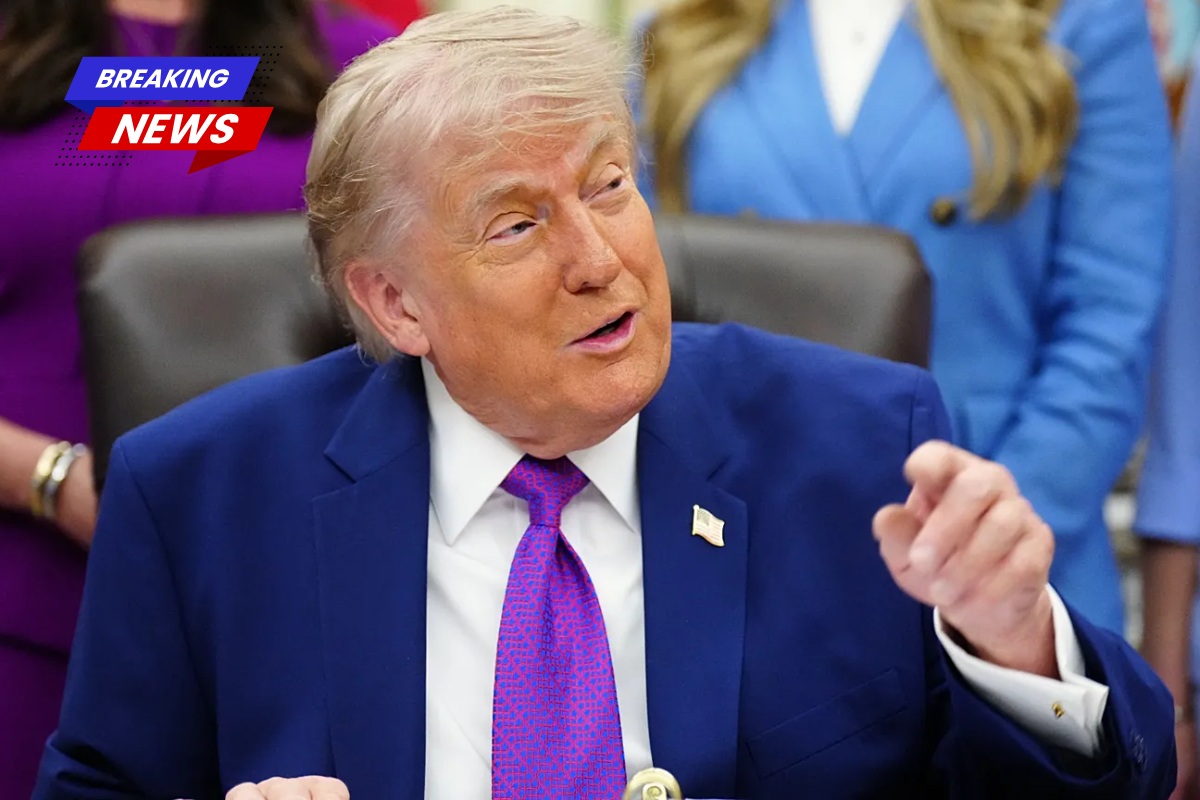
Donald Trump’s latest financial disclosure has revealed an enormous level of stock market trading activity tied to the president’s investment portfolio during the first months of 2026. The filings, submitted to the U.S. Office of Government Ethics, disclosed thousands of trades involving major technology companies, artificial intelligence firms, banks, and other large corporations.
The disclosures are now fueling renewed debate in Washington over whether elected officials, including presidents, should be allowed to actively trade stocks while in office.
Trump Disclosure Reveals Massive Trading Activity
According to the financial filings, more than 3,600 transactions were executed between January and the end of March 2026.
Because federal ethics forms only require broad value ranges rather than exact numbers, the total value of the trades is estimated to range between at least $220 million and as much as $750 million.
The reports do not clearly state whether Donald Trump personally directed the trades. His business empire and financial operations are currently managed by his sons, Donald Trump Jr. and Eric Trump, though some records also reference broker involvement.
Even though presidents are legally allowed to own and trade stocks, federal law requires public disclosure of those transactions.
At this time, there have been no accusations or proven evidence of insider trading connected to the filings. However, the scale of the activity is already drawing attention from ethics experts and lawmakers pushing for stricter financial rules for public officials.
Heavy Investments in Technology and AI Stocks
The disclosure shows significant investments in major technology and artificial intelligence-related companies.
Among the companies listed were Nvidia, Microsoft, Broadcom, Amazon, Apple, AMD, Intel, Alphabet, Goldman Sachs, Airbnb, DoorDash, Micron, and several others.
Many of the individual purchases reportedly ranged from hundreds of thousands of dollars to several million dollars each.
The filings also show large stock sales, with some transactions reportedly valued as high as $25 million.
Technology and AI companies have experienced strong market growth over the past year, especially as investor interest in artificial intelligence continues expanding rapidly across global markets.
Portfolio Reportedly Earned Major Gains
Based on the reported transaction dates and market performance, analysts estimate that many of the investments have produced large profits.
According to reports, some holdings may have increased by more than 100% in value, including positions tied to AMD, Intel, Marvell Technology, Bloom Energy, SanDisk, and other technology-focused companies.
The filings also suggest that significant stock purchases occurred during market declines linked to geopolitical tensions involving Iran earlier this year.
The S&P 500 reportedly fell more than 8% during that period before later recovering sharply and reaching new record highs.
Critics argue that public officials holding active investment portfolios while influencing economic, military, or regulatory policy can create concerns about conflicts of interest, even without illegal conduct.
Congress Pushes for Stock Trading Restrictions
The disclosures arrive while Congress is actively debating several proposals aimed at banning or restricting stock trading by government officials.
One of the most discussed proposals is the “Restore Trust in Congress Act,” introduced by Republican Representative Chip Roy and Democratic Representative Seth Magaziner.
The bill would prohibit members of Congress, their spouses, and dependent children from owning or trading individual stocks and certain other investments.
A Senate version of the legislation has also gained bipartisan support.
Some lawmakers and ethics advocates are now pushing to expand those restrictions beyond Congress to include the president and vice president.
Several Democratic-backed proposals specifically mention concerns related to Donald Trump’s business interests and financial disclosures as reasons for stronger executive branch restrictions.
Debate Over Ethics and Public Trust Continues
Supporters of stock trading bans argue that public officials should avoid any appearance of financial conflicts while serving in government.
They believe elected leaders may gain unfair advantages through access to sensitive economic, military, or policy information not available to the public.
Others argue that existing disclosure rules already provide transparency and that banning stock ownership entirely could discourage qualified individuals from serving in public office.
Lawmakers also continue debating whether restrictions should apply only to future trades or require full divestment of existing assets.
Another major disagreement involves whether spouses and family members of politicians should also face investment restrictions.
No National Ban Has Been Passed Yet
Although public support for tighter ethics rules remains strong, no nationwide ban on stock trading by federal officials has become law.
Several proposals have advanced through congressional committees and gained bipartisan support, but disagreements over enforcement details and political concerns continue slowing progress.
Trump’s latest disclosure is likely to intensify those debates as lawmakers, ethics groups, and voters continue examining the relationship between political power and personal financial activity.