
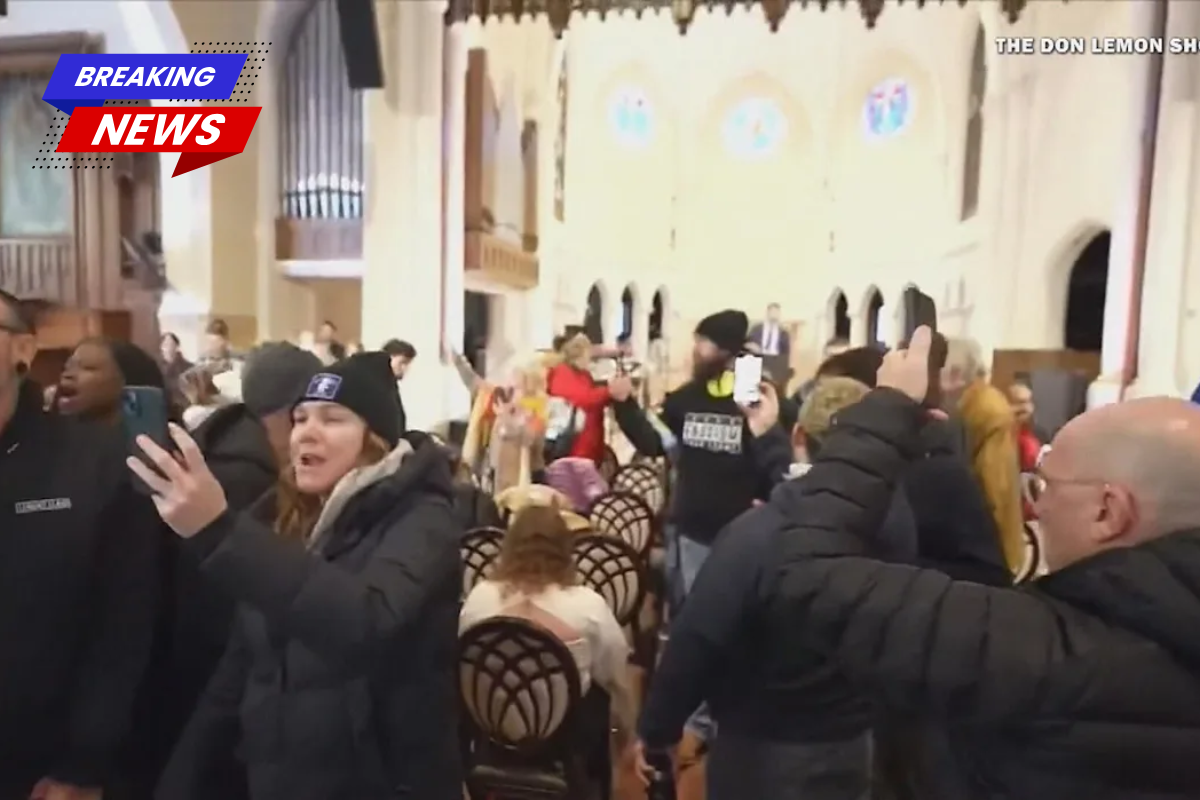
ST. PAUL, Minnesota – The Justice Department announced on Friday that it has charged 30 more individuals in connection with a January anti-ICE protest at Cities Church in St. Paul, Minnesota. This civil rights case, which has also implicated former CNN anchor Don Lemon, continues to unfold in the U.S. District Court for the District of Minnesota.
Unsealing the Superseding Indictment
The Department of Justice unsealed a superseding indictment in the case, which now includes 39 total defendants. Attorney General Pam Bondi stated on X that 25 of the 30 newly charged individuals have already been arrested, with more expected to follow. The original nine defendants, including Lemon and another journalist, have pleaded not guilty.
Charges in the Indictment
The superseding indictment does not introduce new criminal charges but accuses all 39 individuals of violating two civil rights laws. One charge is a misdemeanor offense under the FACE Act, which prohibits individuals from interfering with or intimidating people exercising their constitutional right to practice religion. The second charge is a felony related to conspiring to interfere with religious rights.
Reactions from Legal Representatives
Doug Wardlow, an attorney with True North Legal, who is representing Cities Church, stated that the indictment sends a strong message: “houses of worship are off-limits for those who would use chaos and intimidation to advance a political agenda.”
However, some legal experts have raised concerns about the case’s strength. Former Justice Department civil rights attorneys have expressed skepticism and suggested that the case could be dismissed. They argue that the application of the FACE Act in this context could be legally flawed, as it was initially designed to address interference at reproductive health clinics.
Legal Concerns and the FACE Act
The FACE Act was passed in 1994 to address concerns about threats and intimidation at reproductive health clinics. It has primarily been used to prosecute individuals accused of interfering with medical access at such clinics, not at houses of worship. Legal experts note that courts have consistently tied the application of the law to situations impacting interstate commerce, such as access to reproductive services.
Previous Legal Challenges and Rejections
Before securing the indictment, the Justice Department attempted to charge several defendants with a criminal complaint, but a magistrate judge rejected five arrest warrants, including those for Lemon and the other journalist, citing a lack of probable cause. The same judge also dismissed the FACE Act charge against several defendants on similar grounds.
Lemon and Fort Challenge the Grand Jury Process
Don Lemon and Georgia Fort, the other journalist involved in the case, have requested that the court consider disclosing the grand jury transcripts, which are usually kept secret. In their joint statement, they criticized the government’s conduct:
“Grand jury proceedings are presumed regular and ordinarily protected from outside scrutiny, but the government has squandered that presumption here. Its conduct has been highly unusual, nakedly political, and inconsistent with practice in this District.”
They also expressed concerns over the government’s persistence in moving forward with the case after multiple judges rejected the charges, including those against Lemon and Fort. They argue that the decision to proceed with the indictment was politically motivated, claiming it was pursued due to pressure from President Trump.
The Ongoing Investigation
The case continues to develop, and questions remain about the government’s handling of the indictment and the application of the FACE Act in this context. Lemon and Fort maintain that the situation raises serious concerns about the government’s actions in this case.






