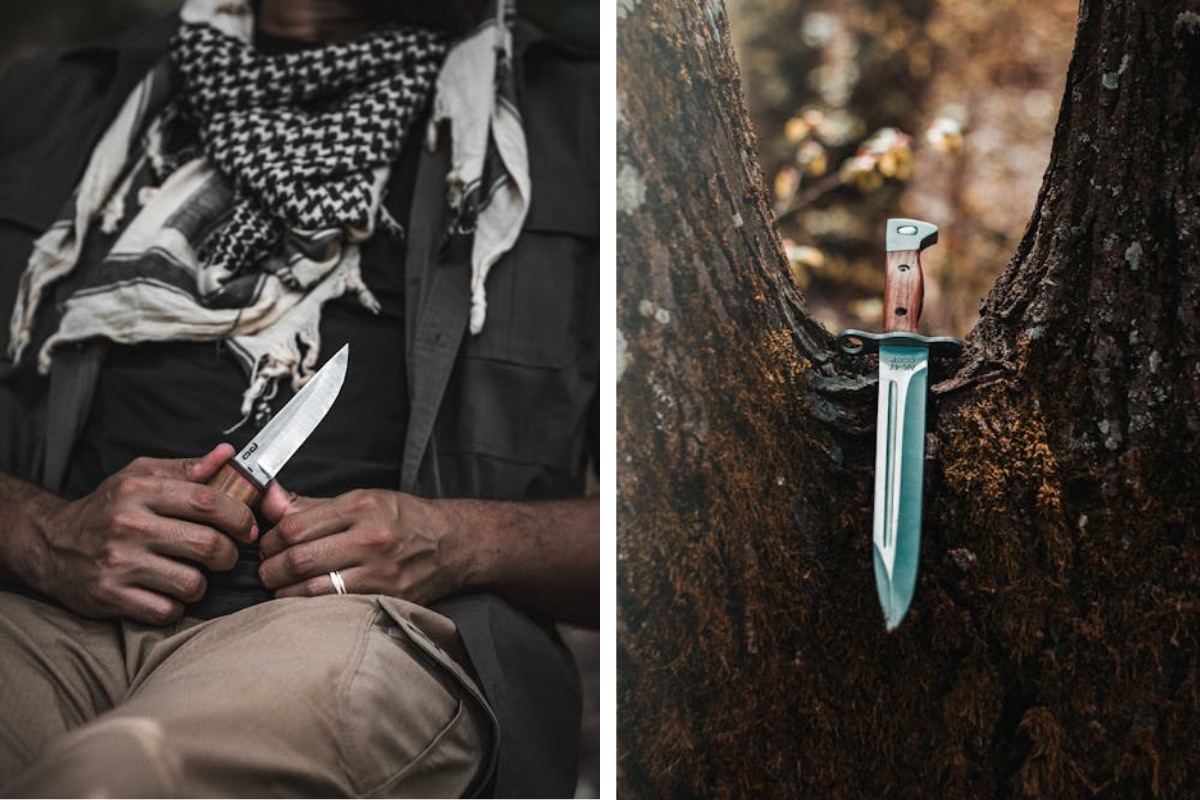
Washington has fairly broad knife ownership rights, but the rules change depending on the knife type, how it is carried, and where you are. In general, you can legally own many common knives, but concealed carry of certain “dangerous weapons” and possession of spring blade knives are restricted under state law.
What state law allows
Washington law does not impose a general statewide blade-length limit for all knives. That means many ordinary knives, including fixed-blade knives, can be owned and carried under the right circumstances. The important detail is that the law focuses less on blade length and more on whether the knife is one of the restricted types or is being carried in a prohibited way.
Restricted knife types
State law makes it a gross misdemeanor to possess or sell certain weapons, including “spring blade knives,” which are knives that open automatically by spring, gravity, or centrifugal force. A knife that uses a spring, detent, or bias toward closure and requires manual force to open is not treated the same way under the statute. Washington also restricts furtive concealed carry of daggers, dirks, and other dangerous weapons.
Open carry and concealment
Open carry is generally safer legally than concealed carry in Washington, especially for knives that could be viewed as dangerous weapons. Concealing a dagger or similar weapon can create criminal exposure under state law. Even when a knife is legal to own, hiding it on your person can turn a lawful item into a legal problem.
School and sensitive places
Washington law is strict about knives on school property. It is unlawful to carry or possess knives on public or private elementary or secondary school premises, with limited exceptions. That means a knife that is otherwise legal in everyday life may become illegal the moment you enter a school zone or school building.
Local rules still matter
State law is not the whole story because some cities or counties may have additional restrictions or enforcement practices. That is why a knife that seems acceptable in one part of Washington may draw attention in another. If you travel often, it is smart to check local ordinances in addition to the state statute.
Practical examples
A folding pocketknife used for work or camping is often lawful if carried openly and not in a prohibited place. A switchblade or other spring blade knife is a much bigger problem under Washington law. A concealed dagger in a waistband or bag can also create risk, even if you are not using it.
SOURCES:
- https://app.leg.wa.gov/rcw/default.aspx?cite=9.41.250
- https://www.twyfordlaw.com/spokane-criminal/knife-crime-lawyer/