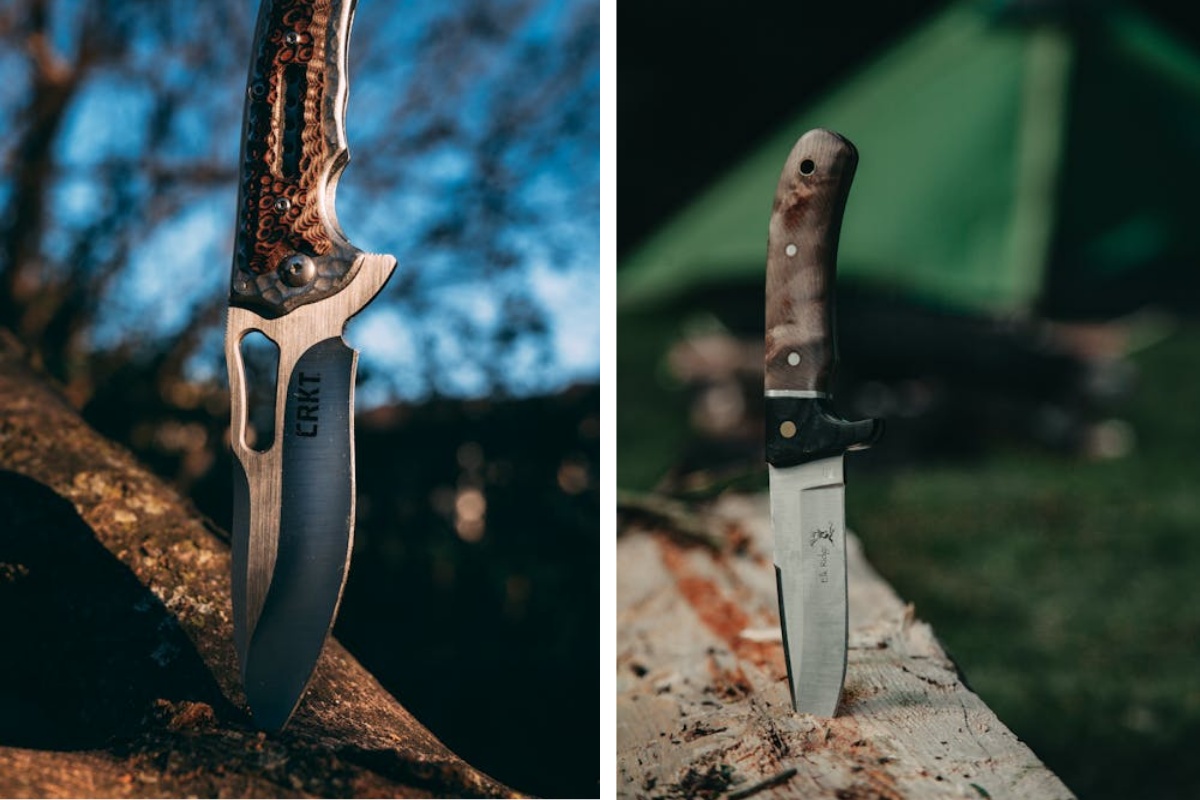
Texas gives people broad knife rights, but those rights still depend on blade length, location, and age. In general, adults can own and carry most knives, while knives with blades over 5.5 inches face extra restrictions in certain places.
Texas Knife Law Basics
Texas removed the old category of “illegal knives,” which means the state generally allows ownership and carry of many knife types, including switchblades, Bowie knives, daggers, and similar blades. The main legal dividing line is whether a knife is “location-restricted,” which means it has a blade longer than 5.5 inches.
For most adults, carrying a knife open or concealed is allowed unless the knife is carried into a prohibited location. Texas also has state preemption, so local cities and counties cannot create their own conflicting knife rules in most cases.
Where Large Knives Are Restricted
A knife with a blade over 5.5 inches can usually be carried, but not everywhere. Common prohibited places include schools, polling places, courthouses, correctional facilities, airports past security, amusement parks, hospitals, nursing homes, and 51% alcohol establishments.
Some restrictions also apply at sporting events and certain places of worship, depending on the specific legal setting. If someone carries a location-restricted knife into one of these prohibited places, the penalty can range from a misdemeanor to, in school-related situations, a felony.
Age Rules For Minors
Texas law is more restrictive for minors than for adults. People under 18 generally cannot buy location-restricted knives, and they cannot carry knives over 5.5 inches except in limited situations such as their own property, a private vehicle or boat, travel to or from it, or when accompanied by a parent or legal guardian.
This means a teenager may still legally possess or use many smaller knives, but large blades bring stricter limits. Parents should be careful because the law treats the knife size and the location together, not just the type of knife.
Practical Self-Defense Limits
Texas law is favorable to self-defense, but a knife is still a deadly weapon in legal terms if it is used that way. That means knife ownership rights do not create a blanket right to threaten, display, or use a knife in a dangerous way.
In practice, the safest approach is to treat knife carry as a property and location issue first, then a self-defense issue second. A legal knife carried in the wrong place can still lead to criminal charges.
SOURCES:
- https://texascriminaldefensegroup.com/understanding-texas-knife-laws/
- https://thewrangler.com/understanding-your-knife-rights-in-texas-a-legal-guide/2025/06/13/