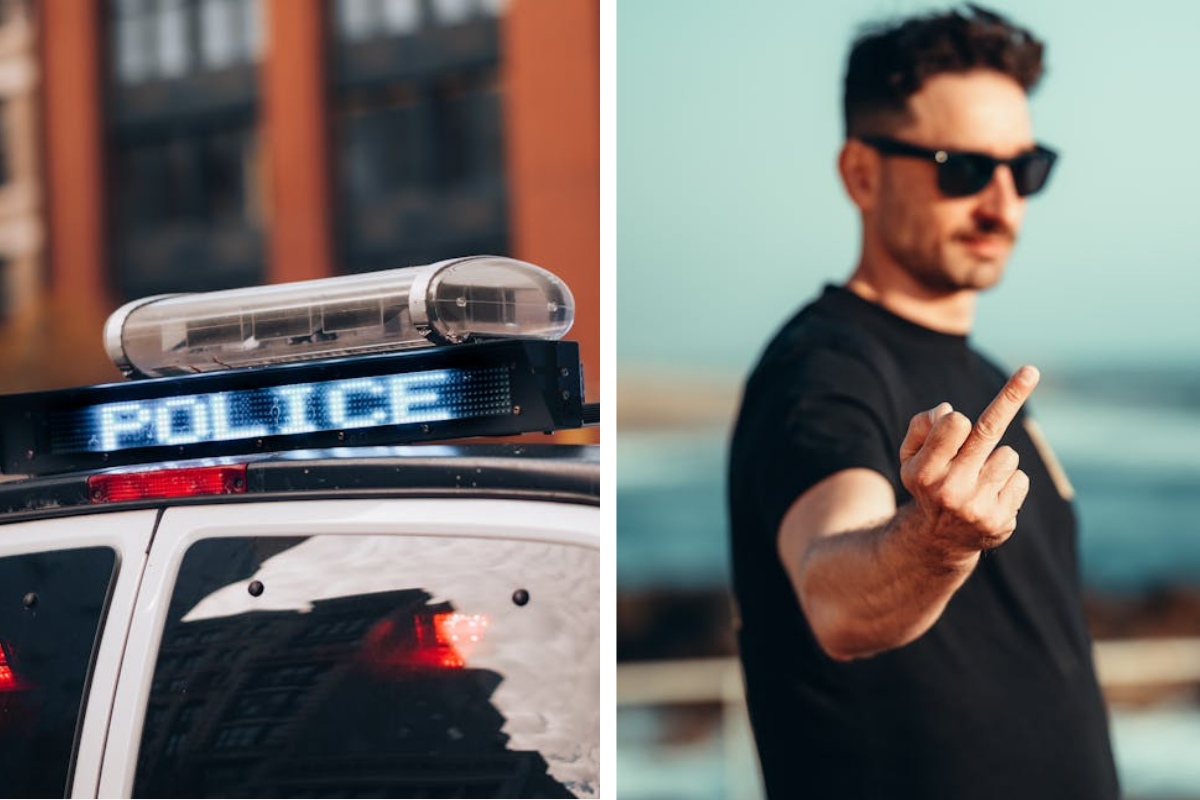
Flipping off a police officer (showing the middle finger) feels risky, but in Tennessee it is generally treated as protected free speech, not an automatic crime.
Courts in the federal appeals court that covers Tennessee (the Sixth Circuit) have ruled that giving an officer the finger is a form of expressive conduct protected by the First Amendment, so an officer cannot lawfully stop or arrest someone just for that gesture.
However, “legal” does not mean “wise.” Even if the gesture itself is protected, it can easily escalate a situation and lead officers to watch you closely for any actual violations they can lawfully act on, such as traffic offenses or disorderly conduct based on your broader behavior, not the gesture alone.
Free Speech Protection and the Sixth Circuit
The key legal point is that offensive gestures toward police have been recognized as speech under the First Amendment. The United States Court of Appeals for the Sixth Circuit, which covers Tennessee, held that a driver’s act of flipping off an officer after a traffic stop could not by itself justify a new stop or legal penalty, because “rude” expression is not a crime.
Since Tennessee falls under the Sixth Circuit’s jurisdiction, that constitutional protection applies in Tennessee, meaning officers are not supposed to use the middle finger alone as a legal basis to stop, detain, or arrest you.
When It Can Still Get You in Trouble
While the gesture itself is protected, the context can turn a legal gesture into a situation that supports charges. For example, if along with the gesture you shout threats, encourage a crowd, or create a scene that reasonably disturbs public order, police might use disorderly conduct, breach of peace, or similar laws based on your overall behavior, not just the finger.
If you are in the middle of a lawful stop and you refuse lawful commands, argue loudly, or interfere with the officer’s work, you might face charges such as obstruction or failure to comply, again because of your conduct, not because of the gesture itself. Courts draw a line between protected disrespect and unprotected threats or actual interference.
Practical Risks Even if It’s Legal
Even where the law is on your side, officers have wide discretion in how closely they observe you. If you flip off an officer and then drive away, the officer may legally follow your car and watch for any minor traffic violation—like forgetting a turn signal or a light issue—and then stop you based on that violation.
If you end up arrested or cited and later argue your rights were violated, you might technically win in court or in a civil rights lawsuit, but that process can be stressful, expensive, and time‑consuming. That is why many lawyers say the gesture is “legal but foolish” from a practical point of view.
Best Approach in Real‑Life Encounters
From a rights perspective, you do not have to show emotional respect to preserve your constitutional protections, but from a safety and outcome perspective, staying calm and polite usually leads to the fastest and least painful result.
If you feel an officer has treated you unfairly, documenting the encounter, getting badge numbers, and filing a complaint later is far safer and more effective than responding with insulting gestures in the moment.
SOURCES:
- https://www.wirthlawoffice.com/tulsa-attorney-blog/2021/04/can-i-legally-flip-off-the-police
- https://www.caranddriver.com/news/a26840600/court-ruling-hand-gestures-drivers/