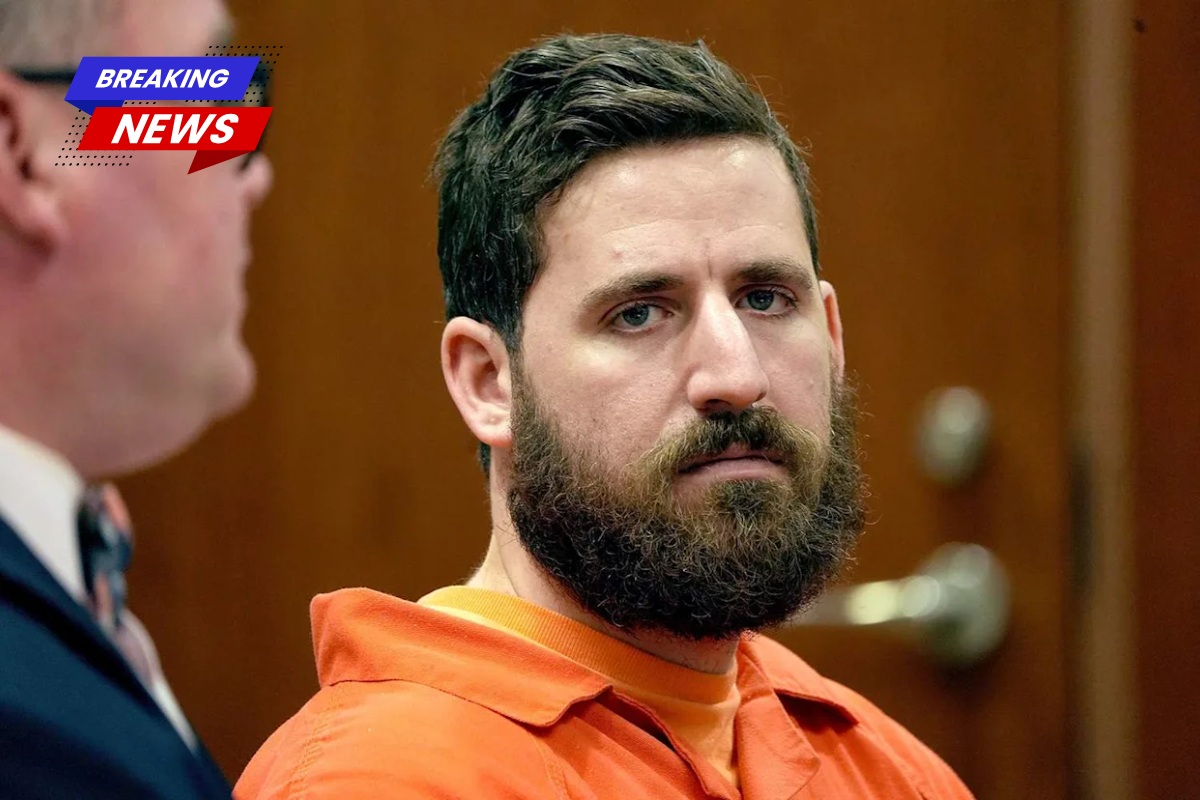
Matthew Hertgen, the New Jersey man who made headlines last year for killing his younger brother and a cat, has died in custody. He was 32. Authorities say he was found dead at the Mercer County Jail on Friday, May 8, in an apparent suicide.
The official cause of death is pending autopsy, and both the Mercer County Prosecutor’s Office and the Middlesex Regional Medical Examiner’s Office have not yet responded to requests for comment.
Hertgen, a former college soccer player and Wesleyan University alumnus, had previously attempted suicide a week after his arrest in February 2025.
His death comes months after a judge ruled in March that he was not legally responsible for the death of his 26-year-old brother, Joseph Hertgen, due to severe mental illness. The court determined that Matthew was legally insane, and a May hearing was scheduled to decide his future custody.
Background of the Case
On February 22, 2025, Matthew Hertgen allegedly killed his younger brother Joseph in their Princeton, New Jersey apartment. Authorities reported that the attack involved both a knife and a golf club, and also included the killing of the family cat.
Disturbing reports indicated Matthew committed acts of extreme violence, including removing his brother’s eye and allegedly consuming it. Evidence found in the apartment included a plate and utensils smeared with blood, as well as a small cup filled with what appeared to be blood, according to a probable cause affidavit.
During the investigation, Matthew’s older brother, David Hertgen, told authorities that Matthew had been experiencing severe mental illness for at least five years.
He reportedly described Matthew as “extremely distressed, despondent and experiencing terrifying visions” on the day of the murder. Text messages exchanged between Joseph and David on the day of the killing indicated that Joseph was aware of Matthew’s troubling visions.
Mental Health Struggles
During court proceedings, forensic psychologist Dr. Gianni Pirelli testified that Matthew had a history of escalating psychotic behavior. Pirelli said Matthew experienced “prophetic and divine visions” of a religious and apocalyptic nature.
At times, he reportedly believed he was God or the anti-Christ, or that committing a “sacrificial murder” was necessary to save the world. “Anytime he closes his eyes, he’s seeing tremendous visions,” Pirelli testified.
The judge ultimately concluded that Matthew’s severe mental health issues rendered him legally insane, resulting in a finding of not responsible for Joseph’s death.
Remembering Matthew Hertgen
In his obituary, Matthew’s family acknowledged his mental health struggles while also remembering the person he was before his illness took hold. They described him as a caring and loving individual who enjoyed a large extended family, attended Wesleyan University where he played soccer, and went on to work as a vice president in senior finance for a telecommunications company.
The obituary highlighted that despite his later struggles with severe mental health issues, Matthew expressed remorse and sorrow in many ways. His family encouraged donations to NAMI Mercer, a nonprofit supporting mental health in Mercer County, New Jersey.