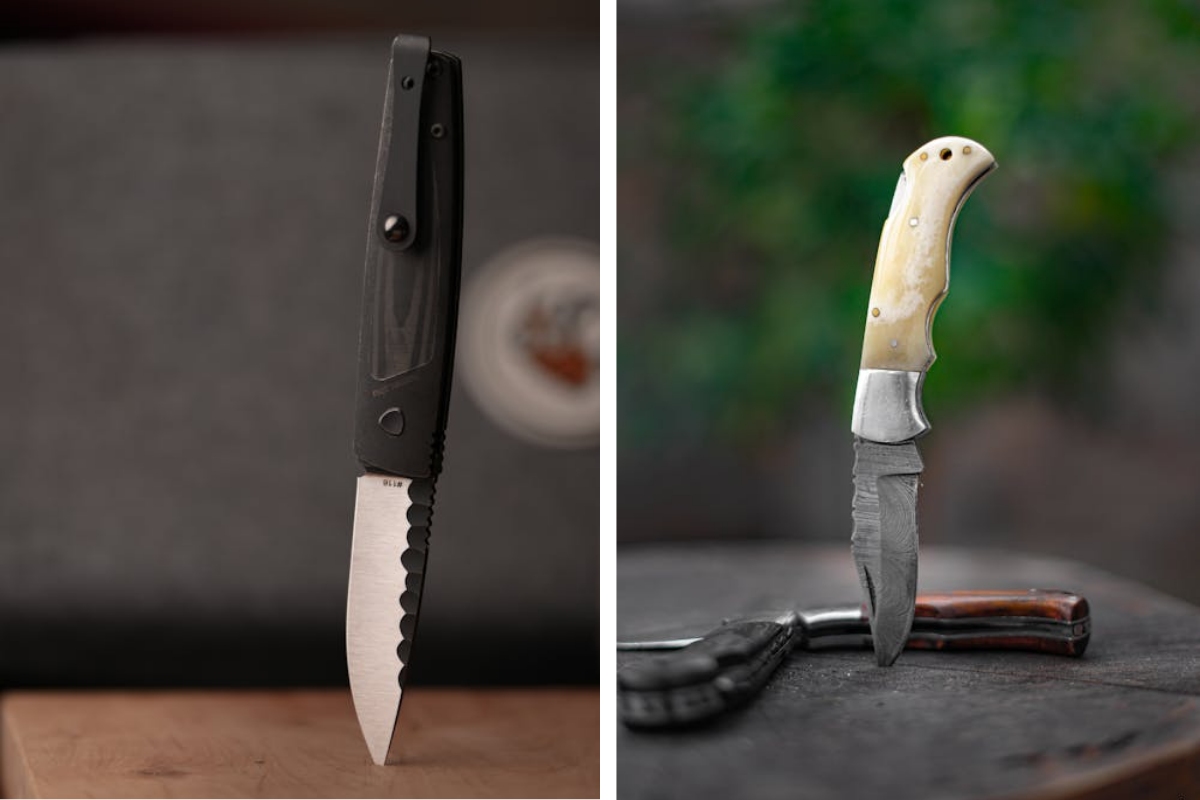
Pocket knives are generally legal in Washington, but the law draws a clear line around certain blade types and how you carry them. Folding knives are usually allowed, while spring blade knives, daggers carried furtively, and other dangerous weapons can trigger criminal penalties.
What Washington law allows
Washington’s knife statute makes it a gross misdemeanor to possess or sell a spring blade knife, and it also prohibits furtively carrying with intent to conceal a dagger, dirk, pistol, or other dangerous weapon. The statute defines a spring blade knife broadly, but it also says a knife with a spring or detent that requires physical effort to open is not a spring blade knife.
That distinction matters for ordinary pocket knives. A standard folding pocket knife that you open by hand is different from an automatically opening knife or gravity knife-style weapon. In practice, that means most everyday pocket knives are legal to own and carry if they do not fit a prohibited category.
Carry rules to know
Washington does not have a simple statewide blade-length rule for pocket knives in the materials reviewed here. Instead, legality depends more on the knife’s mechanism, where you are carrying it, and whether the carry is done in a way that suggests concealment of a weapon.
Open carry is often treated more leniently than concealed carry, but that does not make every knife legal in every setting. A knife can still become a problem if it is carried in a way that causes alarm or is restricted by local policy, building rules, or sensitive locations like courthouses.
Restrictions and sensitive places
The biggest legal risk comes from prohibited knife types and from where you bring them. Washington law specifically targets spring blade knives, and carrying a dagger or other dangerous weapon furtively can also be unlawful.
Even a legal pocket knife can create trouble if used or carried in a threatening manner. If an officer believes the knife is part of a weapon display, intimidation, or unlawful concealment, the situation may be treated more seriously than ordinary possession.
Practical examples
A small folding pocket knife carried in a pocket for work or everyday use is usually the safest example of lawful carry. By contrast, a switchblade, gravity knife, or other automatically opening knife can fall into a prohibited category under Washington law.
SOURCES:
- https://www.akti.org/state-knife-laws/washington/
- https://www.carved.com/blogs/life-at-carved/pocket-knife-rules-laws-by-state