
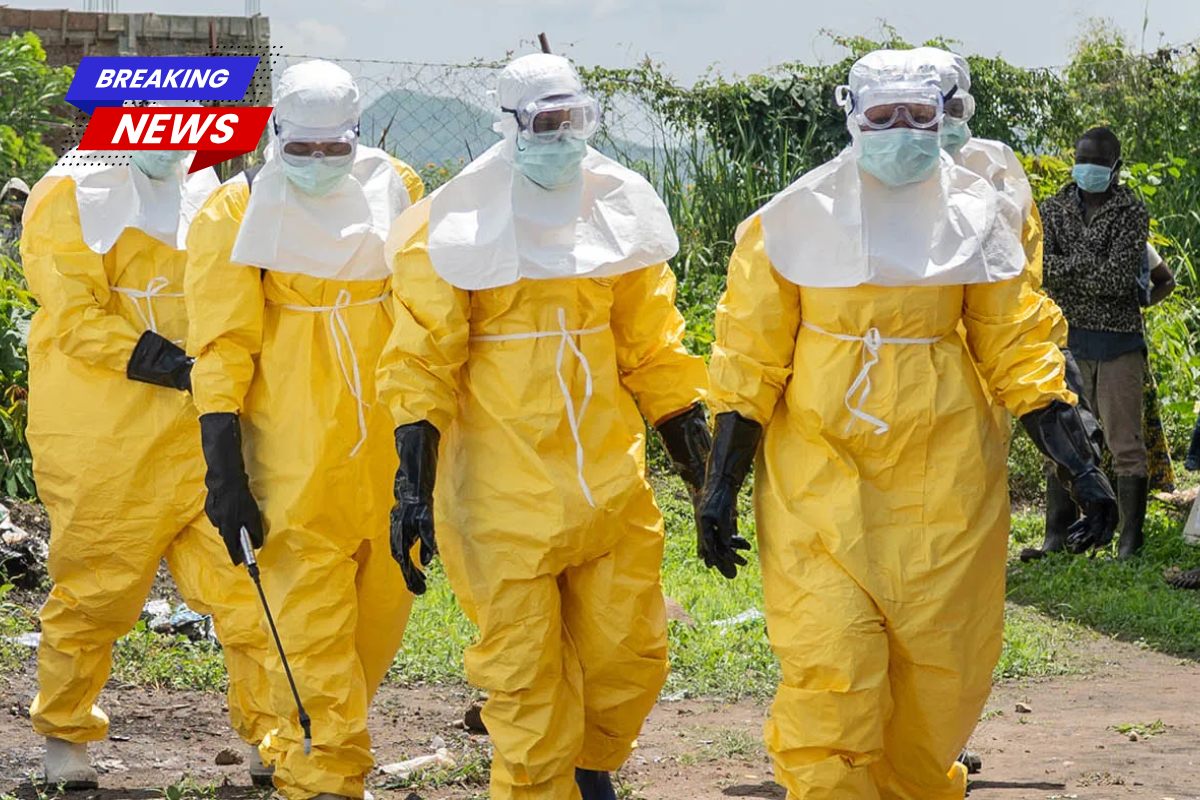
The Ebola outbreak in the Democratic Republic of the Congo is spreading faster than authorities can contain it, raising concerns about the Trump administration’s response and preparedness. Health experts warn that the outbreak, caused by the rare Bundibugyo strain, could be more difficult to control than previous Ebola epidemics.
Scope of the Outbreak
The virus has resulted in nearly 1,000 suspected cases and more than 220 suspected deaths in Congo. Neighboring Uganda has reported seven cases and one death.
This outbreak is already the third largest in history, prompting the World Health Organization to declare it a public health emergency of international concern. Currently, no approved vaccines or treatments exist for the Bundibugyo strain.
The aid group International Rescue Committee (IRC) warned that without urgent international action, this outbreak could become the deadliest on record. Bob Kitchen, the IRC’s vice president of emergencies, said that “delays cost lives” and highlighted the impact of global conflicts and aid cuts on containment efforts.
Trump Administration’s Response
The Centers for Disease Control and Prevention (CDC) has stated that the risk of Ebola spreading to the U.S. remains low. However, the Trump administration has restricted international travel and taken steps to manage Americans who may be exposed to the virus overseas.
Officials announced plans to build a quarantine and treatment facility in Kenya for Americans exposed to Ebola. Public health officers are preparing to deploy quickly to staff the facility, which is intended to provide immediate care without the long flight back to the United States.
An administration official explained that the facility is “designed to provide access to high-quality care for Americans who would need to quickly get out of DRC and quarantine without the risks of a lengthy transport back to the U.S.” The State Department is leading the effort, coordinating with the Department of Health and Human Services and the Department of Defense.
Deviation from Past Ebola Protocols
Previously, Americans exposed to Ebola were often transported back to the U.S. for treatment at specialized facilities. In this outbreak, the administration has opted to treat Americans overseas. In recent weeks, an infected American doctor was evacuated to Germany, while another doctor exposed to the virus was sent to Prague, Czech Republic. Officials say shorter flights reduce risks and save lives.
“The facility will enable Americans in the region who contract Ebola to receive lifesaving care as quickly as possible without 12-plus hours of medevac flight time,” a government official said.
Concerns from U.S. Diplomats and Health Experts
The American Foreign Service Association has urged the State Department to allow U.S. diplomats and their families to leave Congo, Uganda, and South Sudan due to Ebola concerns. The union criticized the decision to quarantine Americans overseas as a “stark departure from how every previous administration has handled Ebola exposure.”
During a White House Cabinet meeting, Secretary of State Marco Rubio said that preventing Ebola from entering the U.S. is the administration’s top priority. He stated that the CDC, HHS, and other agencies are working to contain the outbreak in Congo and minimize risks to Americans.
Travel Restrictions and Screening Measures
Last week, the Trump administration temporarily banned green card holders who had visited Congo, Uganda, or South Sudan within the past 21 days from entering the U.S. Enhanced airport screenings have also been implemented at Washington Dulles, Houston’s George Bush Intercontinental, and Atlanta’s Hartsfield-Jackson airports. CDC employees have been asked to volunteer as airport screeners.
Criticism of Quarantine Plans
Experts have raised concerns about the decision to quarantine Americans overseas. Lawrence Gostin, a global health law professor at Georgetown University, described the approach as “unprecedented” and potentially dangerous.
He noted that during the 2014 Ebola outbreak, infected U.S. nurses were treated at specialized domestic facilities, including the National Institutes of Health.
Gostin warned that establishing a foreign facility may increase the risk of severe health complications or death and sends a troubling message to U.S. health workers, implying they cannot rely on the government for protection while deployed on humanitarian missions.
Administration’s Defense
Officials say the Kenya facility will be equipped to provide the full spectrum of Ebola care, including intensive and critical care. They emphasize that time is critical in treating Ebola, and the overseas facility is designed to provide rapid lifesaving interventions for Americans exposed to the virus.






