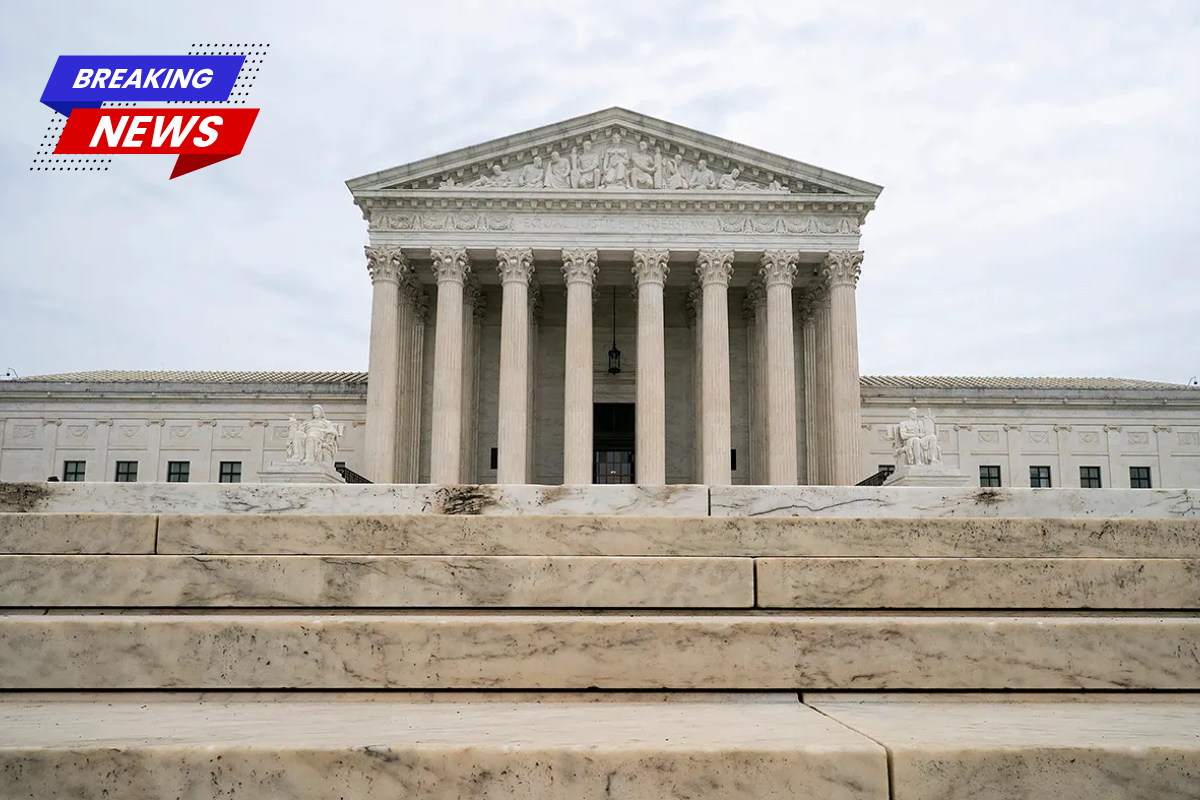
The U.S. Supreme Court is set to hear arguments on whether it is constitutional to make it a crime for unlawful drug users to possess firearms. The case marks another major Second Amendment debate before the conservative-majority court, which has recently expanded gun rights protections.
Supreme Court to Review Federal Gun Law
At the centre of the case is a federal law, in place since 1968, that makes it illegal for anyone who is an unlawful user of or addicted to a controlled substance to possess a firearm.
The court will examine whether this rule fits within the nation’s historical tradition of firearm regulation. In recent years, the Supreme Court has required that gun control laws be consistent with historical practices dating back to the founding era.
The Trump administration is defending the law’s constitutionality, even though it has generally taken a pro-gun stance on other issues.
Details of the Texas Case
The case involves 28-year-old Texas resident Ali Hemani. Authorities searched his home and found 60 grams of marijuana and a Glock 9mm pistol.
Hemani admitted to using marijuana several times a week. Based on that admission and the firearm discovery, he was charged under the federal statute.
The Justice Department argues that the law is aimed at habitual drug users and is comparable to older laws that restricted firearm access for habitual drunkards.
However, Hemani’s legal team argues that the statute is too broad and could affect millions of Americans who occasionally use substances like marijuana.
Arguments From Both Sides
The Justice Department will argue that disarming regular drug users is similar to historical laws that temporarily restricted firearms for individuals seen as dangerous or irresponsible.
Principal Deputy Solicitor General Sarah Harris is expected to defend the statute by comparing it to founding-era laws that regulated habitual intoxication.
On the other hand, Hemani’s lawyers claim there is no strong historical tradition of permanently stripping firearm rights from individuals who consume intoxicants a few times a week.
They argue that the law violates the Second Amendment because it goes beyond what history supports.
Terrorism Allegations Not Central to Case
The administration has mentioned that Hemani allegedly has sympathies with Iran’s Islamic Revolutionary Guard Corps. Officials also say he told law enforcement he would not report a terrorist attack if he knew about one.
However, Hemani has not been charged with any terrorism-related offences. His legal team emphasises that the Supreme Court case strictly concerns the marijuana possession and firearm issue.
They argue that the additional allegations are not relevant to the constitutional question before the court.
Broader Second Amendment Impact
This case is part of a series of major gun-rights decisions in recent years. In 2022, the Supreme Court ruled that firearm regulations must align with the country’s historical tradition.
In 2024, the court upheld a federal law banning gun possession for individuals under domestic violence restraining orders.
Now, the justices will decide whether the ban on unlawful drug users owning firearms meets the same constitutional standard.
Gun rights organisations such as the National Rifle Association and Gun Owners of America have filed briefs urging the court to strike down the law.
Interestingly, Hemani’s legal team includes attorneys from the American Civil Liberties Union and Clement & Murphy, a law firm led by conservative lawyers Paul Clement and Erin Murphy.
Historical Background of the Law
The 1968 gun control law was enacted after a wave of political assassinations, including the killings of President John F. Kennedy and civil rights leader Martin Luther King Jr.
The law created several categories of individuals prohibited from owning firearms, including convicted felons, people under restraining orders, and unlawful drug users.
As marijuana laws have changed across many states, the conflict between federal gun laws and state-level cannabis legalisation has become more noticeable.