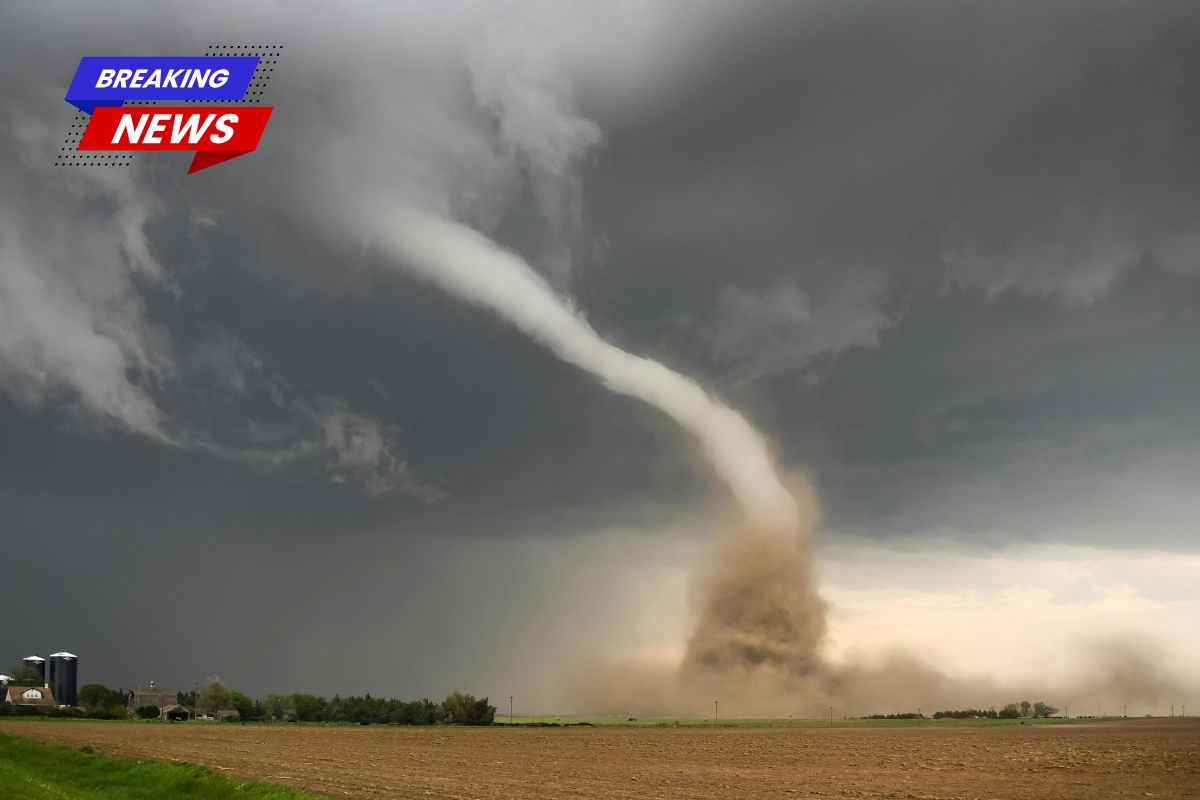
Severe weather could impact millions of people across parts of the central United States as forecasters warn that conditions may become favourable for tornado development on Friday. The National Weather Service has identified several states that could experience dangerous storms capable of producing tornadoes, damaging winds, and large hail.
Tornado Threat Issued for Five States
The National Weather Service has warned that parts of five states face the possibility of tornadoes on Friday, June 6.
Meteorologists say atmospheric conditions across portions of the Midwest and Great Plains may support the development of severe thunderstorms capable of producing tornadoes.
Residents in affected areas are being urged to closely monitor weather forecasts and remain prepared for rapidly changing conditions throughout the day.
States Under Tornado Risk
According to weather officials, areas within the following states could be affected by severe storms and potential tornado activity:
| State | Potential Threat |
|---|---|
| Nebraska | Tornadoes, damaging winds, hail |
| Kansas | Tornadoes, severe thunderstorms |
| Iowa | Tornadoes, strong winds |
| Missouri | Tornadoes, heavy storms |
| Illinois | Tornadoes, severe weather outbreaks |
The exact locations facing the highest risk may change as weather conditions evolve throughout the day.
Why Tornadoes Are Dangerous
Tornadoes are among the most destructive weather events in the United States.
These rapidly rotating columns of air can develop quickly during severe thunderstorms and may cause significant damage to homes, businesses, vehicles, and infrastructure.
Strong tornadoes can uproot trees, destroy buildings, and turn everyday objects into dangerous debris.
Because tornadoes can form with little warning, preparedness is critical.
Stay Informed Throughout the Day
Weather officials strongly encourage residents in potentially affected areas to remain informed about forecast updates.
Local television stations, weather apps, emergency alerts, and NOAA Weather Radio broadcasts can provide important information about watches and warnings as storms develop.
Understanding the difference between a tornado watch and a tornado warning is especially important.
A tornado watch means conditions are favourable for tornado development, while a tornado warning means a tornado has been detected or indicated by weather radar and immediate action should be taken.
What To Do If You Are At Home
If a tornado warning is issued for your area, move immediately to the safest location available.
The best option is a basement or dedicated storm shelter.
If neither is available, move to an interior room on the lowest floor of the building and stay away from windows, doors, and exterior walls.
Residents should also bring pets into shelter if time allows.
Using mattresses, blankets, or helmets to protect against flying debris can provide additional safety during a tornado.
Safety Tips For Schools and Workplaces
Schools and workplaces often have established tornado safety plans.
During a tornado warning, individuals should follow emergency procedures and move quickly to designated shelter areas.
Stay away from large open spaces such as gymnasiums, auditoriums, cafeterias, and rooms with wide-span roofs.
Employees and students should remain calm and follow instructions from emergency personnel or supervisors.
What To Do If You Are Outdoors
Being outside during a tornado is extremely dangerous.
If severe weather approaches, seek shelter inside a sturdy building as quickly as possible.
Temporary structures such as tents, sheds, and mobile homes do not provide adequate protection during a tornado.
If no building is available, continue searching for a safer location while remaining aware of changing weather conditions.
Tornado Safety While Driving
Vehicles offer very limited protection during a tornado.
If you are driving and a tornado warning is issued, the safest option is to reach a sturdy building immediately.
If shelter cannot be reached safely, weather officials recommend staying low and protecting your head from flying debris.
In some situations, abandoning the vehicle and seeking shelter in a low-lying area such as a ditch or ravine may reduce exposure to dangerous winds and debris.
However, residents should always follow local emergency guidance based on current conditions.
Importance of Emergency Preparedness
Severe weather can develop quickly, leaving little time to react.
Families are encouraged to prepare emergency kits containing water, flashlights, batteries, medications, important documents, and mobile phone chargers.
Having a communication plan in place can also help family members stay connected during severe weather emergencies.
Preparedness measures taken before storms arrive can make a significant difference during dangerous situations.