
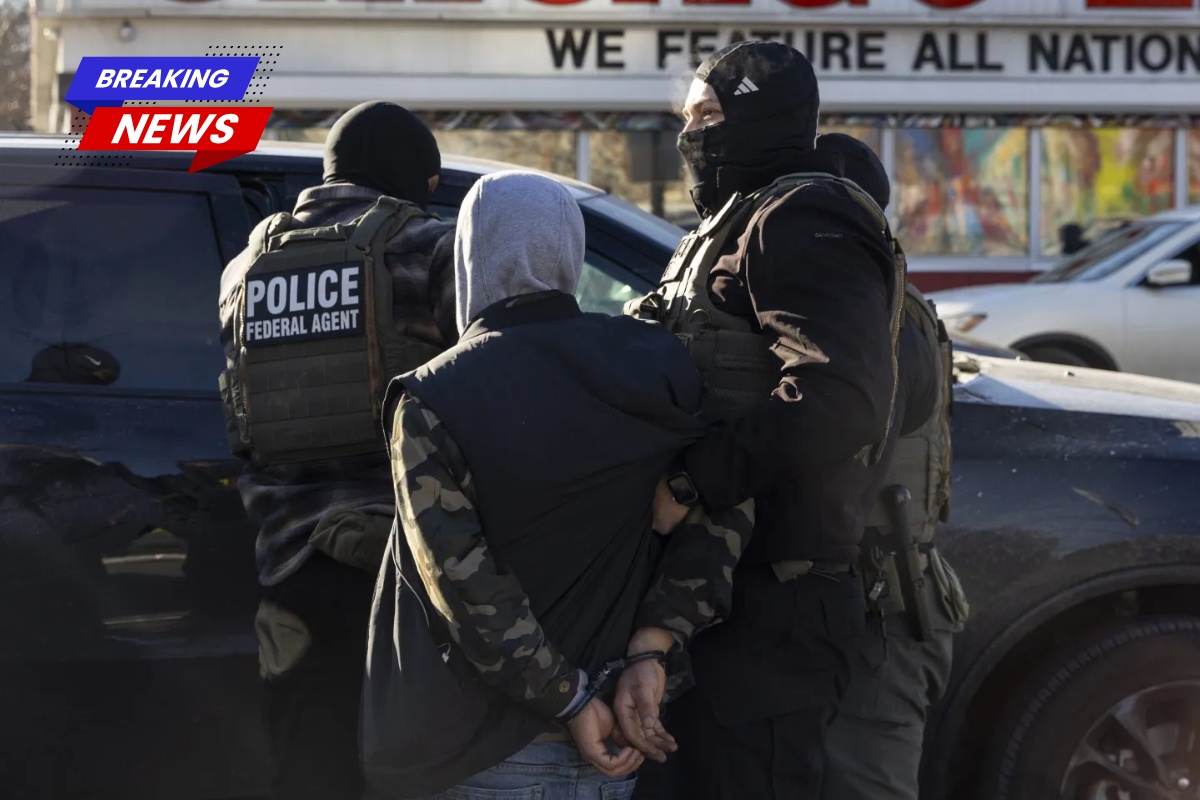
President Donald Trump’s immigration enforcement campaign is facing renewed scrutiny after a recent study suggested that large-scale deportation operations may have had broader economic consequences than supporters anticipated.
Researchers found that aggressive immigration enforcement in several U.S. cities was associated with significant job losses affecting both immigrant and U.S.-born workers.
Study Examines Economic Impact of Immigration Enforcement
A recent study by researchers at the Brookings Institution examined the effects of increased Immigration and Customs Enforcement (ICE) activity during the first months of President Donald Trump’s second administration.
According to the report, more than 105,000 individuals were deported between January and June 2025 as immigration enforcement operations expanded across the country.
Researchers sought to determine whether increased enforcement activity had measurable effects on local labor markets and employment levels.
Their findings suggest that cities experiencing the largest surges in ICE activity also saw noticeable declines in employment.
Researchers Estimate Significant Job Losses
The study estimated that immigration enforcement operations contributed to approximately 668,000 job losses nationwide.
Researchers found that the impact extended beyond undocumented immigrants and affected both foreign-born and U.S.-born workers.
According to the analysis, employment fell by an average of 0.73% in cities experiencing the highest levels of ICE enforcement activity.
In locations where employment data was available for a longer period before enforcement increased, job losses reached approximately 1.48% compared with cities that did not experience similar enforcement surges.
The researchers estimated that roughly 30 jobs were lost for every ICE arrest made during the study period.
Cities Experienced Sharp Increases in Arrests
The report examined 86 cities that experienced the highest levels of immigration enforcement activity.
Researchers found that approximately 52,000 arrests occurred across those cities between January and June 2025.
In some communities, enforcement activity increased dramatically.
For example, the study noted that arrest levels in certain areas rose far above historical averages following the launch of expanded operations.
Researchers stated that ICE street arrests increased significantly during the period examined, allowing them to compare economic outcomes between cities with high enforcement activity and those with lower levels.
Construction and Service Industries Hit Hardest
The report found that industries heavily dependent on immigrant labor experienced some of the largest employment declines.
Construction, hospitality, and food service sectors were particularly affected.
Researchers argued that labor shortages created by enforcement actions disrupted business operations and reduced economic activity.
According to the study, the effects extended beyond workers directly targeted by enforcement efforts.
When labor shortages occur in industries such as construction, projects may be delayed, creating additional challenges for managers, inspectors, suppliers, and other workers connected to those projects.
Researchers concluded that employment disruptions often spread through multiple sectors of the local economy.
Impact Extended to U.S.-Born Workers
One of the study’s key findings was that job losses were not limited to immigrant workers.
Researchers estimated that between 51,000 and 297,000 of the jobs lost were held by U.S.-born workers.
The report emphasized the interconnected nature of modern labor markets, where workers in different roles often depend on one another.
According to the researchers, removing workers from one part of an industry can create ripple effects that reduce opportunities for others.
Businesses facing labor shortages may delay projects, reduce services, or scale back operations, resulting in broader employment declines.
Consumer Spending Also Declined
Researchers pointed to additional studies suggesting that immigration enforcement may have affected consumer behavior.
According to the report, highly visible enforcement operations created fear among some residents, leading many people to reduce shopping, dining, entertainment, and other activities outside the home.
The researchers described this phenomenon as “fear-driven demand suppression.”
As fewer people visited businesses and public venues, industries dependent on customer spending experienced additional challenges.
Some sectors with relatively small immigrant workforces still experienced employment declines because of reduced consumer activity.
Debate Continues Over Immigration Policy
Supporters of stricter immigration enforcement have argued that deportation efforts help protect jobs for American workers and strengthen border security.
Critics, however, contend that removing large numbers of workers can create labor shortages and harm local economies.
The Brookings study adds to a growing body of research examining how immigration enforcement affects labor markets, business activity, and economic growth.
Researchers acknowledged that broader economic factors also influence employment trends, but they argued that cities experiencing enforcement surges showed distinct patterns compared to cities that did not experience similar increases.
Researchers Warn of Potential Long-Term Effects
The study’s authors suggested that economic impacts could continue beyond the period examined in the report.
According to the researchers, prolonged labor shortages may contribute to higher costs for goods and services.
They also warned that delays in construction projects could affect housing availability and home prices.
The authors indicated that additional economic effects may become clearer as more data becomes available in the coming months and years.






