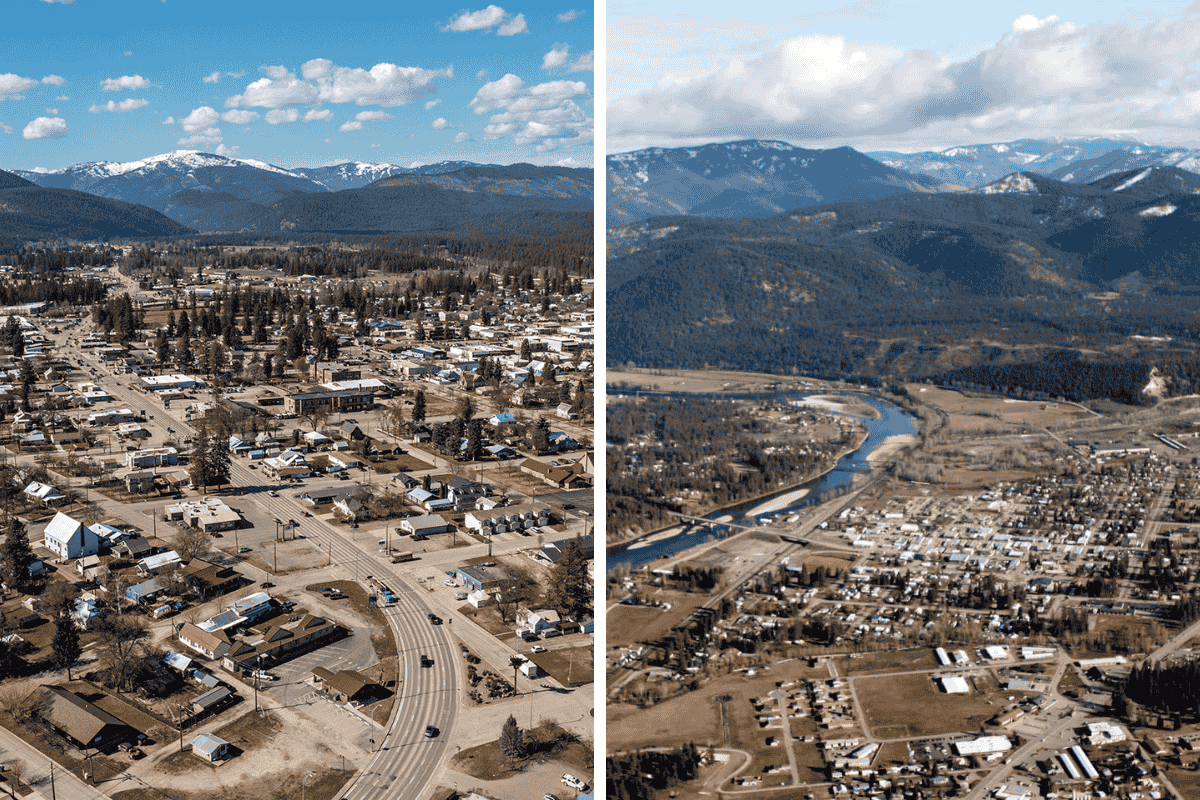
Libby, Montana, stands as the poorest town in the state based on the latest economic data, grappling with the highest poverty rate and lowest median income among comparable places. Nestled in Lincoln County amid the rugged Cabinet Mountains, this former timber and mining hub of about 3,000 residents faces persistent challenges despite Montana’s booming sectors.
Economic Snapshot
Recent analyses peg Libby atop Montana’s poverty rankings. Its poverty rate hits 29.1% (2024 data), with 832 residents below the line, far exceeding the state average of 11.7%.
Median household income lags at $36,373—lowest statewide—while projections for 2026 show slight population growth to 3,454 but persistent struggles at 23.96% poverty.
| Metric | Libby | Montana Avg |
|---|---|---|
| Poverty Rate | 29.1% | 11.7% |
| Median Income | $36,373 | $65,000+ |
| Unemployment (est.) | High | 3-4% |
| Pop. in Poverty | 832 | N/A |
Historical Roots
Libby’s woes trace to the 20th century. Once thriving on logging and vermiculite mining (W.R. Grace operated until 1990), the town suffered when mills closed in the 1970s and EPA superfund designation hit in 2009 over asbestos contamination.
Superfund cleanup, costing over $600 million by 2025, displaced jobs and families. Timber decline amplified this; Lincoln County’s economy now leans on tourism and low-wage service roles, with median per capita income at $37,891.
Current Challenges
High poverty stems from limited opportunities. Unemployment hovers above state norms, with jobs in retail, healthcare, and seasonal tourism dominating—average pay under $40k.
Housing affordability helps somewhat (low cost of living), but 17.6% of families remain impoverished. Aging population (median age 51) strains resources, while youth outmigration to Bozeman or Missoula drains vitality.
Health impacts linger: Asbestos exposure links to mesothelioma spikes, burdening Smurfit-Stone mill closures added unemployment waves.
Community Life
Despite stats, Libby boasts resilience. Yaak River fishing, Kootenai National Forest trails, and events like the Libby Logging Show foster pride. Schools serve 12% poverty-impacted kids, per state data.
Downtown revivals via grants target tourism, but raw numbers persist: 89% white, 6% multiracial demographics reflect rural isolation.
Comparisons: Stevensville (24.1% poverty) and Cut Bank (26.7%) trail closely, but Libby’s combo of low income/high poverty seals its rank. Larger Anaconda-Deer Lodge (22.9%) has more in poverty (2,165) due to size.
Paths Forward
Federal aid via Superfund supports remediation, ending residential cleanup in 2023. Economic development eyes wood products revival and outdoor rec—Kootenai Falls draws visitors.
Montana’s 2025 poverty initiatives, including workforce training, offer hope. Yet without diversified industry, Libby risks stagnation amid Big Sky growth elsewhere.
For U.S. content creators, spotlight Libby’s story: From mining bust to superfund survivor, it’s Montana’s poverty poster child. Verify via Census QuickFacts for updates—narratives blending data and humanity engage readers best.
SOURCES:
- https://www.roadsnacks.net/poorest-places-in-montana/
- https://worldpopulationreview.com/us-cities/montana/libby