
Global markets are reacting sharply as the war involving the United States, Israel, and Iran intensifies, with investors increasingly preparing for a longer conflict. Rising geopolitical tensions have already pushed oil prices higher, rattled stock markets, and raised concerns about global energy supplies and inflation.
Markets React as War With Iran Intensifies
Financial markets showed signs of stress as investors responded to the escalating conflict involving the United States, Israel, and Iran.
Oil prices surged after fighting spread across the Middle East and key energy infrastructure came under attack.
U.S. oil futures rose nearly 25% to $113.30 per barrel, while Brent crude climbed more than 23% to $114.38 per barrel.
These increases mark the first time oil has crossed the $100-per-barrel level since 2022, fueling concerns about higher energy costs worldwide.
Gas Prices Could Rise Above $4 Per Gallon
Experts say the spike in oil prices could quickly affect drivers.
Patrick De Haan, head of petroleum analysis at GasBuddy, warned that gasoline prices in the U.S. could soon climb above $4 per gallon.
He estimated there is roughly an 80% chance that prices will reach that level within the next month if current trends continue.
Despite the surge in oil prices, Donald Trump said releasing oil from the Strategic Petroleum Reserve may not be necessary at this stage.
Trump argued that short-term price increases could be worth it if the conflict ultimately eliminates Iran’s nuclear threat.
Stock Markets Drop on Conflict Fears
Wall Street futures dropped sharply as investors reacted to the growing instability.
- Futures tied to the Dow Jones Industrial Average fell more than 1,000 points
- S&P 500 futures declined about 2%
- Nasdaq Composite futures dropped roughly 2.3%
Investors are increasingly concerned that the war could disrupt global trade, energy supplies, and economic growth.
Strait of Hormuz Closure Threatens Oil Supply
One of the biggest concerns in global markets is the closure of the Strait of Hormuz.
The narrow waterway is one of the world’s most important oil transport routes, used by many Gulf nations to export crude oil.
With the passage effectively shut down, oil producers in the Persian Gulf have been forced to reduce output because they cannot ship their supplies.
Officials say oil production in Iraq has already fallen by 60%.
Critical Infrastructure Attacks Raise New Concerns
The conflict has expanded beyond military targets to include critical infrastructure.
Iran and Bahrain reported attacks on desalination plants that produce drinking water.
Many countries in the Middle East rely heavily on these facilities, with some getting up to 90% of their water supply from seawater desalination.
Intelligence officials have previously warned that widespread damage to these plants could trigger humanitarian crises or force evacuations from major cities.
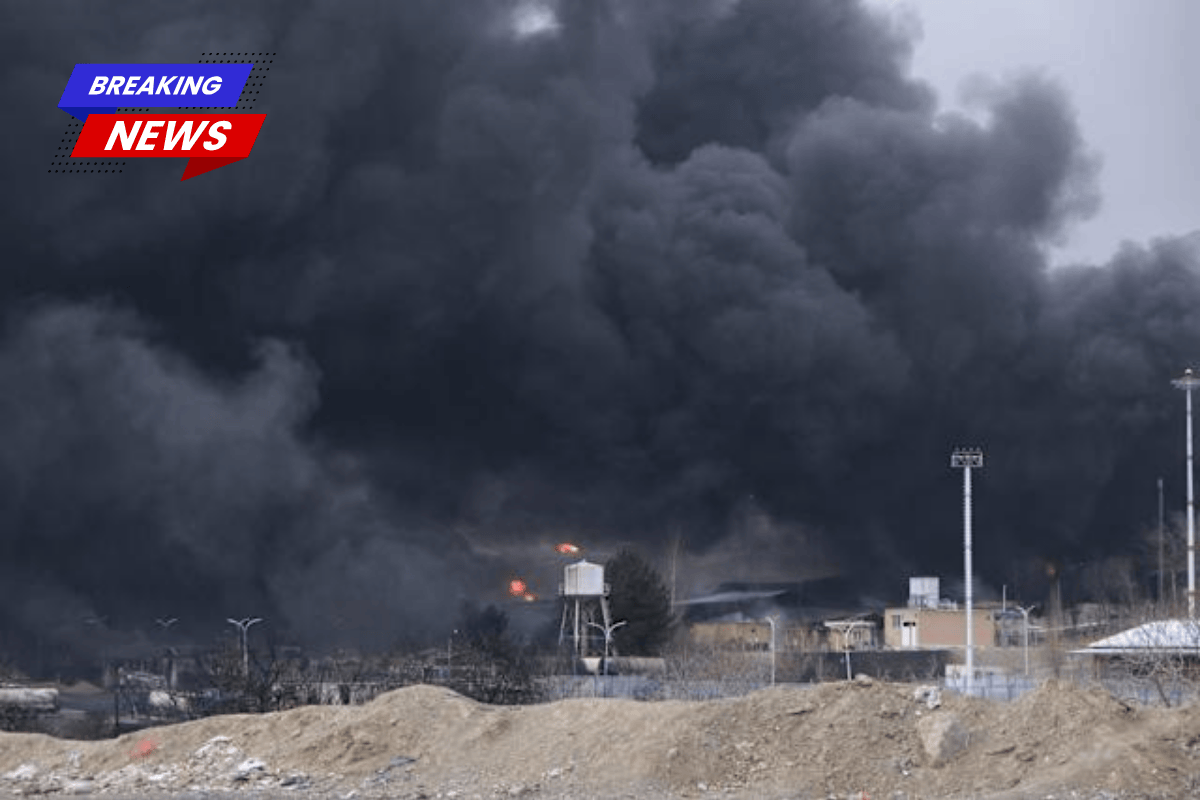
Meanwhile, U.S. and Israeli forces reportedly struck an oil depot in Tehran, creating massive smoke plumes across the city.
Growing Military Escalation Across the Region
Military tensions continue to escalate across the Middle East.
The Pentagon recently confirmed the death of a seventh U.S. service member connected to the conflict.
Reports also indicate that U.S. officials are considering a special forces mission to secure near-bomb-grade uranium inside Iran that could potentially be used in nuclear weapons.
Meanwhile, other countries could become involved.
- Gulf nations have warned Iran against further attacks
- Turkey is reportedly considering deploying fighters to northern Cyprus
- Russia is believed to be sharing intelligence with Iran
Iran Names New Supreme Leader
The political situation inside Iran has also shifted dramatically.
Following the death of Ali Khamenei, Iranian authorities announced that his son, Mojtaba Khamenei, will become the country’s next supreme leader.
The decision is widely viewed as a sign that hardline factions remain firmly in control of the Iranian government.
President Trump previously criticized the possibility of Mojtaba Khamenei assuming power, saying the United States wanted leadership in Iran that could bring stability and peace.






