
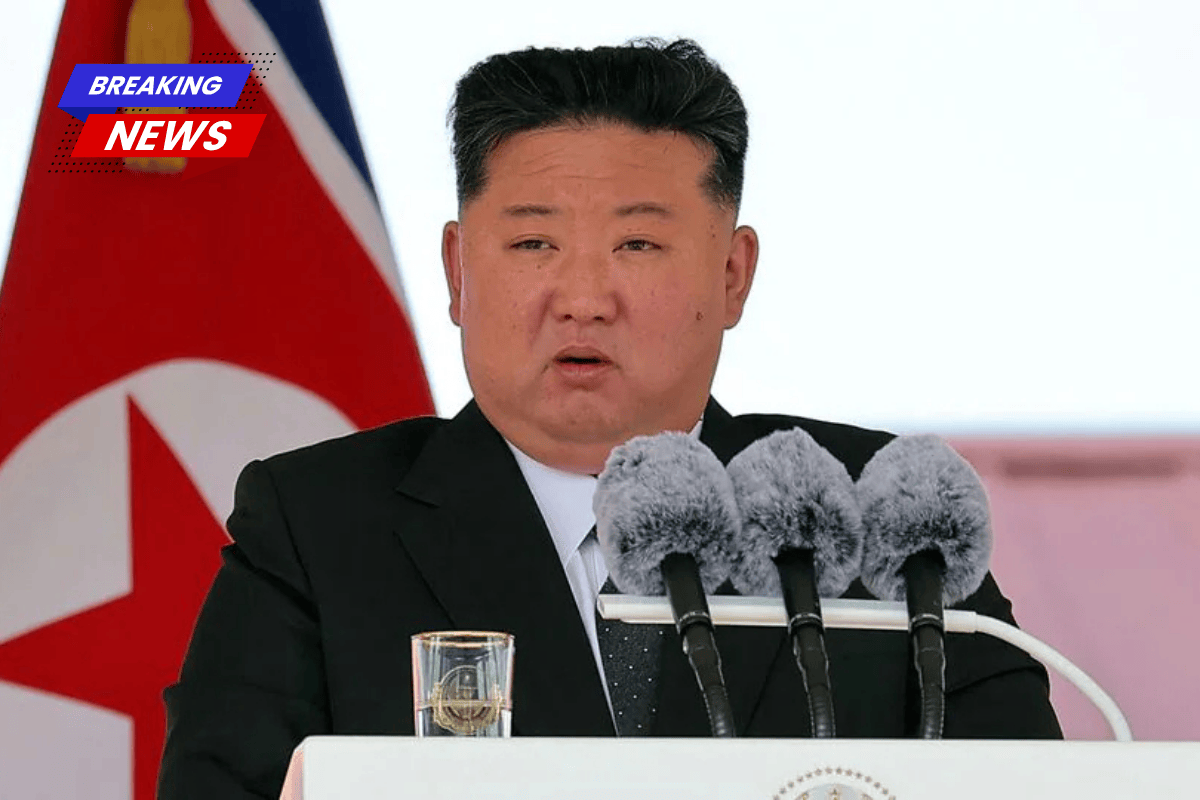
Rising tensions between the United States and Iran are now influencing global security debates far beyond the Middle East. North Korea has begun using the conflict as a warning to the international community and as justification for its own military strategy.
North Korea Uses U.S.–Iran Conflict to Justify Hard-Line Strategy
Kim Jong Un and officials in North Korea are framing the escalating confrontation between the United States and Iran as proof that countries must maintain overwhelming military power to survive.
State media and officials in Pyongyang have warned that the conflict could lead to “terrible consequences” for the region and for countries that underestimate North Korea’s resolve.
The messaging serves two purposes: warning foreign adversaries and reinforcing domestic support for the government’s military policies.
Pyongyang Condemns U.S. and Israeli Actions
North Korean officials have criticized recent strikes carried out by the United States and Israel against Iranian targets.
A spokesperson from North Korea’s foreign ministry described the operations as violations of sovereignty and international law.
According to Pyongyang’s statements, the attacks demonstrate a broader pattern in which Washington and its allies use military power against governments that refuse to align with Western interests.
Kim Jong Un Emphasizes ‘Overwhelming Power’
Kim Jong Un has linked the U.S.–Iran conflict to his long-standing argument that only powerful military forces can guarantee national survival.
He has stated that North Korea does not seek war but also “has no intention of avoiding it.”
The North Korean leader has repeatedly used this logic to defend the country’s continued development of nuclear weapons and missile technology.
Officials argue that nations without strong deterrents could face the same pressures now confronting Iran.
Kim Yo Jong Emerges as Key Voice
Kim Yo Jong, the sister of Kim Jong Un, has become one of the most prominent voices criticizing U.S. and allied actions.
She has accused Washington of disguising aggression under the pretense of peace and warned that North Korea will respond to pressure with “counterpressure.”
Her statements also criticized joint military exercises conducted by the United States and South Korea, describing them as rehearsals for invasion.
Military Drills Raise Tensions on Korean Peninsula
North Korea has tied its warnings about the U.S.–Iran conflict to tensions closer to home.
Large-scale military exercises by the United States and South Korea are viewed by Pyongyang as provocative demonstrations of force.
North Korean officials claim the number of joint drills has increased significantly compared with previous years, using that argument to justify expanding their own military capabilities.
Historical Context: Nuclear Deterrence
North Korea often points to past conflicts to support its nuclear strategy.
Officials frequently reference the fates of governments in countries such as Iraq and Libya, arguing that the lack of nuclear weapons left them vulnerable to outside intervention.
The current confrontation with Iran is now being cited as another example used to reinforce the country’s deterrence narrative.
Potential Risks of Escalation
Security analysts warn that overlapping crises in different regions could create new geopolitical risks.
A prolonged conflict involving the United States and Iran could:
- Divert U.S. military resources from East Asia
- Increase tensions on the Korean Peninsula
- Encourage nuclear expansion by other states
At the same time, regional powers such as China and Russia closely monitor these developments due to their potential impact on regional security and global power dynamics.
North Korea and Iran: Strategic Messaging
North Korea’s support for Iran also reflects broader geopolitical positioning.
Both countries often portray themselves as resisting Western pressure and sanctions.
Although analysts debate how closely the two governments cooperate, their public messaging frequently emphasizes shared opposition to U.S. influence.






