The situation of women in Afghanistan has become a serious global concern since the Taliban returned to power. Strict rules and policies have greatly limited women’s freedom, education, and access to justice.
Recently, a disturbing case from northern Afghanistan highlighted how difficult it has become for women facing domestic violence to seek protection through the legal system. The story of one woman shows how abuse is often ignored and how victims are sometimes forced to return to the same dangerous environments.
A woman’s struggle against domestic violence
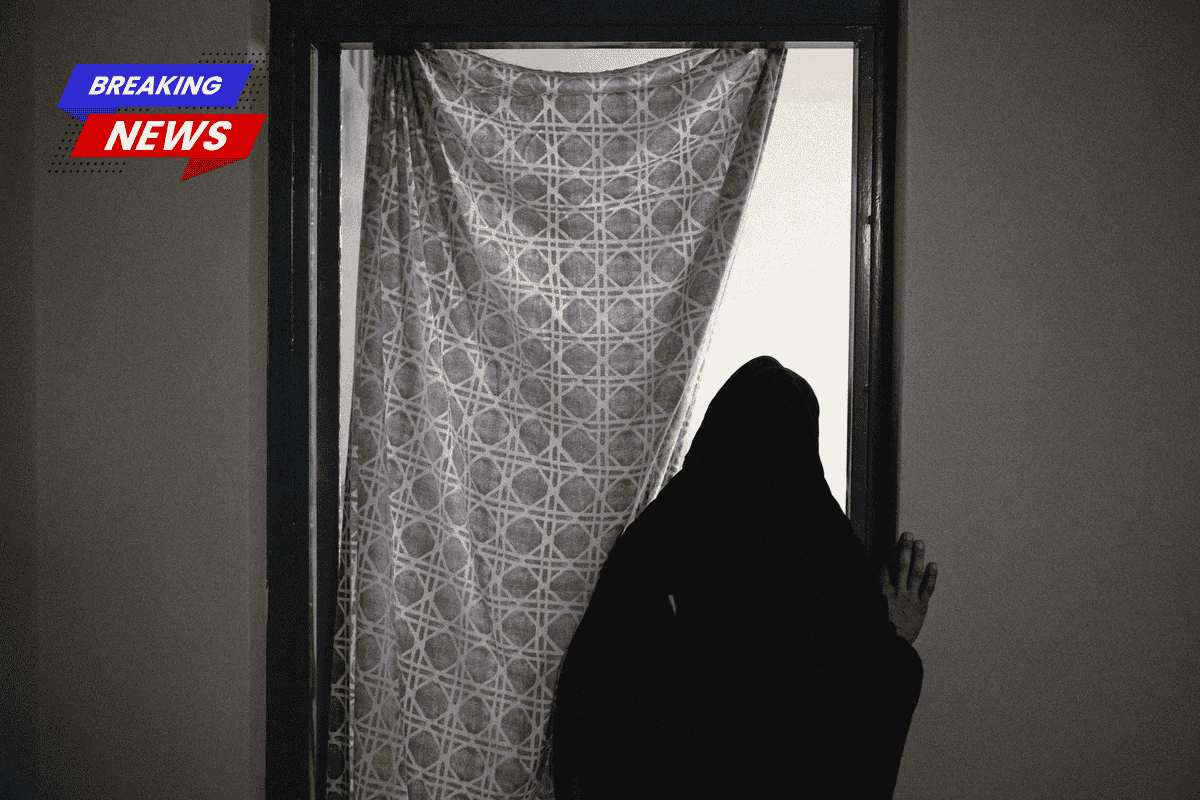
Farzana (name changed for safety) said she suffered repeated physical and emotional abuse from her husband. According to her account, he was quick-tempered and often beat her during arguments. She said he regularly insulted her and called her “disabled” because one of her legs was slightly shorter than the other.
For years, Farzana tolerated the situation because she did not want to break her family and worried about her children’s future. However, one incident pushed her to seek help.
One evening, she was very sick and did not have the strength to cook dinner. When her husband returned home from work, he became angry and accused her of not doing household duties. Even after she explained that she was ill, he allegedly beat her using a mobile phone charger cable.
Farzana said the marks from the beating stayed on her arms and back for several days. At that time, she did not think about collecting evidence or taking photographs, which later became a problem when she tried to prove the abuse.
Attempt to seek divorce rejected by court
After the attack, Farzana decided she could no longer live with the violence and applied for a divorce. She hoped that the court would help her escape the abusive situation.
However, when her case reached a Taliban court, she said the judge dismissed her claims and questioned her reasons for wanting to leave the marriage.
According to Farzana, when she explained that her husband regularly beat and insulted her, the judge responded by asking whether she had any other reason to seek a divorce. When she described the recent beating, the judge asked her to provide proof.
Since she did not have photographs or medical records to show the injuries, the judge reportedly rejected her request.
Farzana said the judge also accused her of making excuses to divorce her husband so she could marry someone else. Instead of offering help or protection, the judge reportedly told her to go back home and continue living with her husband.
She said the judge told her that occasional anger and beatings would not kill her and that a man is allowed to discipline his wife if she disobeys him.
New laws that allow violence against women
Human rights organisations say Farzana’s case is not unusual in Afghanistan today. Shaharzad Akbar, head of the human rights organisation Rawadari, said many women who seek justice are often sent back to abusive homes.
According to activists, a new criminal code introduced for courts last year has made the situation even worse for women. The law reportedly allows a husband to beat his wife as long as the violence does not cause serious injuries such as broken bones, open wounds, or clear bruises.
Under these rules, women must prove that serious harm occurred if they want legal action against their husbands. Even when the abuse is proven, the punishment can be very small, sometimes as little as 15 days in prison.
Human rights groups say this law effectively gives men permission to use violence in the home without facing serious consequences.
Global concern over women’s rights in Afghanistan
Many international organisations have strongly criticised the restrictions placed on Afghan women since the Taliban took control. Women have been banned from attending secondary schools and universities, restricted from most jobs, and limited in public life.
Activists and experts argue that these policies create a system where women are treated as second-class citizens.
Nobel Peace Prize winner Malala Yousafzai spoke about the situation at the United Nations this week. She said the treatment of women in Afghanistan is not related to culture or religion, but rather a system that separates and controls women.
Malala called the situation “gender apartheid,” meaning a system where women are deliberately denied rights and opportunities.
Life after the court decision
After the court rejected her request for divorce, Farzana said she was forced to return home and continue living with her husband. According to her, the situation has become even more difficult.
She said her husband now behaves more violently and threatens her, telling her that she must either tolerate the abuse or face worse consequences. He has also reportedly stopped her from visiting her father’s house.
Farzana also said the judge told her that she had no right to object if her husband decided to marry another woman.
For many women in similar situations, leaving an abusive marriage has become extremely difficult because legal support and protection are limited.
International warning about the dangers
Global organisations are warning that ignoring the rights of Afghan women could have serious long-term consequences. Susan Ferguson, the UN Women special representative in Afghanistan, said silencing women and punishing them simply for being women sends a dangerous message to the world.
She explained that if the international community allows such treatment to continue without strong action, it risks normalising discrimination and violence against women everywhere.
The situation in Afghanistan has therefore become not only a national issue but also a global human rights concern.