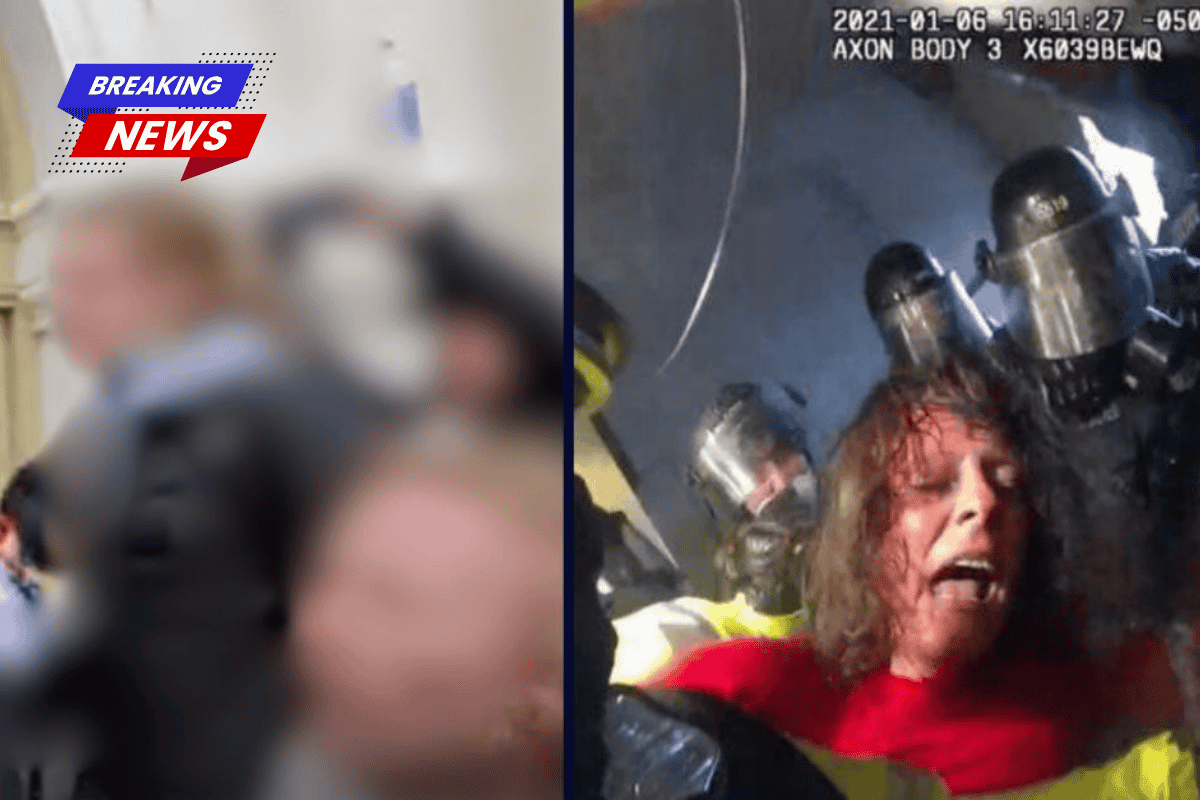
A federal judge in Washington, D.C., has dismissed a lawsuit filed by a Jan. 6 defendant who accused police officers of using excessive force during the attack on the U.S. Capitol. The court ruled that the officers involved were protected by qualified immunity, a legal doctrine that shields government officials from civil liability in many circumstances.
Case Overview
| Detail | Information |
|---|---|
| Plaintiff | Victoria White |
| Defendants | MPD Commander Jason Bagshaw and Officer Neil McAllister |
| Court | U.S. District Court, Washington, D.C. |
| Judge | Carl J. Nichols |
| Main Claim | Excessive force by police |
| Court Decision | Case dismissed based on qualified immunity |
| Incident | Jan. 6, 2021 Capitol riot |
Background of the January 6 Case
Victoria White was arrested in March 2021 after participating in the January 6, 2021 attack on the U.S. Capitol.
The riot occurred as Congress gathered to certify the results of the 2020 presidential election.
According to the U.S. Department of Justice, White interfered with law enforcement officers during the violent breach of the Capitol building.
In August 2023, she pleaded guilty to one charge of interfering with law enforcement officers during a civil disorder.
The court later sentenced her to:
- 10 days in prison
- 90 days of home detention
- 24 months of supervised release
Lawsuit Against Police Officers
In January 2024, White filed a lawsuit against two officers from the Metropolitan Police Department.
The defendants were:
- Commander Jason Bagshaw
- Officer Neil McAllister
White claimed that officers used excessive and deadly force against her while she was caught in a crowd near the tunnel entrance of the Capitol.
Her lawsuit alleged violations of the:
- Fourth Amendment
- Fourteenth Amendment
She also claimed the officers were responsible for supervisory misconduct.
White argued that officers repeatedly beat her while she was trapped in a crowd and unable to retreat.
Officers Invoked Qualified Immunity
In June 2025, the officers filed a motion asking the court to dismiss the case based on qualified immunity.
Qualified immunity is a legal doctrine that protects government officials, including police officers, from lawsuits unless a plaintiff can show two things:
- A constitutional right was violated.
- That right was clearly established in law at the time of the incident.
The doctrine was created by the U.S. Supreme Court decades ago and has often been criticized for making it difficult to sue police officers for misconduct.
Judge’s Ruling
U.S. District Judge Carl J. Nichols ruled in favor of the officers and dismissed White’s excessive force claim.
In his 11-page opinion, the judge focused on whether the alleged constitutional violation was clearly established under existing law.
Nichols wrote that White failed to show any legal precedent that closely matched the circumstances of her case.
Because of this, the judge concluded that the officers were entitled to qualified immunity.
Court’s Analysis of the Riot
The ruling also examined White’s actions during the Capitol riot.
The judge noted that White had admitted to participating in the breach of the Capitol and helping another rioter enter the Lower West Terrace tunnel, where officers were defending the building.
The opinion stated that her actions posed a potential threat to officers during a chaotic and violent situation.
According to the ruling, White could not be considered a passive protester because she was part of a crowd attempting to push past police lines.
Comparison With Other Legal Cases
White attempted to rely on previous court rulings to argue that the officers’ use of force was unreasonable.
However, the judge said the cases she cited did not apply to the specific circumstances of the Capitol riot.
One case she referenced came from another federal circuit, which the judge said did not establish binding legal precedent in Washington, D.C.
Another case from the D.C. federal court system was considered more relevant, but the judge said that ruling actually supported the officers’ position.
Why the Court Dismissed the Claim
The judge ultimately concluded that the chaotic and dangerous conditions during the Capitol attack made it difficult to classify the officers’ actions as a clear constitutional violation.
He wrote that officers were responding to a violent mob attempting to force entry into the Capitol building while Congress was in session.
Because no clearly established legal precedent existed for such a situation, the officers could not be held personally liable.