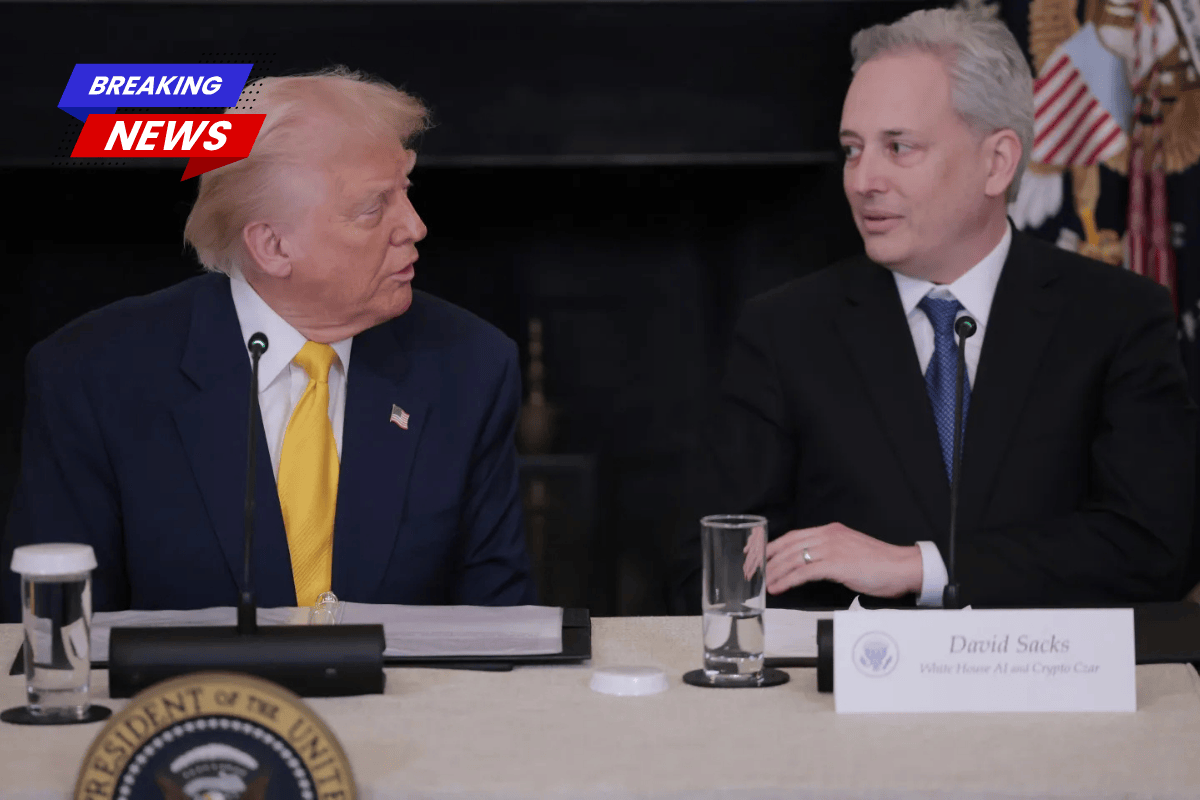
David Sacks, a venture capitalist serving as President Donald Trump’s AI and crypto adviser, has warned that the ongoing conflict involving the United States, Israel, and Iran could lead to serious global consequences if it continues to escalate.
Speaking on the All-In Podcast, Sacks suggested that now may be the time for leaders to pursue de-escalation rather than intensify military actions.
Conflict Overview
| Detail | Information |
|---|---|
| Commentator | David Sacks |
| Role | AI and Crypto Adviser to President Trump |
| Platform | All-In Podcast |
| Key Concern | Escalation of U.S.–Israel conflict with Iran |
| Main Warning | Risk of economic, humanitarian, and regional catastrophe |
Sacks Calls for an “Off-Ramp”
During the podcast discussion, Sacks said the conflict may have already achieved its strategic objectives and that continuing the war could create unpredictable consequences.
He argued that this could be a moment to step back.
“This is a good time to declare victory and get out,” Sacks said, adding that financial markets would likely respond positively to de-escalation.
According to him, prolonging the conflict increases the chance of a dangerous escalation cycle.
Concerns About Escalation
Sacks warned that ongoing attacks could lead to retaliation targeting critical energy infrastructure across the Middle East.
One possible escalation scenario involves attacks on oil and gas facilities throughout the region.
Such strikes could disrupt global energy production and threaten the economic stability of Gulf nations.
He also highlighted the importance of the Strait of Hormuz, a key global shipping route for oil.
If the conflict continues and production infrastructure is destroyed, reopening the strait alone might not restore energy supply because the facilities themselves could be damaged.
Water Infrastructure at Risk
Sacks raised another concern about potential attacks on desalination plants in the Gulf region.
These facilities provide a large share of the region’s drinking water.
If desalination plants were destroyed, he warned that millions of people could face severe water shortages.
According to Sacks, damage to this infrastructure could create a humanitarian crisis affecting roughly 100 million people in Gulf countries.
Risk of Wider Regional Impact
The venture capitalist also noted that Israel has faced significant attacks during the conflict.
If the war were to intensify or continue for months, he said the situation could become increasingly dangerous.
Sacks suggested that in an extreme scenario, continued escalation might push countries toward more drastic military decisions.
Debate Within the U.S. Government
The conflict has also sparked debate within the U.S. administration and political circles.
Some policymakers and advisers have reportedly urged President Trump to pursue a diplomatic solution or ceasefire.
Rising oil prices and potential economic impacts are among the concerns being discussed.
However, others have argued that continued military pressure is necessary to prevent Iran from advancing its nuclear capabilities.
Economic and Political Factors
Reports indicate that economic advisers have warned the White House that higher energy prices could weaken public support for the conflict.
Gasoline price increases often have strong political consequences in the United States.
This has added another layer of complexity to decisions about whether to escalate or de-escalate the conflict.