US intelligence officials concluded on Wednesday that Iran has not attempted to rebuild its nuclear enrichment capacities, which were destroyed in a US-Israeli operation last year. This conclusion directly contradicts a central justification used by President Donald Trump for his ongoing military actions in the Middle East.
The revelation comes amid a broader debate over the motives and outcomes of the war, with some of Trump’s allies offering mixed signals in their testimony before Congress.
Operation Midnight Hammer: A Key Moment in US-Iran Relations
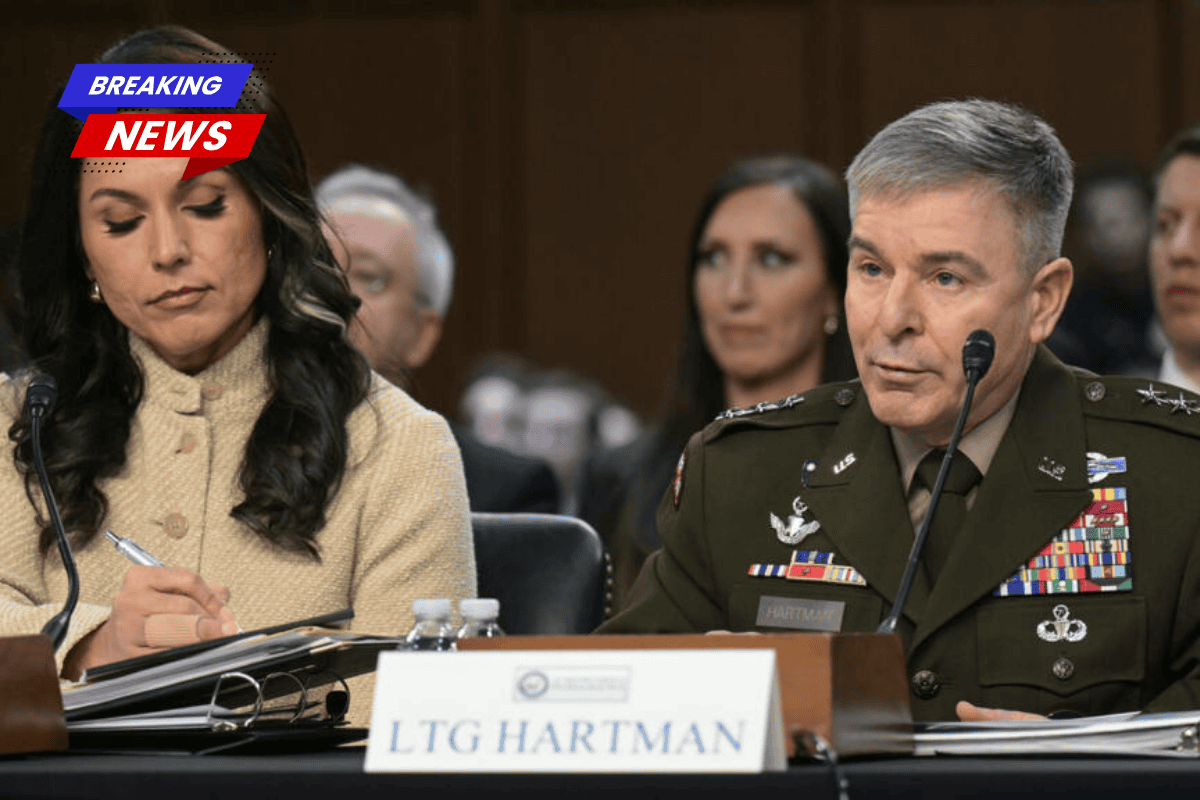
During a Senate intelligence committee hearing, Tulsi Gabbard, the director of national intelligence and ally of Trump, described Iran’s nuclear program as “obliterated” by the June 2025 US attack, known as Operation Midnight Hammer.
Gabbard testified that no efforts had been made to rebuild Iran’s nuclear enrichment capabilities since that time. However, when pressed by a Democratic senator, Gabbard hesitated and did not directly reaffirm this claim, suggesting that she had not fully reviewed her testimony during the hearing.
Trump, who had authorized the bombing alongside Israel, repeatedly cited an “imminent threat” from Iran’s nuclear program as justification for the attack. Despite the destruction of Iran’s nuclear facilities, Trump has continued to claim that Tehran was just weeks away from developing a nuclear bomb, maintaining that he acted to prevent this.
The Debate Over Iran’s Nuclear Ambitions
The United Nations nuclear watchdog and most global observers have rejected the assertion that Iran was on the brink of obtaining nuclear weapons. Just days before the attack, Iran had been engaged in negotiations with US envoys for a potential deal, further undermining Trump’s justification for military action.
CIA Director John Ratcliffe added during the hearing that while Iran was negotiating, it had “no intentions of following through” on any agreements, suggesting a lack of genuine intent on Tehran’s part. Despite this, Trump’s stance has remained firm, continuing to characterize Iran as an imminent nuclear threat.
Internal Disagreements Within the Intelligence Community
Gabbard’s testimony also highlighted internal disagreements within the intelligence community. Joseph Kent, a senior aide at the National Counterterrorism Center, resigned in protest, stating that Iran did not pose the “imminent threat” that Trump and his advisors had been led to believe. Kent suggested that both Israel and certain media outlets had misled the administration regarding the situation, which further fueled partisan debates.
Democratic lawmakers quickly criticized Gabbard for her role in the conflict, arguing that the intelligence provided did not support the narrative of an Iranian nuclear emergency. Senator Michael Bennet, a Democrat from Colorado, said, “President Trump said, we are not the policemen of the world. He ran on that. Now he’s turned us into the world’s policeman, into its jury, into its judge, into its executioner.”
The State of Iran’s Regime and Russia’s Influence in Ukraine
Despite the military setbacks, including the assassination of Iran’s Supreme Leader Ayatollah Ali Khamenei, Gabbard stated that Iran’s regime remains intact, though “largely degraded” due to the attacks on its leadership and military infrastructure. She suggested that it could take years for Iran to rebuild its military forces, including drones and missile capabilities.
Turning to the war in Ukraine, Gabbard acknowledged that Russia has maintained an upper hand, despite US-led negotiations between Moscow and Kyiv. She indicated that Russia is likely to continue its slow, grinding conflict until a negotiated agreement is reached, but warned that any escalation could lead to catastrophic consequences, including the potential use of nuclear weapons.
China’s Military Modernization and Taiwan Concerns
Gabbard also addressed China’s growing military capabilities, warning that Beijing is rapidly modernizing its forces with the ultimate goal of seizing Taiwan, a self-governing democracy claimed by China. However, US intelligence suggests that China prefers to pursue a peaceful reunification of Taiwan, rather than resorting to conflict, although it remains a significant concern for US foreign policy.
Trump had initially planned a trip to China in the coming weeks but postponed it due to the ongoing war in the Middle East, further complicating his diplomatic agenda.