
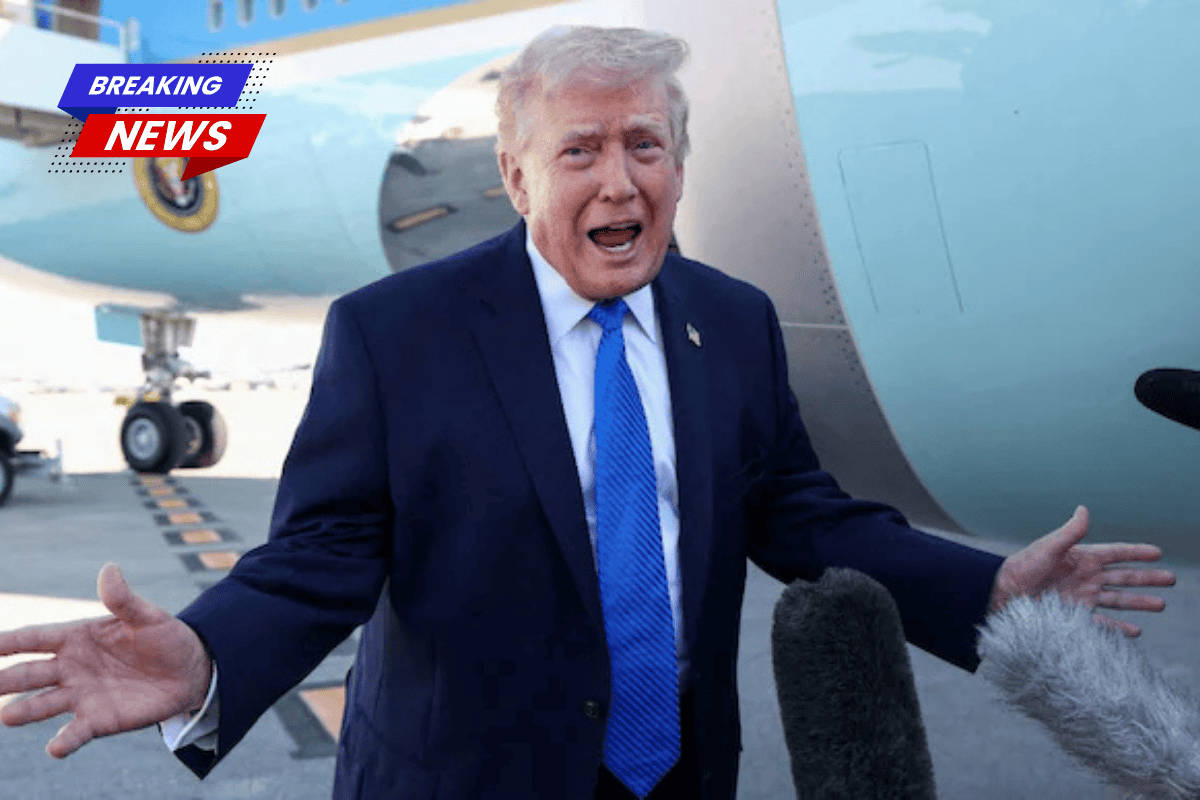
On March 23, President Donald Trump announced that he has ordered a five-day pause on planned U.S. military strikes against Iranian energy infrastructure. This decision follows what Trump described as “productive” talks between the United States and Iran aimed at resolving the ongoing Middle East conflict, which is now in its fourth week.
In a post on his social media platform, Truth Social, Trump shared that discussions between both sides had been positive, with the aim of achieving a “complete and total resolution” of hostilities in the region. He emphasized that, based on the tone and progress of these in-depth and constructive talks, he had instructed the Department of War to postpone military action for five days, contingent on the continued success of the ongoing discussions.
Key Players in the Talks
The discussions between the United States and Iran took place on the night of March 22, involving special envoys Jared Kushner and Steve Witkoff from the U.S., alongside their Iranian counterparts. Trump also indicated that a deal could be reached within the next five days.
However, the president clarified that the U.S. is not negotiating with Iranian leader Mojtaba Khamenei. He expressed doubt about the leadership status of Khamenei, suggesting that there are uncertainties surrounding his position and whether he is still alive, given that the elder Khamenei was reportedly killed in U.S.–Israeli strikes on February 28.
“We are not dealing with Khamenei. We are dealing with a man who I believe is the most respected leader,” Trump stated, although he did not specify who this leader might be.
U.S. Military Success and Regional Tensions
Trump also discussed the success of U.S. military operations, saying that the leadership of Iran’s government had largely been dismantled, including the first three phases of leadership elimination. “We’ve wiped out everybody,” he said in reference to the U.S. military’s operations against Iranian leaders.
Simultaneously, senior Israeli sources confirmed that the U.S. had informed Israel in advance about the decision to delay military escalation and requested Israel to refrain from striking Iranian infrastructure during this temporary pause. According to the sources, Egypt, Turkey, and Pakistan had also played a role in mediating the talks between Washington and Tehran, with Pakistan acting as the lead intermediary.
Iran Disputes Talks
Despite the U.S. president’s claims, Iran has disputed that talks between the two nations are occurring. The Iranian government has not officially acknowledged these discussions, fueling further uncertainty around the situation.
Trump’s announcement came on the heels of a 48-hour deadline he had given Iran to reopen the strategically important Strait of Hormuz, a vital shipping lane for oil. The tension surrounding the Strait has been a central issue in the ongoing conflict, as it sees the passage of millions of barrels of oil daily.
Financial Markets React
Following the president’s statement, global financial markets experienced significant movements. The Dow Jones Industrial Average initially surged by over 1,200 points but later trimmed its gains to around 500 points. Similarly, the tech-heavy Nasdaq Composite Index and the S&P 500 rose by 170 and 600 points, respectively, though they also saw a pullback.
In the oil markets, crude prices saw a sharp decline after Trump’s announcement. U.S. benchmark West Texas Intermediate (WTI) dropped about 5% to $93 per barrel, while Brent crude fell by more than 5%, reaching $106 per barrel.
Iranian Retaliation Threats
In response to the possibility of U.S. strikes on Iranian power plants, Iranian officials, including Parliament Speaker Mohammad Bagher Ghalibaf, warned that any attacks would provoke immediate retaliation against energy and oil infrastructure across the region.
Ghalibaf declared that such attacks would be treated as legitimate targets and would lead to the “permanent destruction” of these facilities. He also warned that U.S. financial institutions holding government bonds would become targets as well.
“U.S. treasury bonds are soaked in Iranians’ blood,” Ghalibaf stated in a separate social media post, adding that any entity financing the U.S. military budget would also be a legitimate target.
Financial Markets and U.S. Treasury Bonds
In the wake of the increased tensions, U.S. Treasury yields saw a rise across the board in futures trading. The 10-year Treasury yield dropped slightly to below 3.8%, while the 30-year yield fell by around 2 basis points to 4.94%. The 2-year Treasury yield, which is sensitive to Federal Reserve policy, remained relatively stable at 3.89%.






