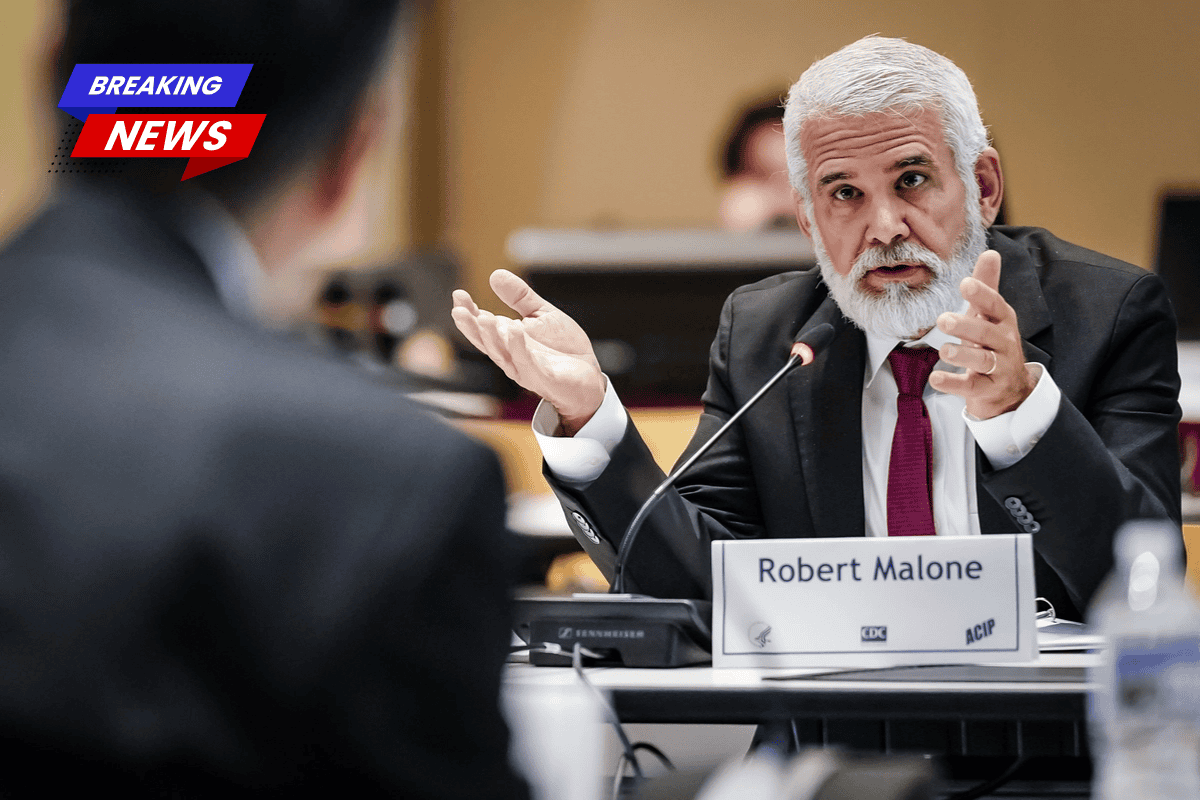
A major development has taken place in the US public health space, as Robert Malone announced that he will no longer advise government officials on vaccines. His decision comes after months of controversy, legal challenges, and growing tensions within the health system.
Why Robert Malone decided to step down
Dr. Robert Malone confirmed on March 25 that he is stepping away from his advisory role. He was serving as vice chair of the Advisory Committee on Immunization Practices, which provides guidance on vaccines to the Centers for Disease Control and Prevention.
Malone said he had already been thinking about leaving for some time. One of the main reasons was the constant criticism from healthcare groups, especially after the committee made decisions related to COVID-19 vaccine recommendations. He also expressed frustration over what he described as a lack of respect for the work done by committee members.
Legal issues behind the controversy
The situation became more complicated after a federal judge ruled that the appointments made by Robert F. Kennedy Jr. were not done using proper procedures. As a result, the judge blocked the newly formed committee from making changes to vaccine guidelines.
This ruling directly affected Malone and other members, as it questioned their positions and halted their work. Malone strongly disagreed with the decision, pointing out his long experience in vaccine research and development.
Concerns about working conditions
Another important reason behind Malone’s decision was dissatisfaction with how committee members were treated. He mentioned that members were not paid for their work and still faced criticism and what he called “chronic disrespect.”
He also referred to communication issues within the Department of Health and Human Services, suggesting that members were not properly informed about important decisions regarding the future of the committee.
Shift in focus to other work
After stepping away from his advisory role, Malone plans to focus on other responsibilities. He said he will continue working with the State Department, particularly on matters related to biological warfare agreements.
This shift shows that while he is leaving the vaccine advisory space, he will still remain active in scientific and policy-related work.
Reactions from the medical community
Malone’s departure has received mixed reactions. Some experts have supported his work and praised his knowledge and contribution. For example, Dr. Wafik El-Deiry from Brown University described Malone as highly knowledgeable, well-prepared, and respectful in discussions.
At the same time, Malone has faced criticism in the past, especially for his views on certain vaccine policies. This divide reflects the broader disagreements within the medical and scientific community on public health decisions.
What happens next
The future of the advisory committee remains uncertain. The government has not yet confirmed whether it will appeal the court ruling or restructure the committee again.
Officials are still discussing their next steps, and no final decision has been announced. This means that changes to vaccine policies and recommendations may remain on hold for now.