
The Department of Justice (DOJ) has taken a strong step by revoking U.S. citizenship in two major cases, showing a stricter approach towards immigration enforcement. These actions highlight a growing focus on removing citizenship from individuals who obtained it through fraud or by hiding criminal activity.
DOJ Revokes Citizenship in High-Profile Cases
In one case, a federal court removed the citizenship of Vladimir Volgaev, a Ukrainian-born individual who became a U.S. citizen in 2016. Investigations showed that he was involved in smuggling more than 1,000 firearm components to countries like Ukraine and Italy. Authorities also found that he committed fraud related to federal housing benefits by hiding his income.
Even though he was convicted in 2020, the court ruled that his criminal actions before becoming a citizen meant he did not meet the requirement of “good moral character,” which is necessary for naturalisation.
In another case, the U.S. District Court for the Southern District of Florida revoked the citizenship of Mirelys Cabrera Diaz, who became a citizen in 2017. She had earlier pleaded guilty to a healthcare fraud scheme that caused losses of more than $6 million. Prosecutors showed that she was involved in illegal activities even before becoming a citizen.
Citizenship Called a “Sacred Privilege”
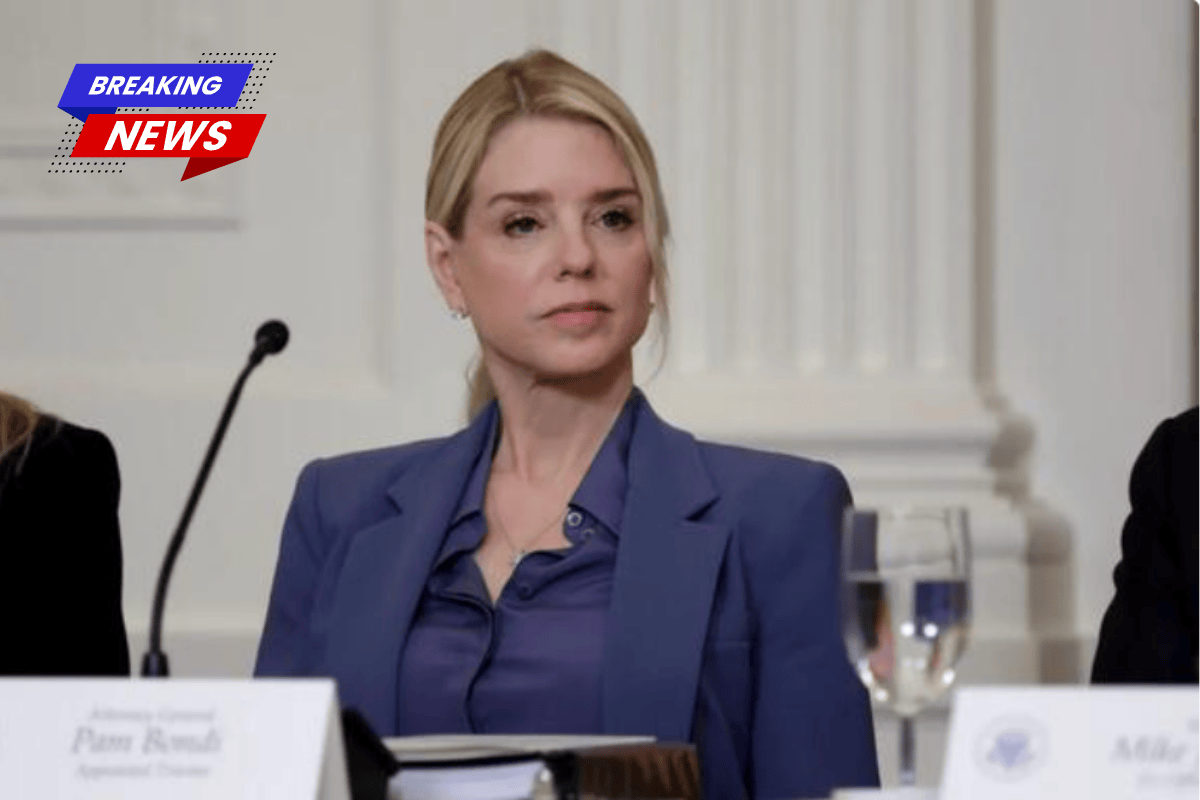
Attorney General Pamela Bondi described U.S. citizenship as a “sacred privilege.” She stated that it should not be given to people who lie or hide serious crimes during the immigration process.
According to her, these actions are part of a larger effort to protect the integrity of the system and ensure that only eligible individuals receive citizenship.
A Major Policy Shift
The DOJ’s recent actions are not isolated cases. They are part of a broader policy change aimed at increasing the number of denaturalisation cases.
Government agencies are now being guided to review and refer around 100 to 200 cases every month. This is a big jump compared to earlier years, when fewer than 15 cases were typically filed annually.
This shift shows a more aggressive approach by the government towards identifying and acting against fraud in the naturalisation process.
Support From Lawmakers and Ongoing Efforts
Some lawmakers have supported this stricter approach. New proposals are being discussed to make it easier to remove citizenship from individuals linked to serious crimes such as terrorism, organised crime, or violent offences.
At the same time, groups like the National Immigration Forum have pointed out that the legal standard for revoking citizenship is still very high. Courts require strong proof before taking such a step.
The government has also launched efforts like “Operation Twin Shield,” which involves reviewing thousands of past immigration cases to check for fraud or hidden criminal activity.
Expanding the Crackdown
The crackdown is not limited to major crimes. The DOJ has also filed a separate case against Alec Nasreddine Kassir for alleged marriage fraud. This suggests that authorities are looking at different types of misuse within the immigration system, not just violent or large-scale crimes.






