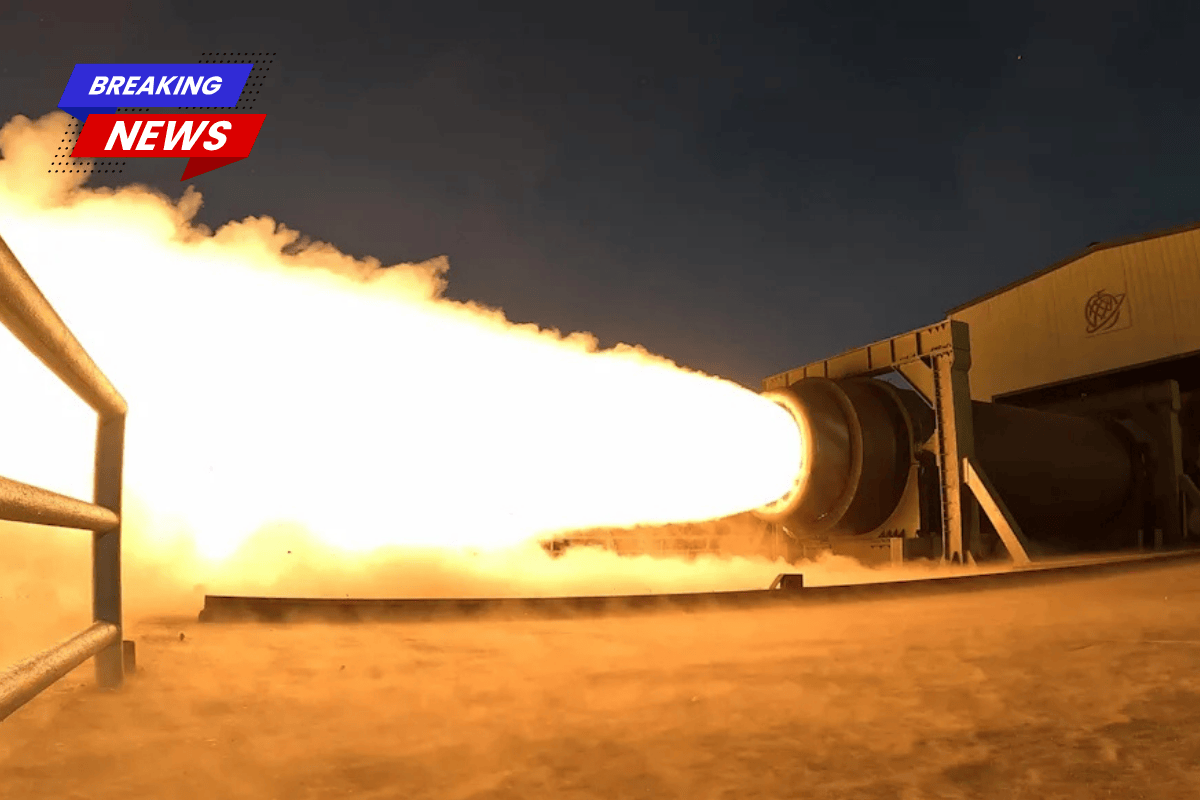
Kim Jong Un, the North Korean leader, observed a test of an upgraded solid-fuel engine that could be used for missiles capable of reaching the U.S. mainland, according to state media reports on Sunday. Kim described the test as a significant development in strengthening his country’s strategic military arsenal.
While the test aligns with Kim’s goal of developing more agile and hard-to-detect missiles targeting the U.S. and its allies, some experts believe North Korea’s claims might be exaggerated.
Solid-Fuel Engines Offer Mobility and Concealment
Solid-fuel engines are easier to move and conceal than liquid-fuel missiles, which must be fueled before launch and are more vulnerable to detection. North Korea’s claim that this new engine will enhance its long-range missile capabilities has sparked speculation about its true capabilities.
The Korean Central News Agency (KCNA) reported that the engine, made from composite carbon fiber material, showed a maximum thrust of 2,500 kilonewtons—up from 1,970 kilonewtons in a previous solid-fuel engine test conducted in September 2025.
The agency did not specify when or where the test occurred, and the event was not covered by independent reporters. A photo released by North Korea showed a large jet of flame coming from the missile’s engine during the test.
Part of North Korea’s Arms Build-Up
The test is part of North Korea’s five-year arms build-up aimed at improving its strategic strike capabilities, including nuclear-capable missiles. Kim claimed the latest engine test was “of great significance” in strengthening the country’s strategic military muscle.
However, some experts believe that North Korea’s report could be a “bluff”, as key details, such as the engine’s total combustion time, were not disclosed.
Delayed or Improved Engine Development?
Some analysts suggest that North Korea’s solid-fuel engine program might be facing delays, or the country could be working on developing a better engine, potentially with Russian assistance. Russia and North Korea have been strengthening their ties, with North Korea sending troops and weapons to support Russia’s war in Ukraine.
In the past, North Korea has test-fired various intercontinental ballistic missiles (ICBMs) capable of reaching the U.S. mainland, but the country’s claims about these tests have often been met with skepticism from foreign experts.
For example, in 2024, North Korea claimed to have successfully launched a multiwarhead missile, but South Korea dismissed the claim as a deception to cover up a failed launch.
Challenges in Developing a Functional ICBM
Some experts believe that North Korea still faces significant technological hurdles in developing a functioning ICBM. One of the biggest challenges is ensuring that the missile’s warheads survive the harsh conditions of re-entry into the Earth’s atmosphere. However, other experts argue that the country has made significant progress in its nuclear and missile programs over the years.
Solid-Fuel Engine Enhancements and Military Strategy
Experts suggest that the development of more powerful solid-fuel engines would allow North Korea to build smaller ICBMs that can be launched from submarines or mobile trucks, making them harder to detect. Some also believe that North Korea’s push to increase the engine’s power is aimed at placing multiple warheads on a single missile to improve the chances of breaking through U.S. missile defense systems.
North Korea’s Growing Nuclear Arsenal
Since the collapse of high-stakes diplomacy between Kim and U.S. President Donald Trump in 2019, North Korea has pushed hard to expand its nuclear arsenal.
In a February Workers’ Party congress, Kim left the door open for dialogue with the U.S., but he insisted that Washington must drop its demands for North Korea’s nuclear disarmament as a condition for talks.