
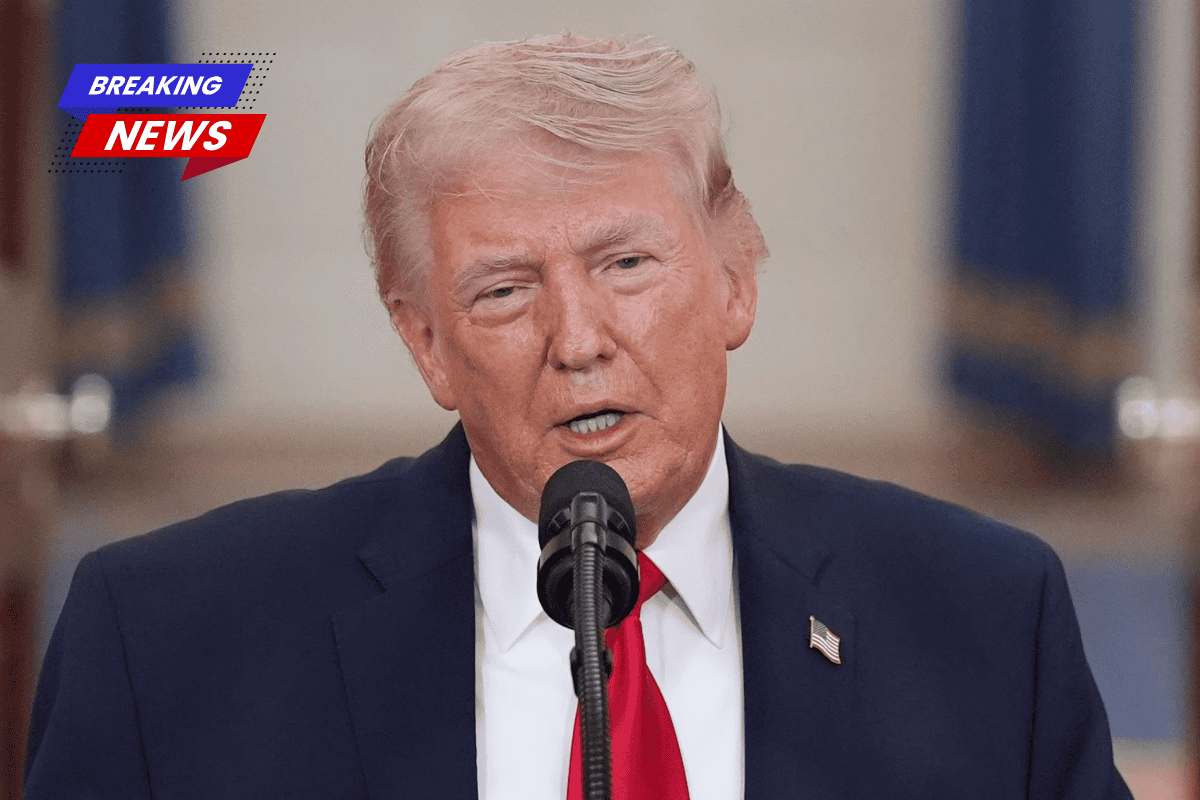
President Donald Trump issued a dire warning on Sunday, stating that if no peace deal is reached with Iran in the next 48 hours, the United States would “blow up the entire country.” This threat came in response to a question from ABC News’ senior political correspondent Rachel Scott about his previously stated timeline of two to three weeks for a deal.
Concerns Over Civilian Infrastructure in Iran
Trump’s comments raised concerns about the potential targeting of civilian infrastructure in Iran and the consequences such actions could have. He emphasized that Iran had already been “decimated” and that things would only worsen for the country moving forward.
“It should be days, not weeks,” Trump said, adding that Iran “has been decimated.” He continued, “Every day they’re gonna have to build more bridges, and they’re gonna have to build more power plants and more everything else.”
Trump Issues Ultimatum on the Strait of Hormuz
In a social media post, President Trump gave Iran an ultimatum: either open the Strait of Hormuz or make peace within 48 hours, or face the consequences. The strait is a critical maritime passage for oil and trade.
“If it happens, it happens. And if it doesn’t, we’re blowing up the whole country,” Trump said, referring to the planned destruction of infrastructure in Iran. He specified that if Iran failed to comply, it would be “bridge day and power plant day” for the country.
Trump’s Previous Ultimatums and Negotiations
This is not the first time Trump has issued an ultimatum to Iran. On March 26, Trump extended the deadline for Iran to open the Strait of Hormuz, citing progress in peace talks. The United States had sent Iran a 15-point proposal for ending the conflict, mediated by the Pakistani government.
Trump claimed that Iran had agreed to allow 10 oil tankers operating under Pakistan’s flag to pass through the strait, interpreting this gesture as a sign of cooperation in the negotiations.
Iranian Response to Trump’s Threats
Iranian officials, however, have rejected the U.S. proposals and have taken a firm stance on the Strait of Hormuz. Iranian Foreign Minister Abbas Araghchi stated that Iran’s power lies in controlling the Hormuz Strait. Iran has also accused the U.S. and Israel of being “natural enemies” and has refused to let ships from these countries pass through the strait.
In response to Trump’s threats, Mohammad-Bagher Ghalibaf, the Speaker of the Iranian Parliament, accused the U.S. of dragging the region into a “living hell” and warned against pursuing what he called “war crimes.”
Trump Pushes Back on Characterization of His Statements
Later, Trump spoke with Rachel Scott and clarified his position. He noted that there could still be a deal, but it was uncertain. “I don’t know. I have no idea what these people, they’re getting the s— beat out of them, and that’s, that’s all I can tell you,” Trump said. He also added that “very little” would be off-limits if no deal is made.
Iran’s Rejection of U.S. Proposal
Iran has publicly rejected the U.S. proposal, with Araghchi reaffirming the country’s stance on the Strait of Hormuz. Iran claims that the strait remains open to “non-hostile” ships, but closed to those from countries it considers enemies, including the U.S. and Israel.
Escalating Tensions and Threats of War
As tensions escalate, President Trump declared that the war in Iran was “nearing completion,” promising to hit Iran “extremely hard” over the next two to three weeks. He also stated that the U.S. would bring Iran “back to the stone ages where they belong.”
In response, Araghchi posted on social media, highlighting the vital importance of oil and gas in the region and questioning whether the U.S. truly wanted to “turn back the clock.”






