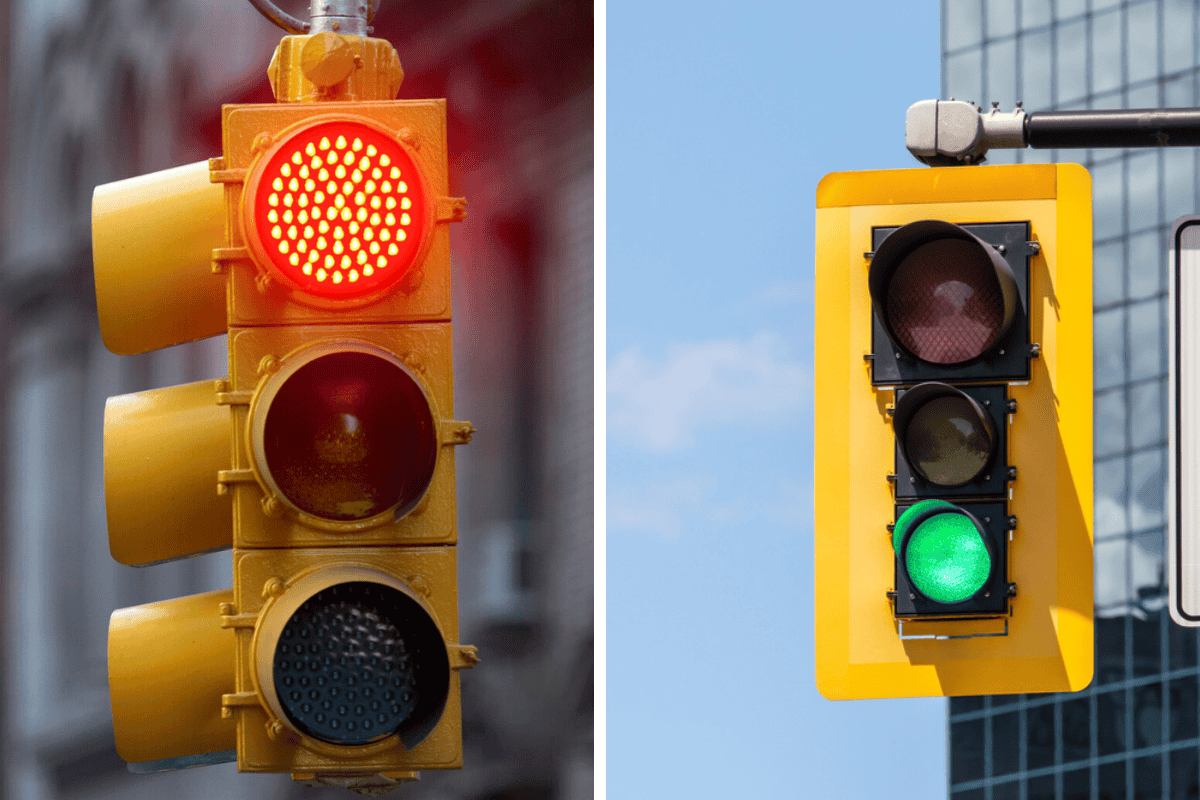
Minnesota allows right turns on red after a complete stop, with no major 2026 updates altering this core rule. The law, under Minnesota Statutes Section 169.06, requires drivers to yield to pedestrians, cyclists, and oncoming traffic unless a “No Turn on Red” sign prohibits it.
Core Right-Turn-on-Red Rules
Drivers facing a steady red light must stop fully at the marked stop line, crosswalk, or intersection edge. Once stopped, proceed right only if safe, yielding right-of-way to all pedestrians (even in unmarked crosswalks), cyclists, and vehicles from the left posing an immediate hazard.
This applies statewide unless signage states otherwise; red arrows demand a full stop until the green arrow appears, overriding right-on-red permission.
No waiting period follows the stop—turn immediately if clear. Left turns on red are permitted only from one-way streets onto another one-way street (leftward), after stopping and yielding. Violations like “rolling stops” trigger petty misdemeanor fines up to $300, plus points on your license.
2026 Legislative Landscape
As of April 2026, Minnesota’s 2025-2026 legislative session yielded no sweeping right-on-red reforms. A minor House bill (HF 2847) proposed enhanced signage for school zones but stalled; no bans or restrictions passed. MnDOT’s 2026 traffic manual reaffirms Section 169.06 without changes, emphasizing pedestrian priority amid rising urban bike lanes.
Nationally, debates echo post-1974 energy crisis origins of right-on-red (to save fuel), but Minnesota resists full bans seen in New York City experiments.
Safety Data and Risks
Right-on-red crashes claim ~25% of intersection fatalities in Minnesota, often from failure to yield to pedestrians (50% of cases). Common errors include checking only leftward traffic, ignoring right-side walkers, or accelerating into blind spots.
A 2025 MnDOT study logged 1,200+ violations yearly in the Twin Cities, linking them to 15% higher side-impact rates. Yielding to protected left turns from opposing lanes is advisory but critical on multi-lane roads like I-94.
Defensive tips: Scan 360 degrees (left traffic, right pedestrians, rearview), creep forward post-stop if needed, and use mirrors for cyclists. Winter conditions amplify risks—ice demands extra caution.
Enforcement and Penalties
State Patrol prioritizes high-crash intersections via cameras and radar. A 2026 trooper advisory stresses treating unmarked corners as crosswalks, fining failures at $138 base plus surcharges. In accidents, failure to stop/yield presumes negligence under comparative fault laws; insurers scrutinize dashcams/police reports. Commercial drivers face CDL points, potential disqualification after 15 in three years.
Exceptions and Special Cases
- No Turn on Red signs: Absolute—wait for green, common near schools/hospitals.
- Red arrows: No turns permitted until green arrow.
- One-way lefts: Legal if both streets one-way, traffic flows leftward.
- Roundabouts: Right-on-red doesn’t apply; yield fully.
- Emergency vehicles: Yield immediately if lights/sirens approach.
Multi-lane turns stay in the rightmost lane unless signed otherwise; wide swings risk tickets.
Comparisons with Neighboring States
| State | Right on Red? | Key Differences | Pedestrian Priority |
|---|---|---|---|
| Minnesota | Yes, after stop | Yields mandatory; one-way left OK | Highest |
| Wisconsin | Yes | Similar; stricter arrow rules | High |
| North Dakota | Yes | Bans in some cities | Medium |
| Iowa | Yes | No one-way lefts | Medium |
| New York | No (most) | Full ban since 2024 expansion | N/A |
Minnesota’s rules align with 48 states but emphasize yielding more than laxer neighbors.
Driver Education and Best Practices
Minnesota DPS driver’s manual (2026 ed.) dedicates Chapter 5 to intersections: Stop, identify hazards (peds first), signal 100 feet prior, proceed cautiously. Apps like Waze flag no-turn zones; dashcams prove compliance in disputes. Teens in ed classes learn via simulations—90% pass rates correlate with rule mastery.
For cyclists/motorcyclists: Same yields apply; drivers must scan blind spots.
Future Outlook
With 2027 sessions looming, activists push camera mandates at 500 risky spots, potentially adding automated tickets. Autonomous vehicles may reshape rules—tests on Hwy 52 prioritize virtual yields. Until then, vigilance rules: “Stop fully, look fully, go safely.”
SOURCES:
- https://www.nelsonpersonalinjury.com/right-on-red-laws-in-minnesota/
- https://www.thefmextra.com/red-turn-arrow-correction/