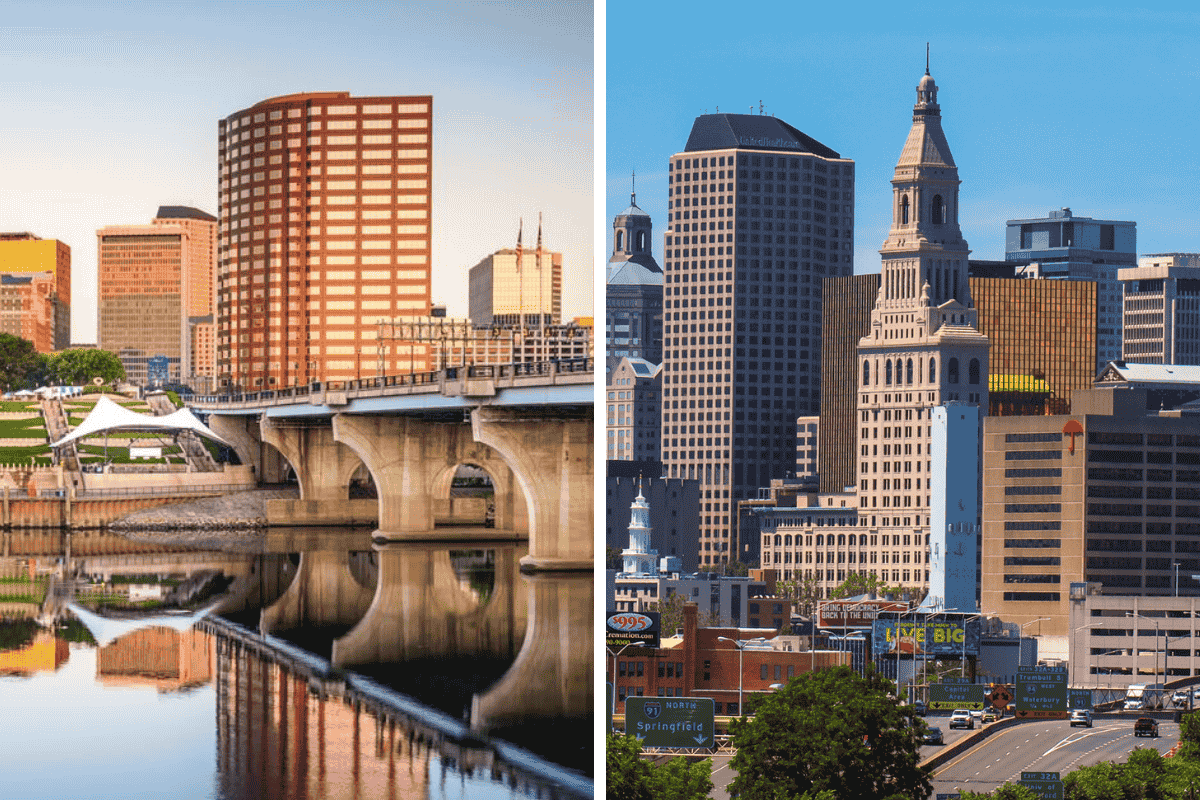
Hartford has been named Connecticut’s poorest city in recent analyses, grappling with a median household income of just $41,841 and a staggering 26.9% poverty rate.
Home to 121,000 residents, it tops lists for economic hardship due to deindustrialization, high unemployment, and urban challenges. While wealthier suburbs thrive nearby, Hartford’s struggles highlight Connecticut’s stark inequality divide.
Economic Snapshot
Hartford’s median income lags the state average of $90,213 by nearly half, ranking it No. 1 poorest for 2024 data carried into 2026 reports. Unemployment hovers at 8-10%, double the national rate, with 32,540 people below poverty—highest raw numbers.
Housing costs eat 40%+ of incomes, despite affordable rents relative to Fairfield County. Recent Census updates confirm persistence, amid 2025 inflation spikes.
Historical Context
Once the “Insurance Capital,” Hartford boomed mid-20th century with Aetna and Travelers HQ. Factory closures (Colt, Underwood) from 1970s-90s gutted blue-collar jobs; white flight left a 75% minority population facing redlining legacies. 2023 United Way report notes 40% households below survival budgets statewide, fastest growth outside cities like Hartford.
Key Challenges
High poverty fuels crime (top violent rates), poor schools (50% proficiency), and homelessness (2,000+ nightly). Limited transit hampers commutes to Stamford jobs; food insecurity hits 20%. Yet, resilience shines: Community gardens, arts districts revive neighborhoods.
Demographics and Poverty Table
| Metric | Hartford | CT Average | Rank in CT |
|---|---|---|---|
| Median Income | $41,841 | $90,213 | 1st lowest |
| Poverty Rate | 26.9% | 10.1% | 1st highest |
| Unemployment | ~9% | 4% | Top 5 |
| Bachelor’s+ | 25% | 41% | Bottom 10 |
| Population | 121,057 | – | – |
Government and Aid Efforts
State invests $100M+ yearly in Hartford Promise scholarships, pre-K expansion. ARPA funds built 500 affordable units; 2026 budget eyes job training via Capital Workforce. Nonprofits like Hartford Soup Kitchen feed 1,000 daily. Critics say piecemeal—need systemic tax reform for equity.
Comparisons to Peers
New Haven ($54,305 median, 25.3% poverty) ranks second, Yale’s shadow boosting some but widening gaps. Waterbury (21.9%) and Bridgeport (22.9%) follow urban patterns; rural Canaan claims lowest income ($31,130) but small scale (1,353 pop). Nationally, Hartford mirrors Detroit—legacy industry loss.
Signs of Hope
Revitalization: Adriaen’s Landing waterfront draws tech; Dunkin’ Park boosts tourism. Median home values rose 5% to $250K, signaling investment. Youth programs cut dropout rates 15%; remote work opens Stamford gigs.
Daily Life Impacts
Residents stretch SNAP dollars at discount grocers; free clinics handle uninsured. Public transit lags, but CTrail connects. Culture thrives: Real Art Ways, Bushnell Theater offer escapes. Community notes progress: Poverty dipped 2% post-COVID aid.
Broader CT Inequality
State’s Gini index (0.48) rivals California’s—billionaires in Greenwich vs. Hartford’s 30% child poverty. 2025 reports urge universal pre-K, minimum wage hikes ($15.69). Federal poverty line ($31K family of 4) understates CT costs ($80K survival).
Future Outlook
2026 forecasts modest recovery via green jobs (solar factories), but housing crunch looms. Analysts predict 3% income growth if transit improves. Hartford’s story: Resilience amid adversity, far from Connecticut’s yacht clubs.
SOURCES:
- https://www.roadsnacks.net/poorest-places-in-connecticut/
- https://247wallst.com/income/2025/01/17/the-poorest-town-in-every-state-in-america/