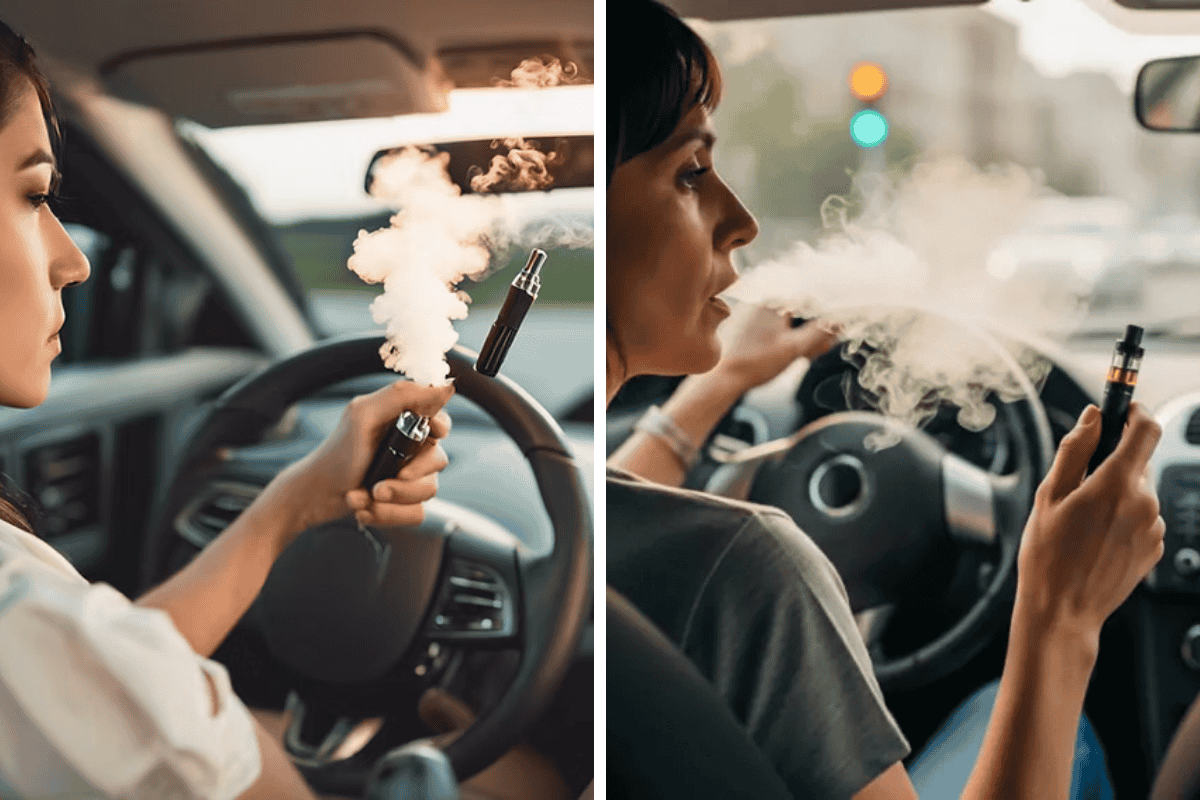
Vaping while driving in Oregon is not outright illegal for adults without minors present, but specific statutes and distracted driving rules create clear restrictions and risks. Oregon Revised Statutes (ORS) 811.193 explicitly bans smoking, aerosolizing, or vaporizing in a motor vehicle when a child under 18 is present, classifying it as a traffic violation enforceable during other stops.
For solo adult drivers using nicotine vapes, no direct prohibition exists, yet actions impairing safe operation fall under broader distracted driving laws (ORS 811.507). This 2026 guide details the nuances, penalties, and compliance tips.
Statewide Ban: Vaping with Minors in the Vehicle
ORS 811.193 makes it unlawful to use an “inhalant delivery system”—covering all e-cigarettes, vape pens, and mods—in any motor vehicle with a person under 18, regardless of window position or ventilation. “Smoking” includes lighted combustibles, while “vaporizing” targets aerosolized nicotine, cannabinoids, or other substances. As a secondary offense, officers cannot initiate stops solely for this but can cite during traffic enforcement like speeding.
Penalties escalate: Class D violation ($250 max fine) for first offenses; Class C ($500 max) for repeats. Enforcement surged post-2025 updates amid child welfare priorities, with Talent PD highlighting zero-tolerance in public advisories. Exceptions? None—applies to drivers and passengers alike.
Adult Vaping: Distracted Driving Risks
Adults 21+ vaping nicotine alone or with peers face no explicit ban, aligning with most U.S. states lacking federal prohibitions. However, ORS 811.507 targets any handheld distraction diverting attention from the road, including handling vapes, refilling, or exhaling clouds obstructing visibility. Studies cited in 2025 reports equate vaping distraction to 12 seconds off-task—over 200 feet at highway speeds.
Marijuana vaping triggers DUII charges under zero-tolerance rules, even without impairment signs, per ORS 813.010. Visibility haze from vapor in enclosed cars strengthens probable cause for unsafe operation stops.
Additional Restrictions and Contexts
State vehicles ban all vaping outright (OAR 125-155-0510), as do workplaces under the Indoor Clean Air Act. Rental cars, rideshares, and taxis often prohibit via policy, risking fees or bans. No blade length or device-specific limits apply beyond child protections.
Enforcement Trends and Penalties
Fines for distractions start at $130 (primary offense), scaling to $1,000+ with jail for repeats or injury crashes. Insurance hikes follow convictions, with 2026 data showing 15% premium jumps post-vaping citations. Oregon’s hands-free cell law (HB 3093) sets precedent, viewing vapes similarly. Rural areas enforce less stringently than Portland metro, but dash cams aid defenses.
Best Practices for Oregon Drivers
Pull over safely to vape—designated rest areas minimize risks. Use hands-free mods sparingly, ensure ventilation, and never with kids or cannabis. Track updates via Oregon DMV manuals emphasizing “eyes on road, hands on wheel.” If cited, contest via evidence showing no impairment; courts often dismiss marginal cases.
Prioritize safety: Oregon’s humid climate amplifies vapor persistence, heightening obstruction claims. Apps like Oregon eCFR monitor statute changes. Vets and advocacy groups push education over punishment, but compliance avoids hassle.
SOURCES:
- https://oregon.public.law/statutes/ors_811.193
- https://ecigator.com/guide/oregon-vaping-driving-laws/