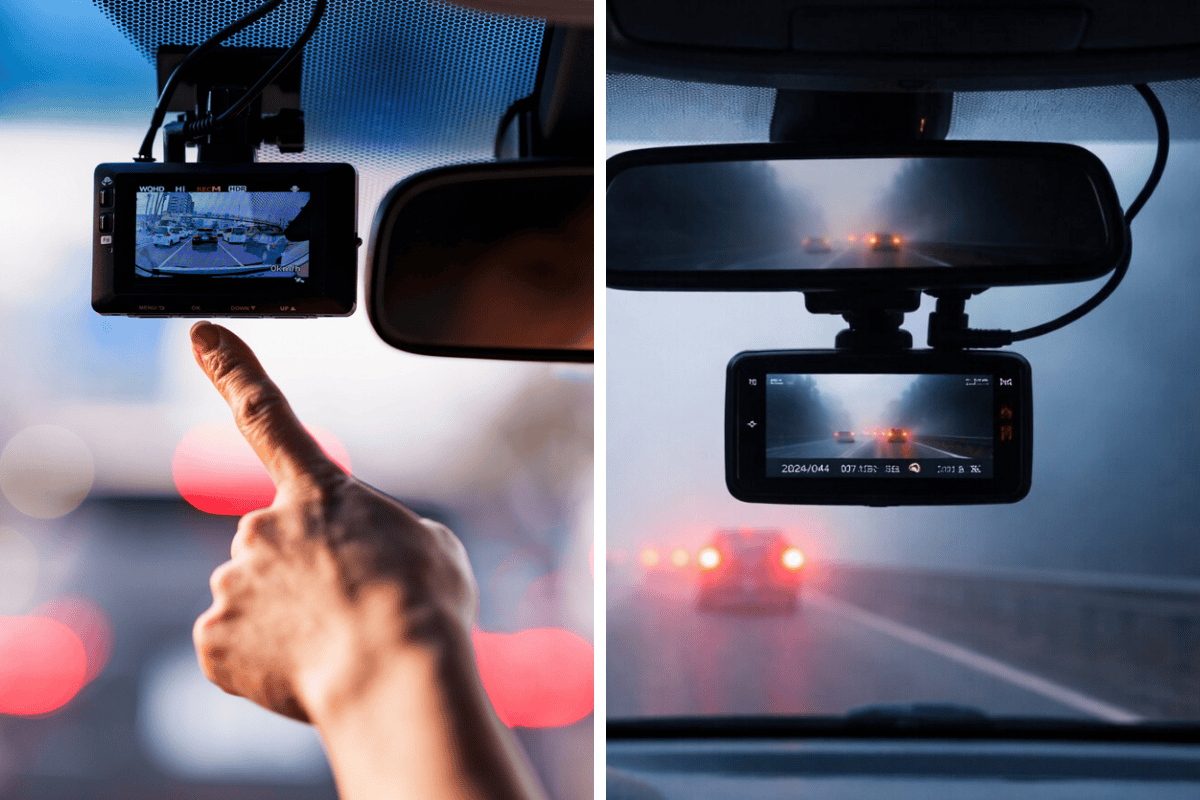
Dash cams are fully legal in Kentucky with no specific statutes prohibiting their use, mounting, or operation, making them a popular tool for drivers seeking evidence in accidents or insurance claims. However, general traffic and privacy laws apply, focusing on safe installation and recording consent to ensure compliance and road safety.
Legality and Ownership
Kentucky has no bans or restrictions on owning, using, or activating dash cams in private vehicles, commercial trucks, or motorcycles. Unlike some states with blade-length limits or windshield tint rules, KY treats dash cams as standard accessories. Front-facing, rear-facing, and interior cams are permitted, including those with night vision, GPS, or loop recording.
Police interactions: Officers cannot demand footage without a warrant or subpoena, but you may voluntarily share it during stops or crashes. Dash cam evidence is admissible in court for proving fault, speed, or witness details.
Mounting and Placement Rules
The primary regulation stems from KRS 189.110, which prohibits objects obstructing the driver’s windshield view or interfering with vehicle operation. Dash cams must be mounted safely:
Best practices: Use OEM-style mounts or low-profile devices. Suction cups are common but ensure they don’t peel in heat. Commercial drivers follow FMCSA guidelines—no extra rules beyond vision safety. Violations: Could lead to careless driving citations ($20-$100 fine).
Audio and Video Recording Laws
Kentucky is a one-party consent state under KRS Chapter 526 (eavesdropping/interception). Audio recording is legal if at least one party consents—the driver qualifies, covering passengers and public road interactions.
- Video: Always legal on public roads (no expectation of privacy).
- Audio caveats: Inform passengers if possible to avoid disputes; interior mics capture conversations ethically.
- Private property: Seek permission; malls/parking lots may prohibit.
No laws require signage or notifications for dash cams.
Usage in Accidents and Insurance
Dash cams shine in Kentucky’s no-fault system (PIP for minor injuries), providing irrefutable proof of fault to overcome thresholds for lawsuits. Benefits:
- Captures license plates, signals, road signs.
- Supports claims against hit-and-runs.
- Insurers like State Farm accept footage readily.
Tips:
- Secure footage post-crash (loop overwrites).
- Timestamp/GPS for authenticity.
- Consult attorney before sharing—could reveal your fault.
If the at-fault driver has the cam, subpoena via discovery.
Commercial and Special Vehicles
Trucking fleets use dash cams under federal ELD mandates, with KY mirroring FMCSA—no state additions. Rideshare (Uber/Lyft): Company policies may require; notify riders. Police pursuits: Do not interfere.
Potential Penalties and Enforcement
Rarely enforced unless obstruction causes incident:
- Citation: $10-50 for minor view block (KRS 189.110).
- Audio misuse: Felony if surreptitious private recording (unlikely for dash cams).
- No data storage mandates or hacking protections specified.
Best Practices for KY Drivers
- Choose compact models (e.g., Garmin, Nextbase) for discreet mounting.
- Test field of view pre-drive.
- Backup footage to cloud/apps.
- Update firmware for compliance.
- Local checks: Rare ordinances in Louisville/Lexington—verify city codes.
SOURCES:
- https://www.cessnageorge.com/using-dash-cam-footage-for-car-accident-claims-in-kentucky/
- https://www.kentuckycourage.com/blog/using-dash-cam-footage-for-car-accident-claims-in-kentucky/