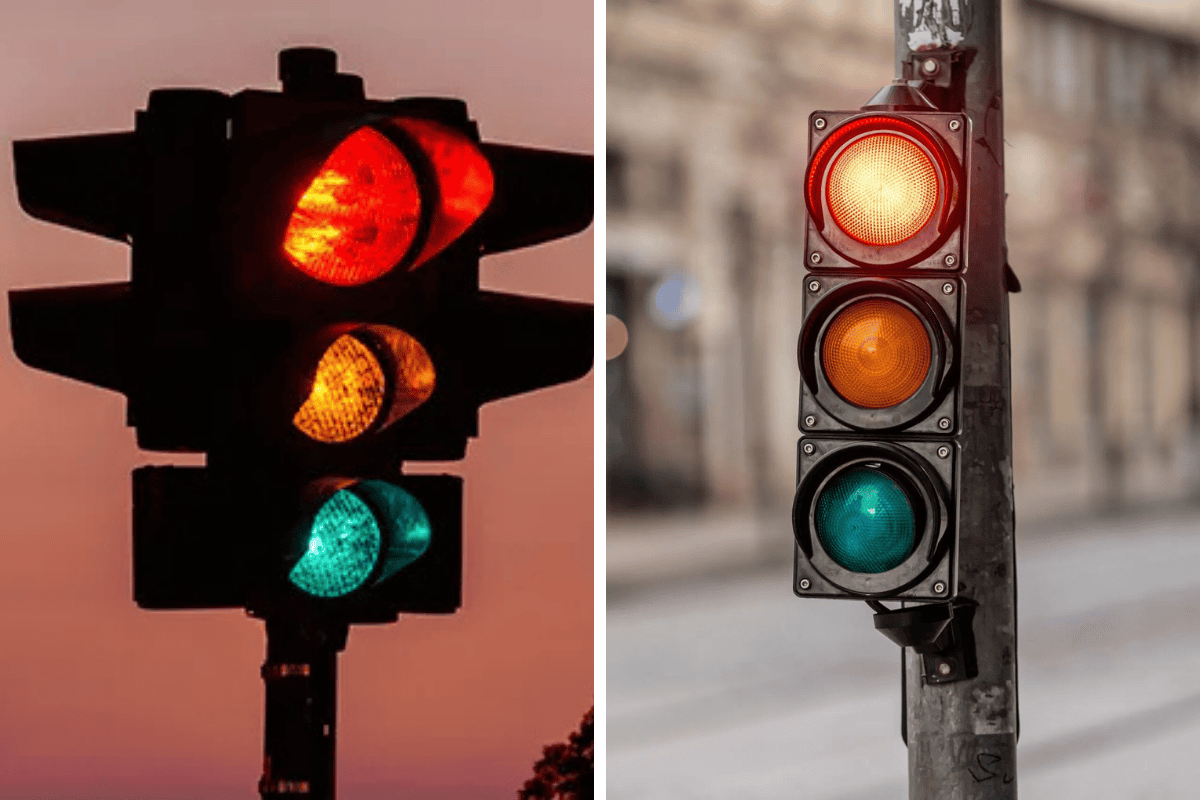
In Oklahoma, turning right on a red light is generally allowed as long as the driver follows specific safety steps and no sign prohibits it at that intersection. State law does not ban right turns on red, and Oklahoma continues to treat such turns as legal under the 2026 traffic‑rule framework, consistent with national norms.
The key is not whether the turn is permitted, but how it is executed: drivers must stop, yield, and respect posted signs or traffic‑signal patterns.
What Oklahoma law allows
Oklahoma’s traffic‑signal statute (Title 47, Section 11‑202) states that when a vehicle faces a steady red signal, it may cautiously enter the intersection to turn right—or, from a one‑way street, left—after coming to a full stop.
The law requires drivers to yield to pedestrians lawfully in adjacent crosswalks and to other traffic that has the right‑of‑way in the intersection before completing the turn. In practice, this means drivers can legally turn right on red unless a sign explicitly says “No Turn on Red” or similar language at that specific light.
Oklahoma also specifies that municipal authorities may not ban a right‑on‑red turn unless they erect clear, uniform signs following the state’s design standards. The state’s traffic‑sign regulations include a “No Turn on Red” sign (R10‑11b) and related variants, which local agencies can place where traffic volume, pedestrian crossings, or safety concerns make such turns riskier.
If one of those signs is present, drivers must treat the red as a full stop and wait for a green, just as they would for a prohibited turn.
How to legally execute a right‑on‑red in 2026
To stay within the legal lines in Oklahoma, drivers should follow a three‑step pattern at every red light where they plan to turn right. First, come to a complete stop behind the stop line or crosswalk, ensuring the vehicle is fully motionless.
Second, check for pedestrians and traffic, including crosswalk users, oncoming vehicles, and cyclists, and wait until the path is clear. Third, turn only when safe, moving smoothly into the lane without blocking cross traffic or encroaching on the left‑hand side of the road, as Oklahoma also requires right turns to be made as close as practicable to the right‑hand curb.
Deviating from this sequence can trigger a traffic violation even though right‑on‑red itself is legal. For example, rolling through without stopping, failing to yield to a pedestrian, or turning right at a red‑arrow left‑turn signal can result in a moving‑violation ticket under Oklahoma’s red‑light and failure‑to‑yield statutes.
These infractions are usually classified as misdemeanors, with fines and possible points on the driver’s license, and repeated violations can lead to higher insurance premiums.
Local variations and safety debates
Some cities and traffic‑safety advocates in Oklahoma are examining whether to limit or ban right turns on red at particularly busy or pedestrian‑heavy intersections. The concern is that vehicles turning right on red increase the risk of collisions with walkers, cyclists, and cross‑traffic, especially where visibility is poor or traffic volumes are high.
As local governments consider such changes, they must still follow state‑signage rules and clearly post any “No Turn on Red” restrictions so drivers are not caught off‑guard.
For drivers, the practical takeaway in 2026 is simple: right‑on‑red is legal in Oklahoma if done with a full stop, proper yield, and no prohibitive sign. Always scan for signs when approaching a red light, use the crosswalks and pedestrian‑right‑of‑way as your guide, and treat the turn as a safety‑first maneuver rather than a time‑saving shortcut.
By following the state’s rules precisely, drivers can stay on the right side of the law while keeping Oklahoma intersections safer for everyone.
SOURCES:
- https://law.justia.com/codes/oklahoma/title-47/section-47-11-202/
- https://allowedhere.com/legality/right-turn-on-red/oklahoma/