
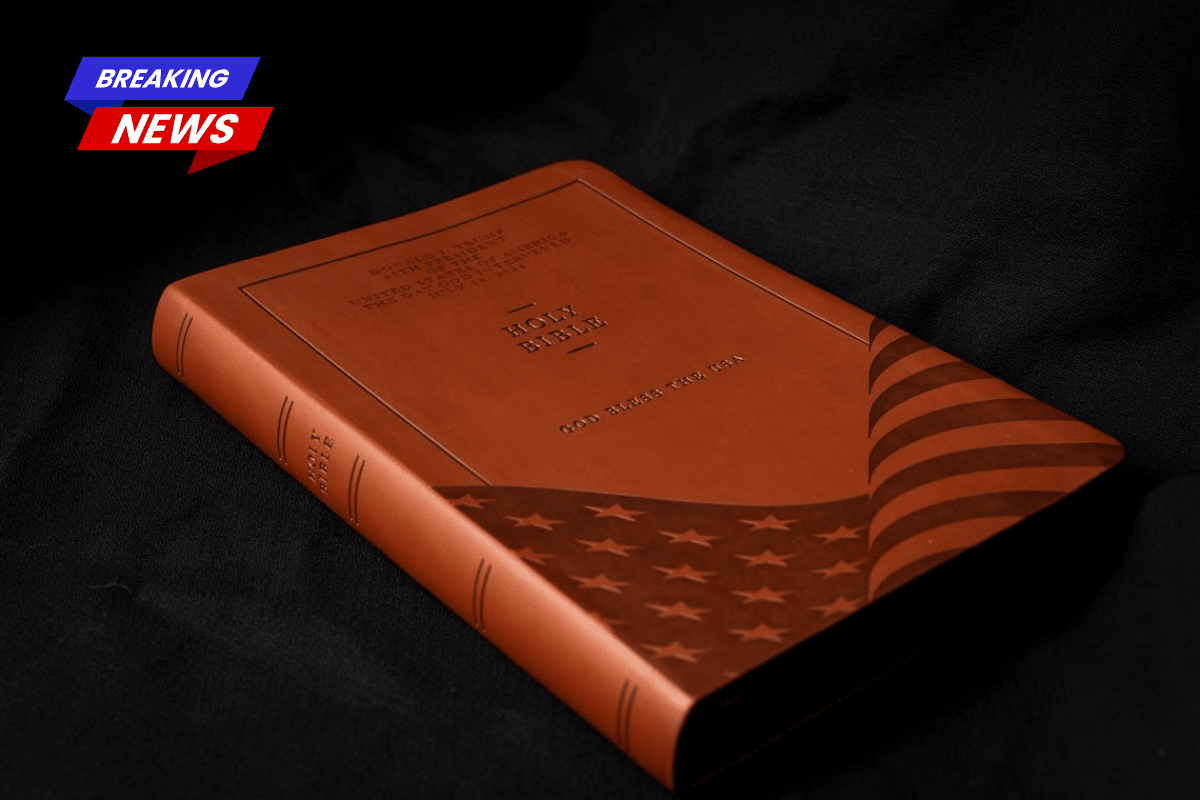
The reading of scripture by prominent figures, including President Donald Trump, has sparked both support and controversy in recent political and religious contexts. Trump’s participation in the “America Reads the Bible” marathon included reading a passage from the book of 2 Chronicles, a verse long associated with Christian nationalism and the idea of America as a Christian nation.
The 2 Chronicles Passage and Its Significance
The specific verse Trump read comes from the 7th chapter of 2 Chronicles, a book in the Hebrew Bible. The 14th verse has become a powerful rallying cry for those who believe that America was founded as a Christian nation and should uphold those values. The verse states:
“If my people, which are called by my name, shall humble themselves, and pray, and seek my face, and turn from their wicked ways; then will I hear from heaven, and will forgive their sin, and will heal their land.”
This scripture is often recited at National Day of Prayer events and has gained prominence in political speeches, with the belief that it speaks to America’s duty to return to God and repent for its wrongdoings.
Trump’s Reading and Religious Themes
During the Bible-reading marathon, Trump’s reading of the 2 Chronicles passage was particularly significant given his longstanding relationship with evangelical Christians, who have formed a vital part of his political base. This verse has been consistently used to emphasize the notion of a divine destiny for America, where the country must repent to restore its moral and spiritual standing.
The passage was also quoted by other political figures like President Dwight D. Eisenhower, who took office in 1953 with his hand on a Bible opened to the same scripture, and President Ronald Reagan, who referenced it during the 1984 National Day of Prayer. These moments reflect the historical use of scripture to promote national unity and divine favor.
Criticism of the Verse’s Use
While the passage resonates with many, particularly evangelical Christians, its use in modern political discourse has faced criticism. Critics argue that it is frequently taken out of context.
Brian Kaylor, a Baptist pastor and president of Word&Way, pointed out that the verse was originally a promise made to ancient Israel, not to the United States. He stressed that the verse was not intended to apply to contemporary political contexts, especially as it is used by some to promote a belief in a “Christian America.”
“It doesn’t really work to pull it out of context and apply it to whatever you want to,” Kaylor said, suggesting that the verse’s selective use has created a partisan and polarizing tone, particularly when combined with efforts to promote Christian nationalism in a diverse country.
Religious and Political Backdrop
The controversy surrounding the verse highlights the intersection of politics, religion, and national identity. Evangelical Christians have played a crucial role in shaping American politics, especially in the Republican Party, where their values often align with conservative policies.
Trump’s appeal to this group, marked by Christian symbols and rhetoric, is seen as a reflection of his understanding of the deep connection between religious faith and politics in America.
Many Republican figures, including former Arkansas Governor Mike Huckabee and religious leader David Barton, have also participated in the Bible-reading marathon, selecting passages that reflect their views on America’s biblical mandate, such as passages from Genesis and Nehemiah.
These figures continue to support the idea of America as a nation with a divinely ordained destiny, especially in relation to support for Israel, which remains a central theme among many evangelical groups.






