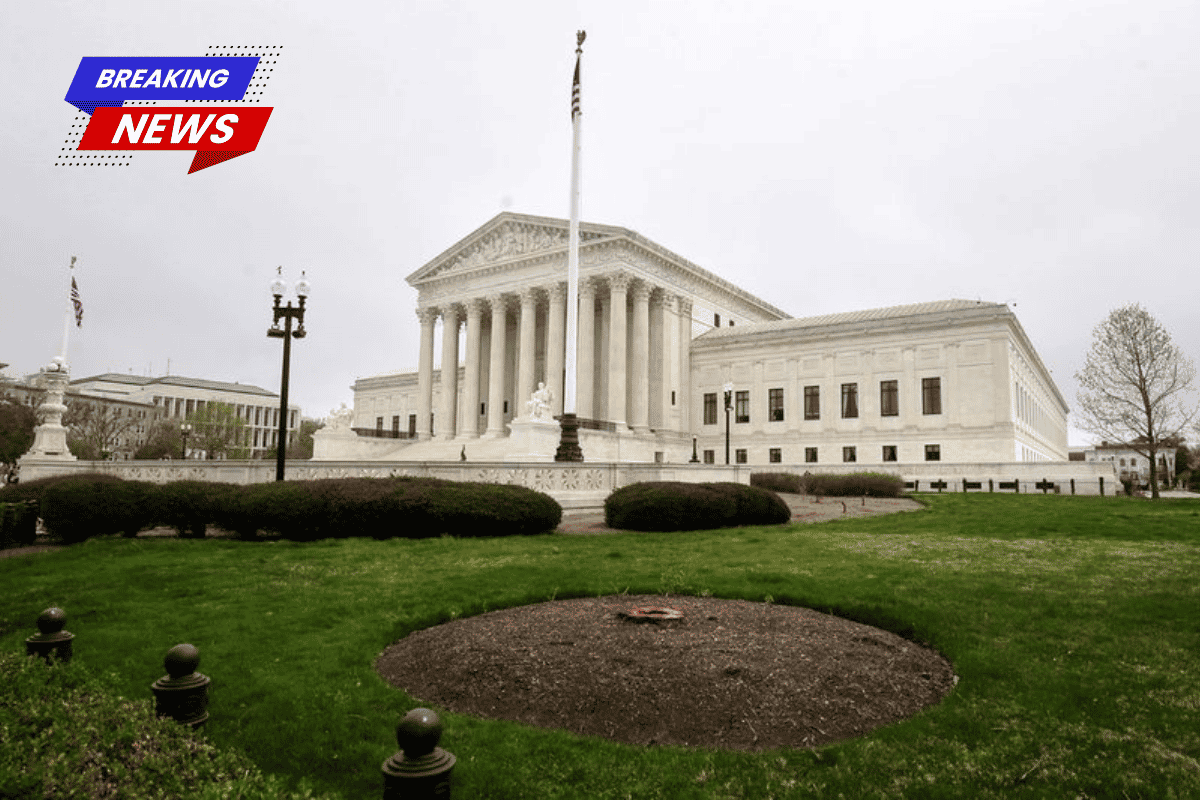
A major decision by the U.S. Supreme Court has sparked a nationwide debate after it weakened a key part of a historic civil rights law. The ruling could reshape how voting districts are drawn and may affect political representation in the coming years.
What Did the Supreme Court Decide?
In a 6–3 decision, the court struck down a congressional district in Louisiana that had a majority Black population. The district was represented by Cleo Fields.
Justice Samuel Alito, writing for the majority, said the district relied too heavily on race when it was created. The court ruled that this approach violated constitutional principles.
Chief Justice John Roberts had earlier described the district as unusually shaped, stretching across multiple regions of the state.
Impact on the Voting Rights Act
The ruling affects a key part of the Voting Rights Act of 1965, specifically Section 2. This section has long been used to challenge voting practices that weaken the political power of minority communities.
When the law was signed by Lyndon B. Johnson, it was seen as a major step toward equal voting rights. Now, critics say this decision weakens those protections.
Strong Reactions From Leaders
Justice Elena Kagan, in her dissent, warned that the ruling could make it harder for minority voters to protect their rights.
Former President Barack Obama also criticised the decision, saying it shows a shift away from ensuring equal participation in democracy.
Cleo Fields said the ruling could make it much more difficult for minority communities to challenge unfair district maps.
Political Divide Over the Decision
Reactions to the ruling have been sharply divided along party lines. The White House supported the decision, arguing that race should not determine how districts are drawn.
On the other hand, Democrats strongly opposed it. Suzan DelBene called the ruling harmful to voting rights and warned it could affect fair representation.
Possible Effects on Elections
Experts say the full impact of the decision may not be seen until 2028, as many election deadlines for 2026 have already passed.
However, states like Louisiana may need to redraw their maps soon to follow the new legal standard. Across the country, more districts could be changed, potentially affecting election outcomes.
Trump’s Response and Broader Context
Donald Trump welcomed the ruling, calling it a positive development. He has previously encouraged states to redraw district maps to improve Republican chances in elections.
The decision also comes after earlier rulings that allowed political parties more freedom in drawing district boundaries.
Why This Matters
This ruling could significantly change how voting districts are created in the United States. It raises important questions about balancing fairness, race, and political influence in elections.
Supporters say it ensures equality by removing race from decision-making, while critics argue it could weaken protections for minority voters.