
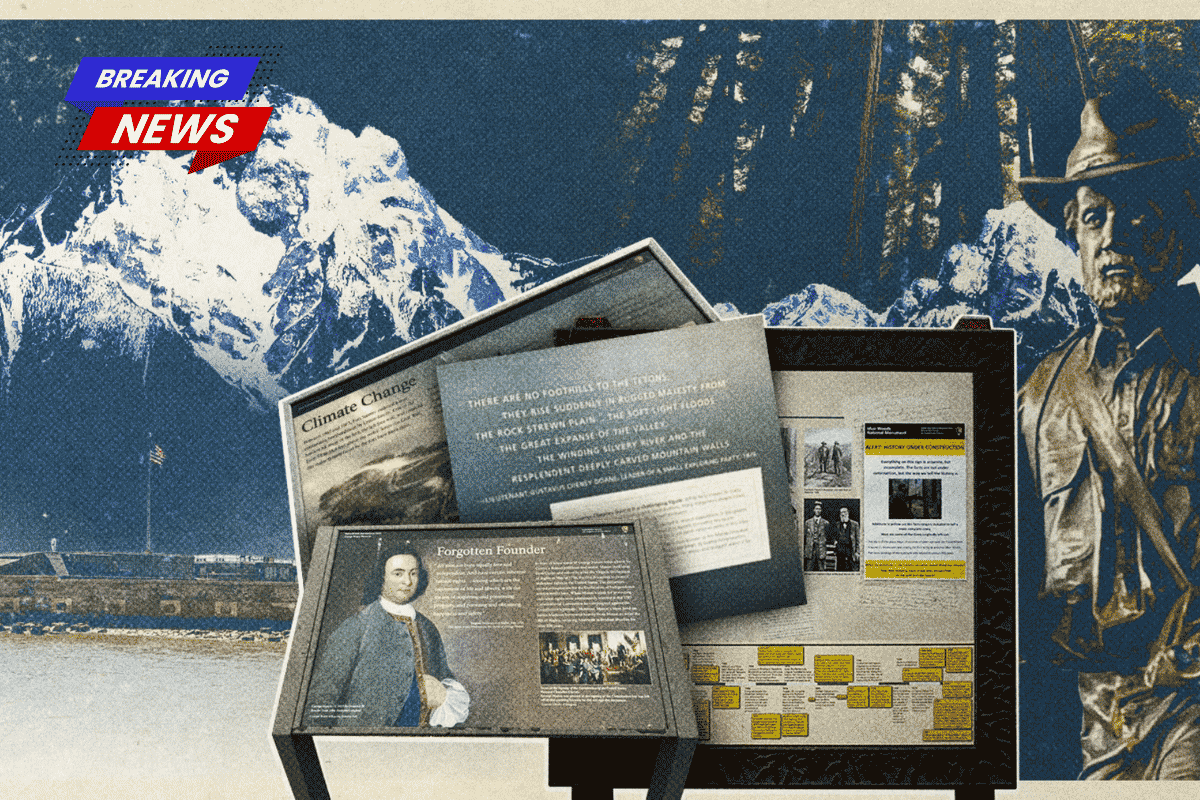
The Trump administration has undertaken a significant overhaul of public content at U.S. national parks, leading to the removal of several exhibits and signs that have sparked widespread controversy.
The changes, which are part of an executive order issued in March 2025, aim to reshape how American history is portrayed, with a focus on eliminating content that may be seen as disparaging to the nation or its historical figures. Critics argue that the removals are erasing important elements of the country’s history.
The Doane Statue Controversy
One of the most prominent examples of this shift is the removal of a marker beneath a statue of Gustavus Cheyney Doane, a 19th-century explorer, at Grand Teton National Park.
The marker previously acknowledged Doane’s involvement in the massacre of 173 members of the Piegan Blackfeet in 1870, an event he bragged about throughout his life. The removal of this marker was cited in a lawsuit filed against the Department of the Interior by critics of the order.
The Trump administration contends that these changes aim to present a more positive portrayal of American history, while critics argue that the removal of such content is an effort to “whitewash” the past.
Tom Rodgers, a member of the Blackfeet Nation, condemned the removals, saying, “We are killing them all over again,” referring to the victims of the massacre. He expressed concern that half-truths are being presented as the whole truth, calling it a “lie” and an “Orwellian” effort to control the narrative.
Widespread Impact of the Executive Order
The changes go beyond Doane’s statue and include the removal of Native American and women’s history from exhibits, such as the ones previously displayed at Muir Woods National Monument in California.
Signs that addressed the racist views of John Muir and his treatment of indigenous people have been removed, with one sign once stating that Muir “ignored the genocide they survived.”
At Fort Sumter National Monument in South Carolina, a sign that warned of climate change impacts, including rising sea levels, was removed entirely. The Department of the Interior defended these changes, claiming they were necessary to replace content with more accurate, evidence-based information.
Additionally, a display on George Mason, a founding father, was altered to remove references to his ownership of slaves, despite being a proponent of individual rights.
Critics Push Back Against the Overhaul
Many critics argue that the removal of these exhibits is an attempt to erase uncomfortable aspects of American history, particularly those involving slavery, indigenous genocide, and climate change.
Alan Spears, a senior director at the National Parks Conservation Association, called the effort a “red herring” and claimed it was addressing a problem that never existed.
Democrats in Congress have voiced their concerns, with Rep. Jared Huffman and Sen. Martin Heinrich sending letters to the Department of the Interior asking for clarification on the issue. Huffman also criticized the removals, saying that “actual history is getting whitewashed and censored.”
The Administration’s Defense
The White House defended the changes, with spokesperson Taylor Rogers stating that Trump was honoring the country’s “extraordinary heritage” and restoring national pride. She argued that the administration was putting an end to “divisive” and “inaccurate” portrayals of the nation’s history that had infiltrated national parks and museums.
Trump’s supporters see these actions as a necessary step to highlight America’s achievements and present history in a more positive light, though critics continue to push back against what they see as an erasure of uncomfortable truths.






