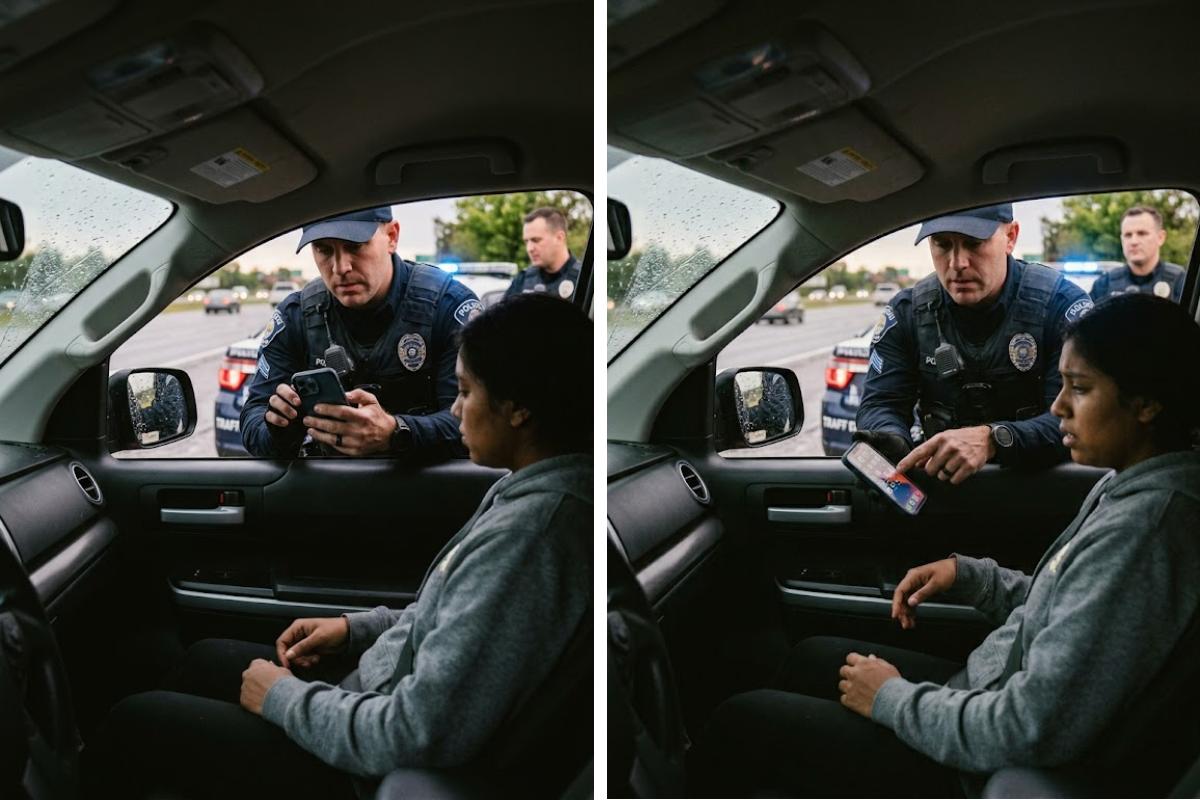
Florida police generally cannot search your phone during a traffic stop unless you give voluntary consent, they have a valid warrant, or a rare emergency makes immediate action necessary. A traffic stop by itself does not give officers the right to browse your texts, photos, apps, or call history.
The main legal rule
The strongest rule comes from Riley v. California, where the U.S. Supreme Court said police usually need a warrant to search a cellphone, even after an arrest. Florida legal sources say that rule applies strongly in Florida because phone data is highly private and protected by both the Fourth Amendment and Florida privacy law.
What police can and cannot do
Police can stop you for a traffic violation, but that does not automatically allow a phone search. They may ask to see your phone, ask you to unlock it, or ask for your passcode, but you do not have to agree unless they have legal authority. If you voluntarily hand over the phone or unlock it, that consent may make the search lawful.
When a search may be allowed
There are only a few common exceptions. Police may search your phone if:
- You give clear, voluntary consent.
- They obtain a valid search warrant.
- A true exigent circumstance exists, such as an immediate threat to safety or evidence destruction.
Florida sources also note that officers may sometimes seize a phone in limited situations, but seizure is not the same as a full search of its contents.
Your rights during the stop
If an officer asks to search your phone, you can politely say no. You generally should not feel pressured to unlock your device or provide a passcode during a routine stop. Refusing consent does not, by itself, make the search legal or give police a right to search.
Florida practice note
Florida-focused legal articles say officers should not search a phone just because they stopped a driver for texting or another traffic offense. Some Florida discussions also mention that police may try to pressure drivers into “consent,” but the safer legal position is still that a warrant is usually required for the phone’s contents.
Bottom line for drivers
If you are pulled over in Florida, a phone search is usually not allowed unless you consent or the police have a warrant or a very narrow emergency exception. The safest response is to stay calm, be respectful, and clearly refuse consent to any phone search.
SOURCES:
- https://www.michaelwhiteesq.com/can-police-search-your-phone-during-a-traffic-stop-in-florida/
- https://www.rossenlawfirm.com/blog/if-im-pulled-over-for-texting-and-driving-can-a-cop-search-my-phone-no-says-fort-lauderdale-criminal-defense-attorney/