
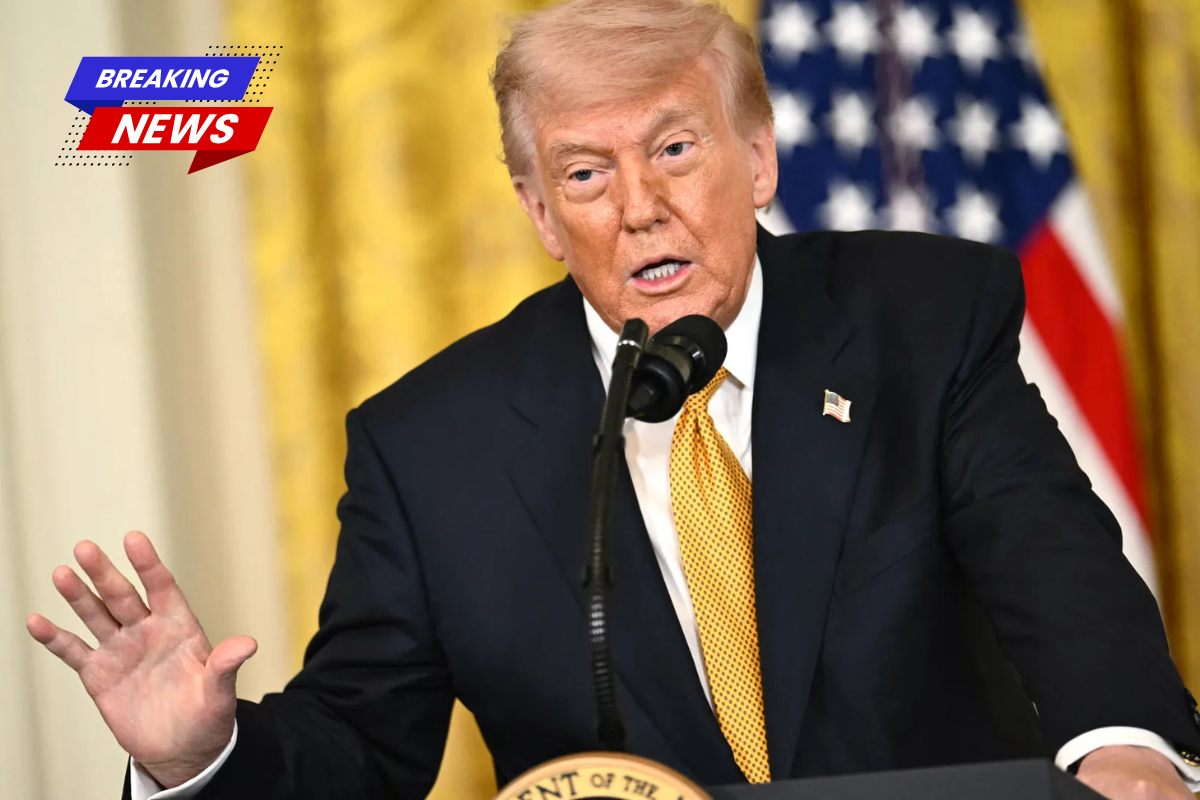
President Donald Trump on Wednesday heightened tensions with Iran, warning that the U.S. military would escalate its bombing campaign if Tehran failed to reach a peace agreement. This came after reports suggested that Washington and Tehran were close to an agreement to end the war, with some details of a potential memorandum of understanding (MOU) emerging.
Trump made the statements in a post on Truth Social, where he outlined his position on the ongoing conflict. He said that the U.S. military operation, Operation Epic Fury, would come to an end if Iran agreed to the terms that had been “agreed to, which is, perhaps, a big assumption.” Under the terms of the deal, Trump stated, the U.S. naval blockade of Iranian ports would be lifted, and the Strait of Hormuz would be reopened for all nations, including Iran.
However, he added that if Iran refused the deal, “the bombing starts, and it will be, sadly, at a much higher level and intensity than it was before.”
Reports of a Potential Peace Deal
The timing of Trump’s statement coincided with Axios reporting that the U.S. and Iran were nearing an agreement. According to Axios, the U.S. expected a response from Iran within 48 hours on several key points. The news led to a significant reaction in the markets, with stock indices rising and oil prices dropping, signaling optimism that the long-running conflict might soon come to an end.
However, Trump remained cautious about the timing of peace talks. In an interview with The New York Post, he emphasized that it was still “too soon” to begin discussing the possibility of in-person negotiations with Iran. He later told PBS News that while there was a “very good chance” the war could end, if it didn’t, the U.S. would resume its military actions, saying, “we have to go back to bombing the hell out of them.”
Trump’s Optimism and Military’s Involvement
During an event celebrating Mother’s Day with military families, Trump expressed optimism that Iran was eager to reach an agreement, noting, “We’re dealing with people that want to make a deal very much.”
Trump emphasized that the deal would need to be one that was satisfactory to the U.S. He also mentioned meetings with executives from major oil companies, including Exxon Mobil and Chevron, at the White House, where discussions included issues surrounding Venezuela and other global oil concerns. It is unclear whether Iran or the Strait of Hormuz were topics during these meetings.
Iran’s Response and Negotiation Efforts
Iran, meanwhile, has not made an official response to the U.S. proposal. Iranian Foreign Ministry spokesperson Esmaeil Baqaei said that Tehran was still reviewing the proposal and would provide its response to mediators in Pakistan. Baqaei also emphasized that “negotiations” require a genuine attempt to resolve disputes in “good faith,” referencing a ruling by the International Court of Justice.
Additionally, Iran’s Foreign Minister, Abbas Araghchi, reaffirmed Tehran’s sovereignty and national dignity during talks with China’s Foreign Minister Wang Yi. Araghchi also reiterated Iran’s trust in China and looked forward to strengthening the bilateral partnership.
Details of the Proposed Deal
The MOU being discussed between the U.S. and Iran reportedly involves several key elements: a commitment by Iran to halt nuclear enrichment, a lifting of U.S. sanctions, and an agreement to de-escalate tensions surrounding the vital shipping route in the Strait of Hormuz. The ceasefire between the U.S. and Iran, which has been in place since April 7, remains fragile, with both sides having carried out military operations in recent weeks.
Earlier this week, Iran attacked U.S. forces helping commercial vessels navigate the Strait of Hormuz and launched additional attacks on the United Arab Emirates. In response, the U.S. sank several small Iranian boats and disabled an Iranian tanker attempting to breach the blockade. These incidents highlight the volatility of the situation and the challenges to reaching a lasting peace agreement.
The Path Forward
Despite the ongoing violence, there is renewed hope for peace. Trump’s decision to pause Project Freedom, the U.S. military operation designed to protect commercial shipping through the Strait of Hormuz, was seen as a sign of progress toward a final agreement with Iran.
Trump’s comments on Truth Social expressed optimism about the potential for a comprehensive peace deal: “Great Progress has been made toward a Complete and Final Agreement.”
In conclusion, the situation remains highly fluid, with both sides facing pressure to reach an agreement. The outcome of the negotiations, particularly over nuclear enrichment and U.S. sanctions, will likely define the future of U.S.-Iran relations and the stability of the broader Middle East region.






