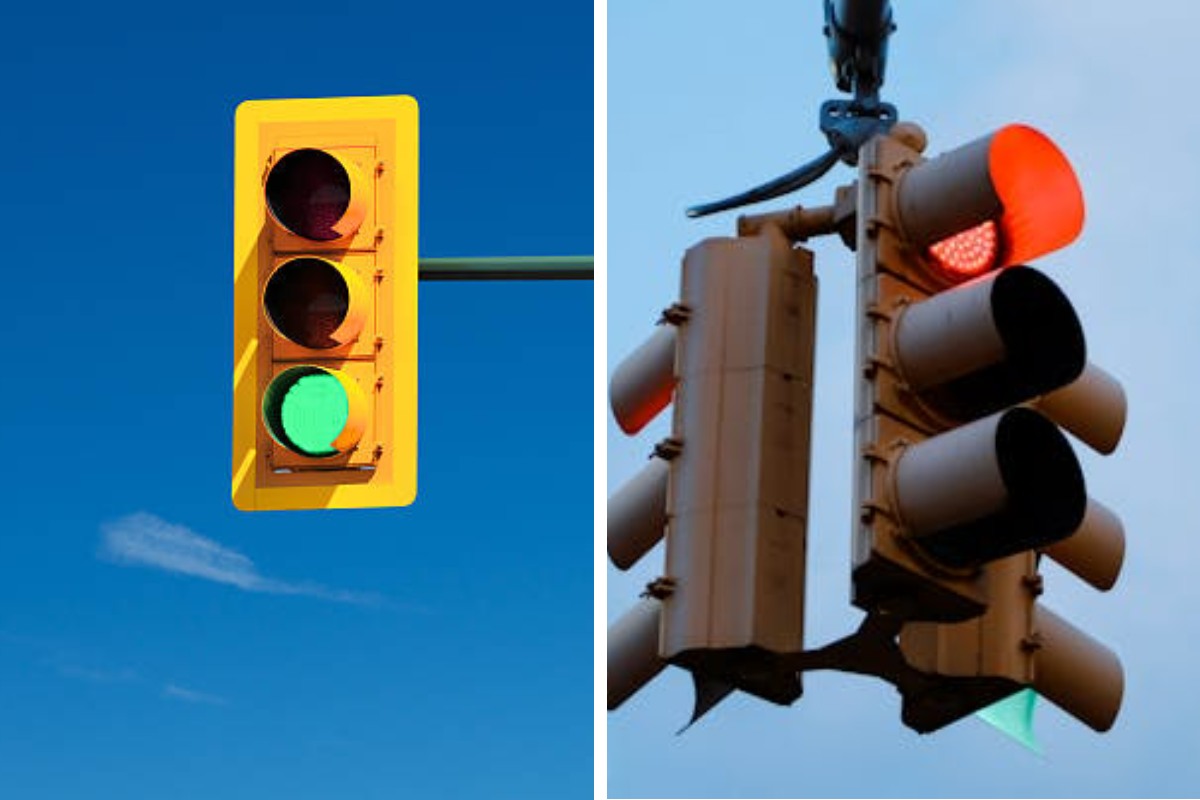
Right turn on red continues to be fully legal throughout Michigan in 2026, following the same fundamental principles that have governed this maneuver for decades.
Under Michigan Compiled Law 257.612, drivers may turn right at a red traffic signal from either a one-way or two-way street onto a two-way street or a one-way street carrying traffic in the direction of the right turn. This rule applies statewide with no significant legislative changes affecting right-turn-on-red procedures as of 2026.
Required Steps Before Turning Right on Red
Michigan law mandates specific safety protocols before executing a right turn on red. Drivers must come to a complete stop before entering the crosswalk on the near side of the intersection, at a marked limit line, or before entering the intersection if no crosswalk or line exists.
After stopping completely, drivers must yield to all pedestrians, bicyclists, electric scooter users, and cross traffic before proceeding with the turn. Simply slowing down without a full stop constitutes a violation that can result in a civil infraction and traffic citation during routine enforcement.
When Right Turn on Red Is Prohibited
Even though right turn on red is generally permitted, certain intersections prohibit the maneuver through posted signage or traffic control devices. When a “No Turn on Red” sign is displayed, drivers must wait for a green signal regardless of traffic conditions.
These restrictions typically appear at high-risk intersections where turning on red would be unsafe, such as locations with poor sight lines, heavy pedestrian traffic, or parallel train crossings synchronized to traffic light timing. Violating a posted prohibition constitutes a civil infraction with enforcement likelihood rated as moderate during routine traffic stops.
Michigan’s Unique Left Turn on Red Rule
Beyond right turns, Michigan law includes a less commonly known provision allowing left turns on red under specific circumstances. Drivers may turn left on a steady red signal from either a one-way or two-way street onto a one-way street carrying traffic in the direction of the left turn, unless prohibited by signage.
However, drivers cannot turn left on red onto two-way streets—the destination must be a one-way street with traffic moving in the same direction as the intended turn. The same complete-stop and yield requirements apply to left turns on red as to right turns.
Yielding Requirements and Right-of-Way
Drivers turning right or left on red never have the right of way. All other road users—including vehicles with green lights, pedestrians in crosswalks, bicyclists, and users of electric scooters—maintain priority over turning vehicles.
This means drivers must check at least two nearby crosswalks and yield to any pedestrians or cyclists, even if those individuals are just entering the crosswalk. Additionally, drivers must watch for oncoming vehicular traffic, particularly vehicles that may have protected turn arrows allowing them priority access to the roadway.
Safety Considerations and Recent Debates
While right turn on red remains legal statewide, some Michigan municipalities have explored limiting the practice at specific high-risk intersections to boost pedestrian and cyclist safety. Michigan law clearly establishes that drivers bear full responsibility for ensuring the maneuver can be completed safely without endangering others.
The enforcement classification as a civil infraction with moderate enforcement likelihood means drivers should expect consequences for violations, particularly failure to stop completely or failure to yield to protected users.
SOURCES:
- https://www.michigan.gov/msp/services/safetytips/traffic-laws-faqs
- https://99wfmk.com/michigan-law-right-on-red-controversy/