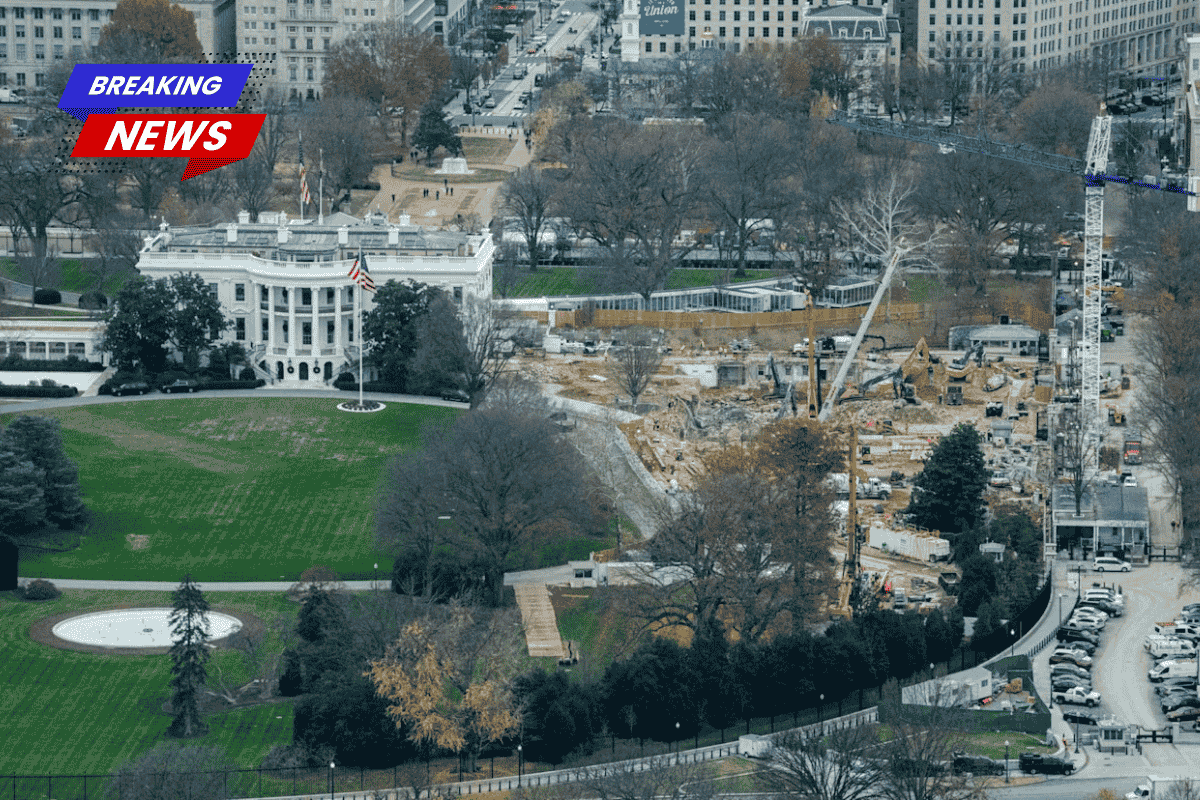
The White House is set to undergo major renovations and repairs, with President Donald Trump pushing forward an ambitious $377 million project for fiscal year 2026. The funding for the renovations, which include extensive repairs and upgrades to various parts of the White House, is significantly higher than previous years, marking an 866% increase from the estimated $39 million spent on White House repairs in fiscal year 2025.
Donors Fund the Renovations
Most of the money for these renovations will come from donors, with major contributions from prominent tech companies such as Meta Platforms, Apple, Google, and Amazon.
Additionally, individual and family donors, including the Adelson Family Foundation, Blackstone CEO Stephen A. Schwarzman, and cryptocurrency billionaires Cameron and Tyler Winklevoss, have pledged financial support. These donations were revealed in October, when the White House disclosed a list of 37 donors funding the East Wing renovations.
An official from the Office of Management and Budget (OMB) clarified that the funding for the White House’s repair and renovation projects is already in government accounts, and does not require additional Congressional approval. This is a key distinction, as other parts of the budget, such as the record-breaking $1.5 trillion military spending request for the upcoming fiscal year, will need Congressional approval.
Planned Renovations and Upgrades
The renovation work will include a variety of projects aimed at preserving and modernizing the White House. According to a filing made in January as part of a lawsuit against the National Park Service (NPS) by the National Trust for Historic Preservation, there are plans to address issues such as water infiltration, outdated electrical infrastructure, and lead-based paint and asbestos removal.
The renovations will also work to ensure that the White House complies with the Americans with Disabilities Act.
Joshua Fischer, White House Management and Administration Director, explained that donated funds would be transferred to the White House Repair and Restoration Account to supplement the government’s annual allowance for maintenance. The allowance for fiscal year 2026 is $2 million, increasing to $6 million in 2027.
The $400 Million Ballroom Project
The most prominent project announced is the renovation of the White House ballroom, which Trump has described as a much-needed update. Despite initial estimates of the project costing $400 million, Trump insisted that taxpayers would not bear the burden of the costs. He emphasized that the renovation would be “on time and under budget.”
Trump described the new ballroom as “the Greatest and Most Beautiful Ballroom of its kind anywhere in the World,” calling it a “fabulous complement” to the White House. In addition to its aesthetic importance, the ballroom will be used for major events such as galas and formal dinners, continuing a long-standing tradition of high-profile gatherings at the White House.
The Rose Garden Renovation
In addition to the ongoing renovations to the East Wing and ballroom, Trump made significant changes to the White House’s Rose Garden last year. The once-lawn space, often used for bill signings, press conferences, and formal dinners, was replaced with a stone patio for events. The newly renovated space, which Trump dubbed the “Rose Garden Club,” is intended for use by lawmakers and influential figures from Washington, D.C., and around the world.
Trump had also planned to host tech executives in the renovated space in September 2025, many of whom later contributed to the ballroom project. However, the event was moved indoors due to bad weather.
Mandatory Spending and Donor Contributions
Of the $377 million budgeted for White House renovations, $350 million is considered mandatory spending, which refers to funds designated for programs Congress funds by law, such as Medicare and Social Security.
The rest of the funding comes from private, tax-deductible donations placed into the National Park Service gift account. This account is considered a mandatory account and is not subject to yearly congressional appropriations.