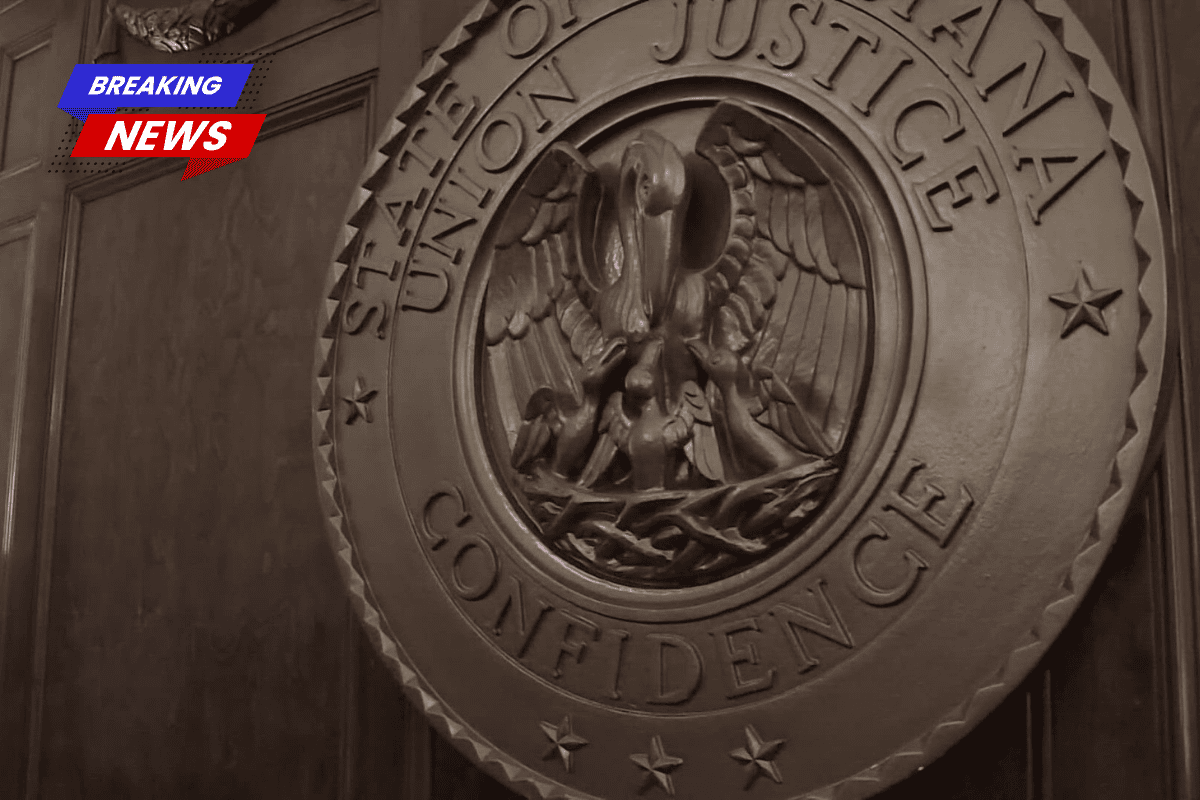
Calvin Duncan is set to be sworn in as the new Clerk of Criminal Court in Orleans Parish on May 4, but recent developments in the Louisiana State Capitol could drastically alter the structure of the court system in the parish, including his soon-to-be role.
Several bills moving through the state legislature aim to consolidate Orleans Parish’s separate civil, criminal, and juvenile courts into a single judicial district.
Proposed Court System Restructuring
The bills under consideration would reduce the number of judges in Orleans Parish and create a single clerk to oversee all court divisions. The restructuring is intended to streamline operations and align Orleans Parish with other judicial systems across Louisiana. State Representative Dixon McMakin, the sponsor of one of the bills, argues that the current system is inefficient and overly funded compared to other districts in the state.
“New Orleans is the one so different than everybody else. They have a civil District Court, a criminal District Court, more judges than everybody else, and they are the only court that gets specific state funding,” McMakin said. “Every other district does it this way.”
Criticism of the Legislation
However, the proposed changes have sparked significant opposition, particularly from Calvin Duncan. Duncan, who was wrongfully convicted of murder decades ago and later exonerated, believes the legislation is politically motivated and aimed at undermining his newly elected position. In a statement, Duncan accused state leadership of trying to override the will of the voters who elected him.
“Now Governor Landry and his lackeys want to overrule the voters and dictate what happens to us. It’s a slap in the face not only to the people who elected me, but to every voter across Louisiana,” Duncan said.
Arguments for and Against the Changes
Senator Jay Morris, who introduced Senate Bill 256, defended the proposal by highlighting the financial burden of Orleans Parish’s separate court system. He criticized the current funding structure, stating that taxpayers across Louisiana should not have to cover the operational costs of a clerk’s office that is unique to New Orleans.
“The fact that the state is having to pay for the operation of a clerk’s office, that it has to do in New Orleans but nowhere else in the state, is a slap in the face to the taxpayers of Louisiana,” Morris said.
McMakin also voiced concerns about the inefficiency of the Orleans Parish court system, claiming that it operates with more judges than necessary, despite handling fewer cases than larger parishes like East Baton Rouge.
Criticisms of Oversimplified Comparisons
While supporters of the legislation argue that Orleans Parish has too many judges, Rafael Goyeneche, President of the Metropolitan Crime Commission, suggests that comparing the number of judges based solely on the number of cases is an oversimplification.
Goyeneche argues that the complexity of cases in Orleans Parish, particularly those involving violent crime, requires more time and resources.
“You cannot just look at and compare the numbers of judges in one jurisdiction with another jurisdiction,” Goyeneche said. “You cannot just look at the numbers of cases going in. You have to look at the types of cases that each of those judges are handling, because different cases require different amounts of time.”
Concerns About Efficiency and Impact
There are also concerns about how the proposed restructuring could affect the efficiency of an already strained system.
Orleans Parish has faced criticism for delays in processing cases, and Chief Criminal Court Judge Juana Lombard expressed concerns about the impact of reducing the number of judges. Speaking before the city council’s criminal justice committee, she warned that the restructuring could have significant consequences on daily operations.
“It’s obvious to anyone that [if you] reduce any business by almost 20% it’s going to have an impact on the day-to-day operations,” Judge Lombard said.
What’s Next?
As the bills continue to move through the legislature, the future of Orleans Parish’s court system—and Duncan’s role within it—remains uncertain. The proposed changes could reshape the way justice is administered in the parish, and many are watching closely to see how the situation develops.