A recent birth at the Audubon Nature Institute in New Orleans has captured global attention, as the world celebrates the arrival of a super rare zebra-giraffe hybrid, Sasha. The excitement surrounding this unusual animal is spreading across Louisiana, the U.S., and even internationally. So, what’s all the buzz about?
The remarkable birth of Sasha, a 3-month-old zebra-giraffe hybrid, has zoologists and animal lovers alike fascinated. But while Sasha is definitely stealing the spotlight, there’s another incredible species involved in this exciting news: the okapi.
What Is an Okapi?
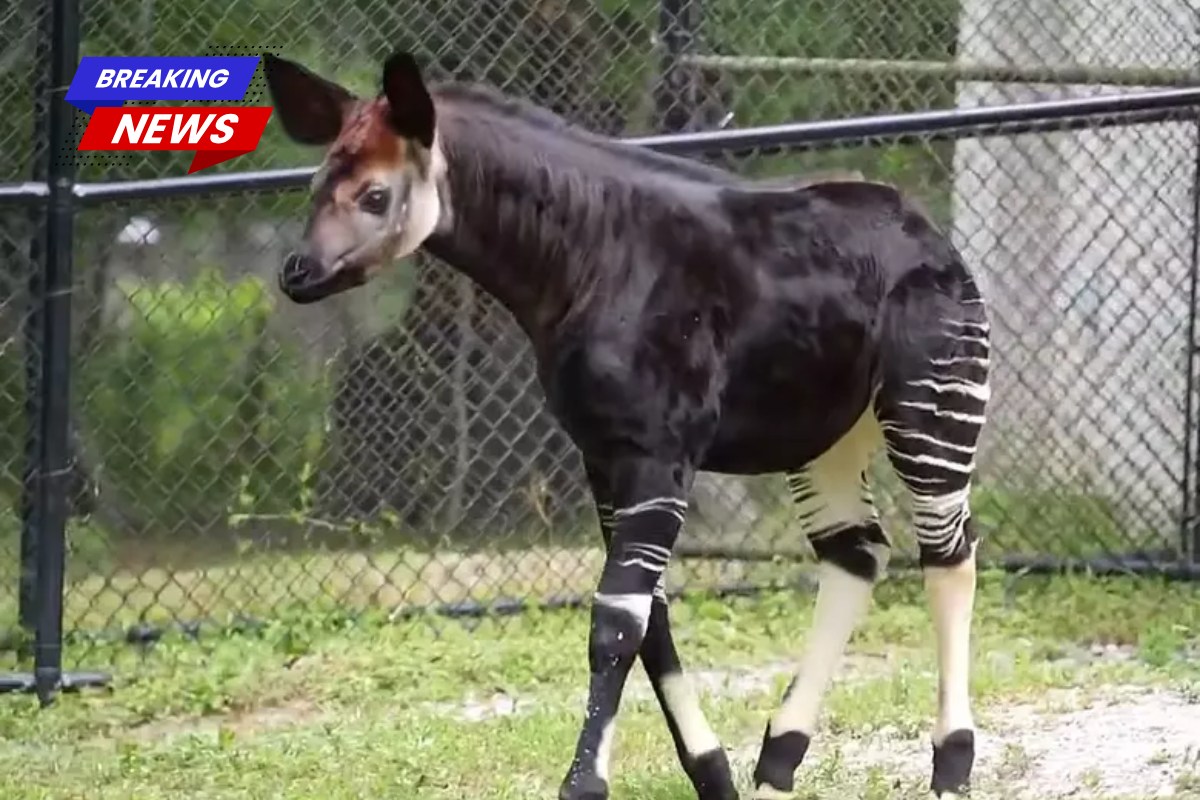
If you’ve never heard of an okapi, you’re not alone. This rare animal looks like a mix between a deer, a zebra, a giraffe, and a horse, but in reality, it’s a unique species all its own.
Native to the dense rainforests of the Democratic Republic of the Congo, the okapi is often referred to as the “forest giraffe” because of its striking appearance. It has a reddish-brown body with velvety fur, large ears, and distinctive zebra-like striped legs. At first glance, it’s an animal that seems almost too incredible to exist in nature.
The Okapi’s Endangered Status
Unfortunately, the okapi is critically endangered. Habitat destruction, illegal mining, and poaching are major threats to their survival in the wild, leading to a decline in populations. Conservation efforts are being led by organizations like the Okapi Conservation Project to protect these beautiful creatures and the rainforest habitats they rely on.
This is where the Audubon Nature Institute comes in.
Okapi Birth at the Audubon Nature Institute
In February 2026, the Audubon Nature Institute in New Orleans made a groundbreaking announcement: the birth of an okapi calf named Sasha. Born to 8-year-old Asili (the mother) and 16-year-old Kikari (the father), Sasha is the second okapi calf born at the Audubon Nature Institute and the first okapi calf born in the U.S. in 2026.
Given that only a few okapi calves are born each year, every birth is a significant milestone for the species, particularly in efforts to sustain and grow populations. Sasha’s arrival marks an exciting achievement for the zoo and the global conservation community.
Sasha’s Progress and Habitat
Since her birth, Sasha has been doing remarkably well, hitting all of her developmental milestones and growing quickly. Unlike typical zoo enclosures, Sasha and her family are not confined to small spaces. They roam freely across a vast 26-acre area at the Audubon Nature Institute, providing them with plenty of space to live more naturally. The area is so expansive that it sometimes takes staff a couple of days to locate the family.
The success of Sasha’s birth and her continued progress are vital for the preservation of the okapi species, and the Audubon Nature Institute’s efforts to protect these animals are helping ensure that they will thrive for generations to come.