
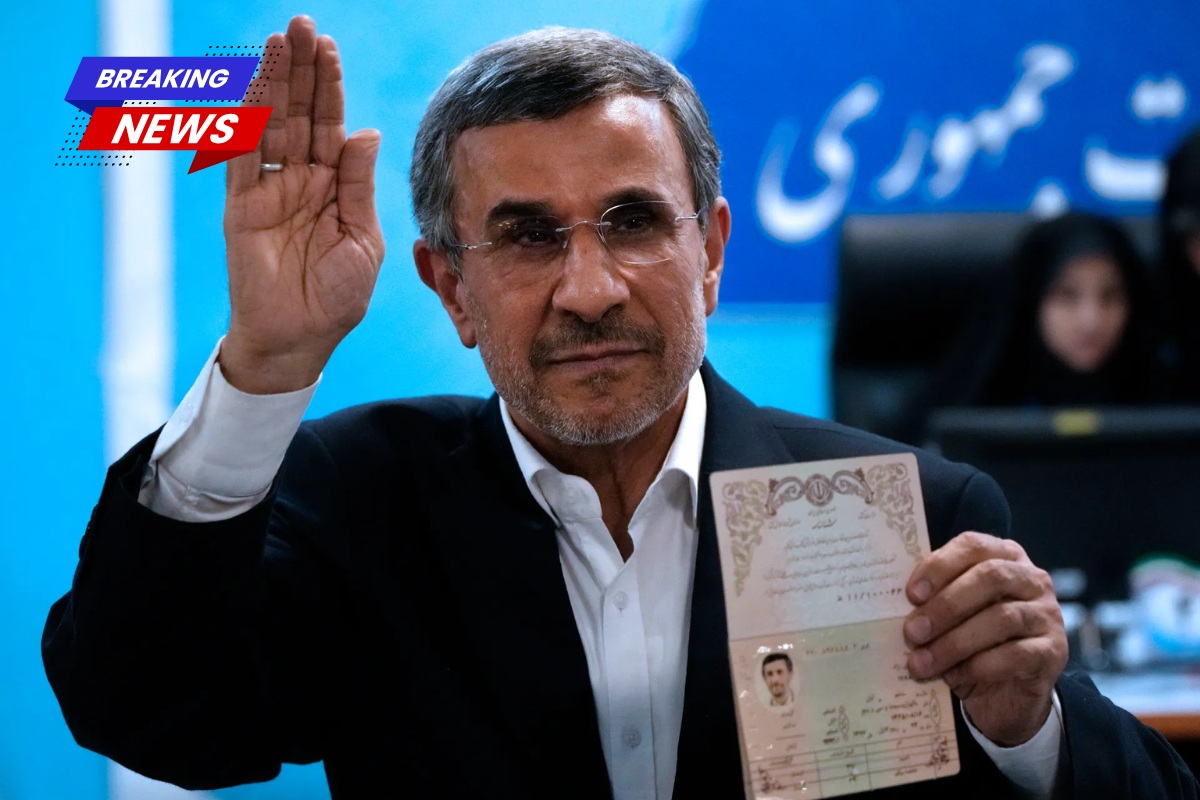
The United States and Israel reportedly planned a daring move in Iran during the recent conflict, aiming to replace the country’s leadership with former hardline President Mahmoud Ahmadinejad, according to The New York Times.
US officials familiar with the plan told the newspaper that the operation “quickly went wrong,” and Ahmadinejad’s current location and condition remain unknown. After the killing of Ayatollah Ali Khamenei, US President Donald Trump reportedly suggested that it would be best if “someone from within” Iran took over the leadership.
Ahmadinejad: A Controversial Choice
Calling Ahmadinejad an unusual choice would be an understatement, the report said. While he had clashed with Iran’s current leadership and was under strict watch, he was known during his presidency from 2005 to 2013 for his anti-US rhetoric, support for Iran’s nuclear programme, and harsh crackdown on internal opposition.
In a 2019 interview, Ahmadinejad praised Trump and suggested improving relations between the US and Iran. He said, “Let’s calculate the long-term cost-benefit of our two nations and not be shortsighted.” Trump, encouraged by his success in the Venezuelan leader Nicolas Maduro operation, reportedly thought a similar approach could work in Iran.
The Risky Jailbreak Operation
Ahmadinejad, who had been consulted about the US-Israeli plan, was reportedly injured in an Israeli strike on his Tehran home on the first day of the war. The strike was intended to free him from house arrest. He survived but became sceptical of the plan and stopped cooperating.
An article in The Atlantic described the strike as essentially a “jailbreak operation.” Ahmadinejad’s associates later confirmed he understood the attack was meant to free him, and Americans believed he could manage Iran’s political and military situation. After the near-death experience, he withdrew from the operation.
Ahmadinejad vs. Iran’s Current Leadership
Ahmadinejad had long been at odds with Supreme Leader Khamenei. He was disqualified from multiple elections, his aides were arrested, and his movements were increasingly restricted. Close associates faced accusations of having ties with the West or even spying for Israel, adding to the complexity of the situation.






