
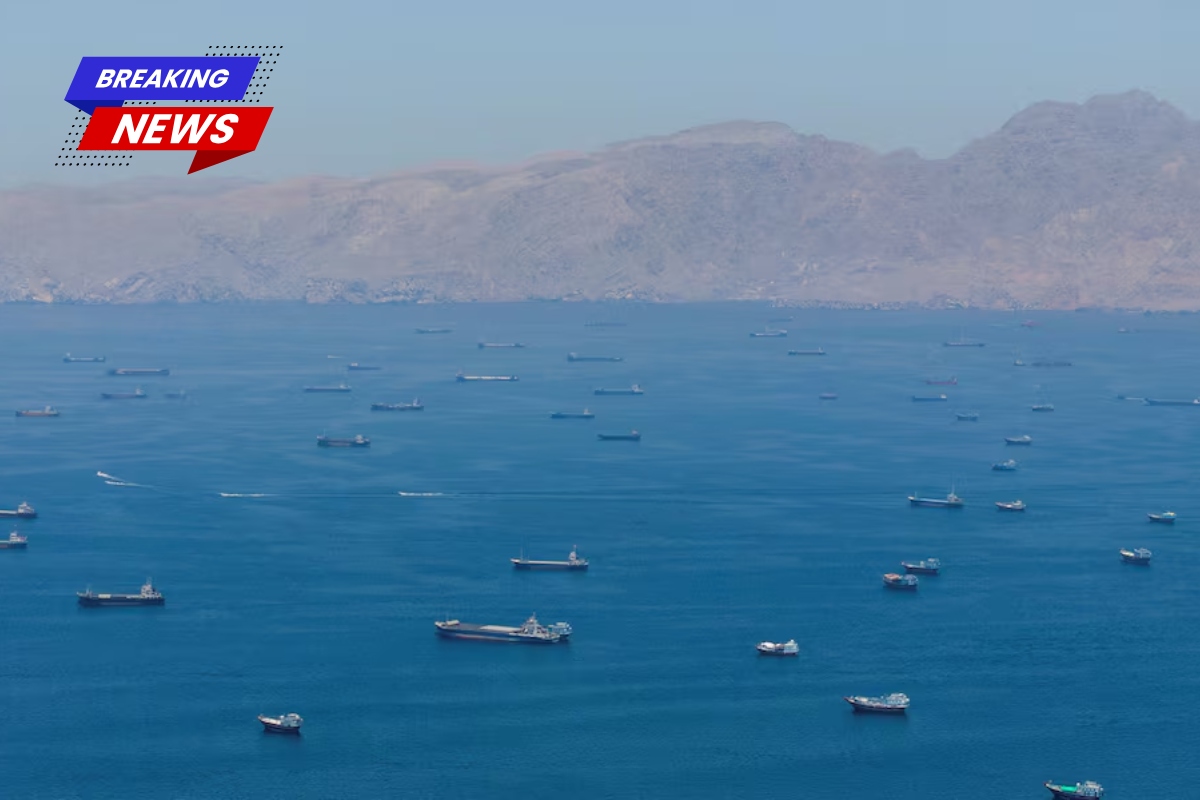
The U.S. military carried out strikes against an Iranian drone operation targeting commercial shipping and U.S. forces in the Strait of Hormuz, a U.S. official confirmed. The action came shortly after President Donald Trump dismissed an Iranian report claiming a draft deal to restore traffic through the strategic waterway.
Details of the Military Action
Officials said U.S. forces shot down four Iranian attack drones and struck a ground control station in Bandar Abbas, which was reportedly preparing to launch a fifth drone. The strikes were described as defensive measures intended to maintain the ceasefire that took effect in early April.
Iranian media reported that vessels attempting to transit the strait were forced to turn back after warning shots, but no casualties or damage were reported from the U.S. strikes. The military also carried out defensive actions in southern Iran on Monday, which Iran labeled a “gross violation” of the ceasefire.
Oil prices, which had fallen over 5% earlier, rebounded following news of the strikes, with U.S. crude futures rising nearly 2% to $90.38 per barrel.
Trump Comments on Strait Control
During a Cabinet meeting, Trump dismissed claims that Iran and Oman had drafted a framework to jointly manage traffic through the strait. He emphasized that no single country would control the waterway, calling it “international waters” and warning that Oman must comply with international norms.
The White House and Oman’s embassy did not respond to requests for comment, and Iran’s UN mission was also unavailable.
Sanctions and Diplomatic Tensions
The U.S. Treasury Department added the Persian Gulf Strait Authority, an Iranian body managing strait passage, to the sanctions list for threatening U.S. national security. The Iranian draft deal reportedly included lifting the U.S. blockade of Iranian ports and withdrawing military forces, but the White House dismissed it as fabricated.
Ebrahim Azizi, head of Iran’s parliamentary national security committee, said Trump’s rhetoric would not force Iran to back down on its demands regarding uranium enrichment, strait authority, and sanctions relief.
Strategic and Military Context
The war, now three months old, has caused thousands of deaths and sharply increased global energy prices since U.S. and Israeli strikes began on February 28.
The Strait of Hormuz handles about a fifth of the world’s oil and LNG traffic. The U.S. maintains roughly 15,000 troops enforcing a blockade, with additional forces in Gulf states like Qatar, UAE, and Bahrain. U.S. naval vessels regularly transit the region and stop in ports including Oman.
Discussions on Iran’s nuclear program are expected to continue in a second round of negotiations, a sticking point in broader peace talks. U.S. Secretary of State Marco Rubio reaffirmed that Iran will not be allowed to develop nuclear weapons.






