
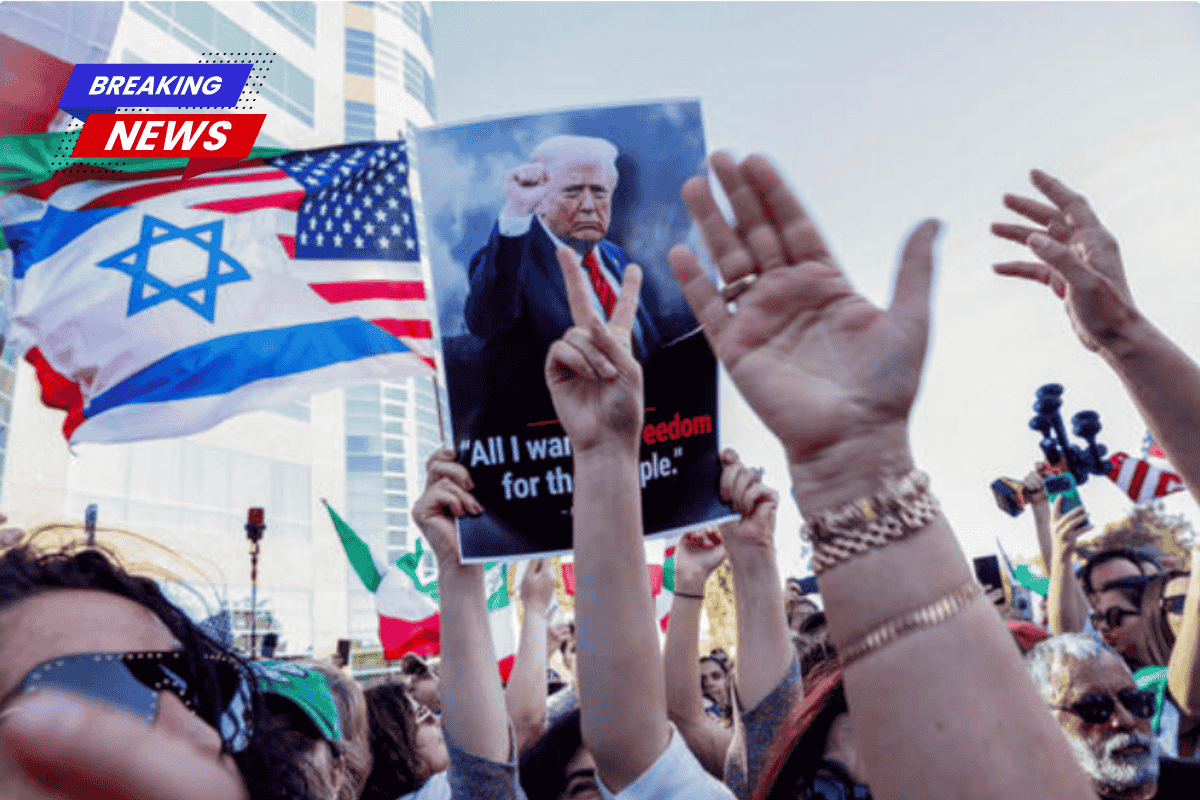
Public opinion in the United States appears divided over the ongoing conflict involving Iran, Israel, and U.S. military action. A new national survey shows that a majority of Americans disapprove of how President Donald Trump is handling the situation and oppose the military strikes themselves.
The poll comes as the military campaign—referred to as Operation Epic Fury—approaches the end of its first week, following escalating tensions in the region and recent attacks involving U.S. forces.
Majority of Americans Oppose U.S. Military Action in Iran
According to the latest survey, 56% of Americans oppose U.S. military action in Iran, while 44% support it.
Support levels have remained relatively stable since January, before the current wave of military operations began.
The poll was conducted shortly after an Iranian drone strike on a command center in Kuwait that reportedly killed six U.S. soldiers, an event that intensified the conflict.
Conflict Escalates With Major Military Strikes
During the operation, U.S. and Israeli forces have targeted Iranian military and government facilities.
Reports indicate that the strikes resulted in the death of Iran’s Supreme Leader, Ayatollah Ali Khamenei, along with significant destruction of Iranian military infrastructure.
However, the conflict has also resulted in substantial civilian casualties.
More than 1,000 civilians have reportedly been killed, including an estimated 175 students and staff at a girls’ school. A preliminary U.S. military investigation suggests the school deaths may have been caused by an American airstrike, according to reports.
Trump’s Approval on Iran Drops
The survey shows that 36% of Americans approve of Trump’s handling of Iran, while a majority disapprove.
This represents a six-point drop compared to January 2020, when tensions rose after the U.S. drone strike that killed Qasem Soleimani, a top Iranian military commander.
The numbers suggest declining public confidence in the administration’s strategy in the region.
Deep Partisan Divide Over Military Action
Public opinion on the conflict varies sharply along political lines.
Key findings from the poll include:
- 79% of Republicans approve of Trump’s approach to Iran
- 84% of Republicans support the military strikes
- 86% of Democrats oppose both the strategy and the attacks
- About 60% of independents disapprove of the administration’s actions
These differences highlight the strong partisan divide surrounding U.S. foreign policy decisions.
Americans Divided on Threat From Iran
While Americans disagree about the military action, many still view Iran as a security concern.
According to the poll:
- 44% say Iran is a major threat to U.S. national security
- 40% consider Iran a minor threat
- 15% say Iran poses no threat
The share of Americans calling Iran a major threat has slightly declined since last summer, possibly reflecting perceptions that Iran’s military capabilities have been weakened.
Debate Over the Justification for War
President Trump has offered several explanations for the military campaign.
These include:
- Preventing Iran from developing nuclear weapons
- Responding to threats against U.S. forces
- Supporting regime change in Iran
However, critics argue that the administration’s explanations have shifted over time.
Some analysts say this may make it harder for the public to understand the objectives or measure success in the conflict.
Experts Offer Different Perspectives
Supporters of the operation argue that the military campaign is weakening a long-standing threat.
Retired U.S. Army Colonel Joel Rayburn, who previously worked on Iran policy at the National Security Council, said the action is moving quickly and effectively.
He believes dismantling the Iranian regime could create long-term stability in the region.
Others strongly disagree.
Former State Department official Alan Eyre, who helped negotiate the 2015 Iran nuclear deal, said the administration has not provided a convincing reason for launching the attacks.
He also expressed concern that Congress has played only a limited role in the decision to take military action.
Uncertainty About How the Conflict Will End
The future of the operation remains unclear.
The White House has said the military campaign could end within four to six weeks, though internal Pentagon assessments reportedly suggest it could last much longer.
Experts say public opinion may shift depending on how quickly the conflict concludes and whether the United States achieves its stated goals.
Public Opinion Snapshot
| Issue | Poll Result |
|---|---|
| Oppose U.S. military action | 56% |
| Support military action | 44% |
| Approve of Trump’s handling | 36% |
| Republicans supporting strikes | 84% |
| Democrats opposing strikes | 86% |
| Americans calling Iran a major threat | 44% |






