
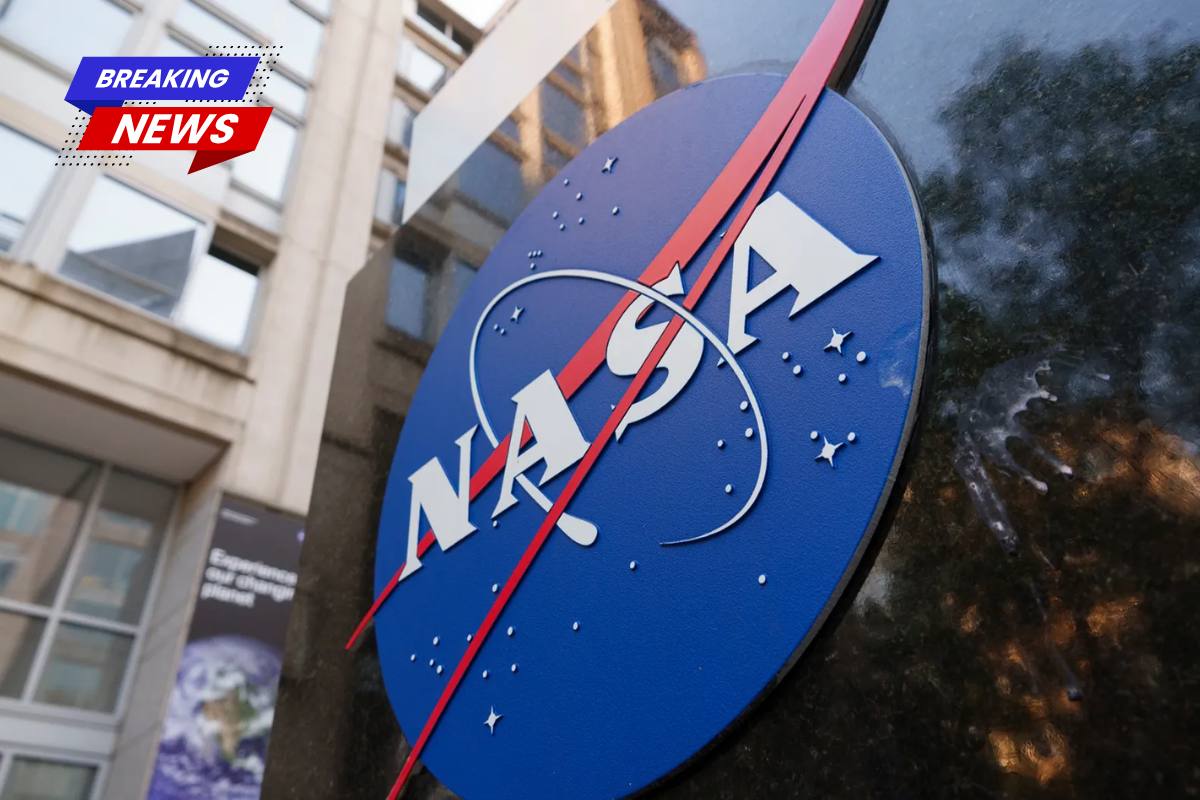
A growing mystery involving the deaths and disappearances of at least 11 U.S. scientists tied to nuclear and aerospace research programs has prompted a federal investigation, raising serious questions about national security and potential foreign involvement.
President Donald Trump described the situation as “pretty serious stuff,” and both Republican and Democratic lawmakers are now examining whether there is a sinister pattern to these incidents.
The Disappearances and Deaths: A Pattern Emerges
The situation gained national attention after the House Oversight Committee announced on April 20 that it would investigate the deaths and disappearances. Committee Chairman James Comer (R-KY) expressed concerns that “something sinister could be happening,” even admitting that he initially dismissed the idea as a conspiracy theory but now saw it as a potential national security issue.
The scientists in question, many of whom worked in sensitive areas related to nuclear research, space exploration, and military defense, began disappearing or dying under suspicious circumstances in 2023 and 2025.
The most recent case was that of William Neil McCasland, a former U.S. Air Force major general, who went missing from his Albuquerque home on February 27, 2026. McCasland, who had connections to Roswell and classified space weapons programs, left behind his personal belongings, including his phone and glasses, but disappeared without a trace.
A Growing Conspiracy Theory
The mysterious nature of these events has sparked speculation, particularly on social media and among political figures. Right-wing influencers and online sleuths have linked the deaths to potential foreign operations, citing the scientists’ work in nuclear technology and advanced space research as possible motives for these disappearances.
Jessica Reed Kraus, a right-wing influencer, connected the deaths of Nuno Gomes Loureiro, a renowned nuclear physicist, and Carl Grillmair, an astrophysicist, both of whom were murdered in 2025, to the larger trend. Daniel Liszt, a conspiracy theorist, also speculated that Loureiro’s work in fusion research was so groundbreaking that it might have been worth eliminating him.
This speculation has continued to spread, especially after the Daily Mail published an article in March titled “Mystery of Five Missing Scientists Sends Chill Across America.” The press coverage has heightened fears that these scientists were targeted by foreign powers or covert operations aimed at stealing or suppressing their research.
The Scientists’ Work and the U.S. National Security Angle
The deaths and disappearances span a variety of high-profile cases, many of which are linked to government and defense programs. Michael David Hicks, a comet and asteroid researcher at NASA’s Jet Propulsion Laboratory, died in July 2023, while Frank Maiwald, another NASA researcher, died under mysterious circumstances in 2024.
Other figures, like Amy Eskridge, a scientist researching anti-gravity technology, reportedly committed suicide in 2022 after stating in an interview that she had planned to reveal information about UFOs and extraterrestrial life, which led to threats against her life.
The missing scientists also include Anthony Chavez, a retired engineer from the Los Alamos National Laboratory, and Monica Jacinto Reza, a materials scientist at JPL, both of whom vanished in 2025. These cases have added to concerns about the nuclear and aerospace sectors, which are crucial to U.S. national security.
Theories and Questions About Foreign Involvement
Republicans like Rep. Eric Burlison (R-MO) have suggested that these disappearances might be part of a broader “foreign operation” involving rivals like China, Russia, or Iran, all of whom are competing with the U.S. in nuclear technology, advanced weapons, and space exploration.
Burlison, who has been vocal about the need to investigate the deaths and disappearances, raised further alarm by posting on X (formerly Twitter), claiming that the U.S. was becoming weaker due to the loss of these scientists.
His posts have added fuel to the fire, with some critics seeing them as a response to Trump’s slashing of science funding, which may have made U.S. scientists vulnerable to being poached by foreign countries.
Skepticism and Criticism
While some Republican lawmakers and influencers have fueled the theory of a foreign conspiracy, others have been more skeptical. Former FBI agent Jennifer Coffindaffer dismissed the claims, telling Newsweek that they “fall apart under basic investigative principles.”
Erin Ryan, a co-host of the political podcast Hysteria, argued that these theories were driven by anti-science rhetoric from the far right, and The Atlantic’s Daniel Engber called the theories “unbelievably dumb,” suggesting no coherent explanation has been offered for the pattern of deaths.
Federal Investigation and Public Response
In response to growing concern, White House Press Secretary Karoline Leavitt confirmed that the administration would launch an investigation.
Some lawmakers, like Rep. Anna Paulina Luna (R-FL), have questioned whether the number of missing and dead scientists points to something larger. However, Rep. James Walkinshaw (D-Va.) offered a more cautious perspective, downplaying the idea that foreign adversaries could be behind the deaths of just a small number of scientists out of thousands working on nuclear programs.
Trump’s Position on the Investigations
Trump addressed the investigation earlier this week, saying there was no conclusive evidence tying the deaths and disappearances to any organized operation. “Some of them that we looked at are very sad cases… Some left this earth self-inflicted,” Trump said, adding that a full report would be forthcoming.
Despite his public remarks, Trump’s administration is facing growing questions about whether these deaths represent a deeper national security risk.
Family Reactions
The families of the dead and missing scientists have expressed frustration over the swirling conspiracy theories. Michael David Hicks’ daughter, Julia Hicks, voiced her confusion over the theories linking her father’s death to a larger conspiracy. “From what I know of my dad, there’s no train of logic to follow that would implicate him in this potential federal investigation,” she said.
Amy Eskridge’s father, Richard Eskridge, also denied claims that his daughter’s suicide was suspicious, pointing out that “scientists die just like other people.”
Meanwhile, the family of Monica Jacinto Reza criticized the media’s handling of her disappearance, saying that no one from the FBI or White House had reached out to them. They rejected any suggestion that her work on nuclear research had placed her in danger.
Ongoing Investigation and New Leads
Despite skepticism and criticism, the investigation continues, with Rep. Burlison now claiming the count of missing or dead scientists is up to 13. He has pledged to keep pushing for answers and warned that the U.S. is growing weaker with every loss.
As the investigation unfolds, it remains to be seen whether these incidents will be connected to a broader national security threat or whether they are part of a tragic and coincidental pattern. The public and families involved continue to seek clarity on the situation, even as conspiracy theories and political tensions continue to swirl around these mysterious events.






