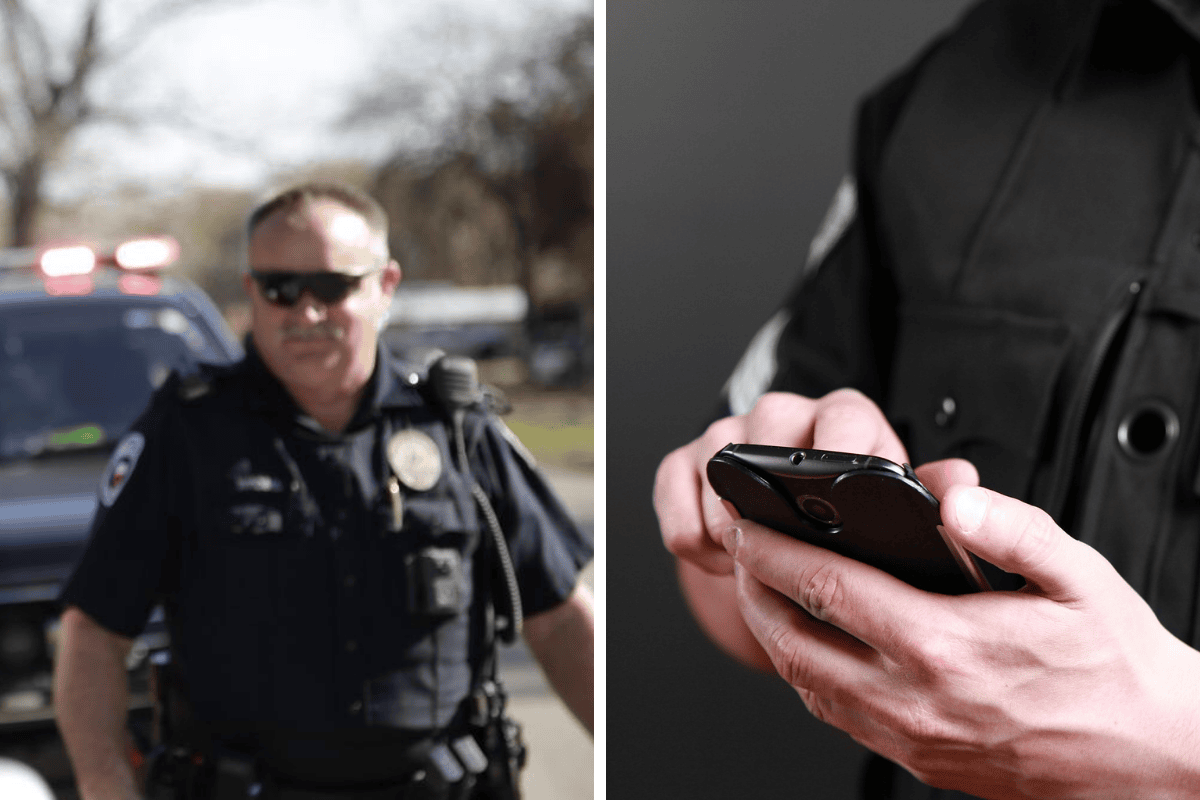
Traffic stops happen daily in Alabama, often for minor issues like speeding or a broken taillight. While police have authority to enforce traffic laws, the Fourth Amendment protects against unreasonable searches and seizures, including your cell phone.
In Alabama, officers need reasonable suspicion to initiate a stop, but searching your phone requires far more—typically a warrant, consent, or a valid exception. Understanding these limits can prevent violations and protect your privacy.
Traffic Stops: What Police Can and Cannot Do
Alabama law allows officers to stop vehicles based on “articulable reasonable suspicion” of a violation, such as unregistered plates or erratic driving. During the stop, you must provide your driver’s license, registration, and proof of insurance. Officers can check these documents and run your information, but they cannot turn a routine stop into a general criminal investigation without justification.
Searches of your vehicle or personal items, like a phone, demand higher standards. Police need probable cause (facts suggesting evidence of a crime), your consent, or an arrest to proceed. A “fishing expedition” without these is illegal, and evidence obtained may be suppressed in court.
The Supreme Court’s Landmark Ruling: Riley v. California
The pivotal case is Riley v. California (2014), where the U.S. Supreme Court unanimously ruled that police generally need a warrant to search a cell phone seized incident to arrest. Chief Justice John Roberts noted cell phones hold vast personal data—texts, photos, location history—far beyond traditional searches incident to arrest under Chimel v. California.
This applies nationwide, including Alabama. Even if arrested during a traffic stop (e.g., for DUI), officers cannot rifle through your phone’s contents without a warrant. Pre-Riley Alabama cases like Gracie v. State (2011) allowed some warrantless phone searches, but Riley overruled such broad permissions.
Specifics for Phones During Alabama Traffic Stops
In a standard traffic stop without arrest, police cannot search your phone. They lack authority to demand it or unlock it. Alabama’s hands-free law (effective 2023) prohibits holding phones while driving, but violations are secondary offenses—officers need another reason to stop you first, and still cannot search the device.
Exceptions include:
- Consent: Officers may ask to see your phone (e.g., for digital registration under Act 2017-242). You can refuse—say clearly, “I do not consent to any search.” Consent must be voluntary, not coerced.
- Plain View: If illegal content is visible on the screen, it may justify further action.
- Incident to Arrest: Post-arrest, they can seize the phone for safety or evidence preservation but need a warrant for contents.
- Probable Cause: Smell of drugs or visible contraband might allow vehicle search, potentially including phone seizure—but not contents without warrant.
- Exigent Circumstances: Rare cases like imminent evidence destruction.
No Alabama-specific statute overrides Riley for phones as of 2026.
Practical Tips: What to Do If Stopped
- Pull over safely: Turn off engine, hands on wheel, interior light on at night.
- Provide required docs: License, registration, insurance—politely.
- Remain silent: Beyond basics, say nothing without a lawyer.
- Refuse searches: “I do not consent to searches of my vehicle or phone.”
- Record if safe: Legal in public in Alabama, but don’t interfere.
- If arrested: Invoke rights: “I want a lawyer” and remain silent.
Passengers share similar rights—ask if free to leave.
| Scenario | Can Police Search Phone? | Required Justification |
|---|
Consequences of Illegal Searches and Next Steps
Illegal phone searches lead to evidence suppression under the “fruit of the poisonous tree” doctrine. This can dismiss charges, especially drug or DUI cases starting from stops. Document everything post-stop: officer details, witnesses, photos.
If rights were violated, consult an Alabama criminal defense attorney immediately. They can file motions to suppress and challenge the stop. Recent 2026 cases reaffirm strict warrant needs.
Conclusion: Stay Informed, Know Your Rights
Alabama police cannot search your phone during a traffic stop without a warrant, consent, or narrow exceptions, thanks to Riley v. California and Fourth Amendment protections. Routine stops limit officers to tickets or warnings—not digital fishing trips. By staying calm, asserting rights, and seeking counsel, you safeguard privacy. Ignorance isn’t bliss; knowledge is your best defense.
SOURCES:
- https://www.mahaneylaw.com/static/2023/11/the_law_of_traffic_stops.pdf
- https://johntottenlaw.com/when-is-a-police-search-illegal-in-alabama-5-things-the-fourth-amendment-protects/