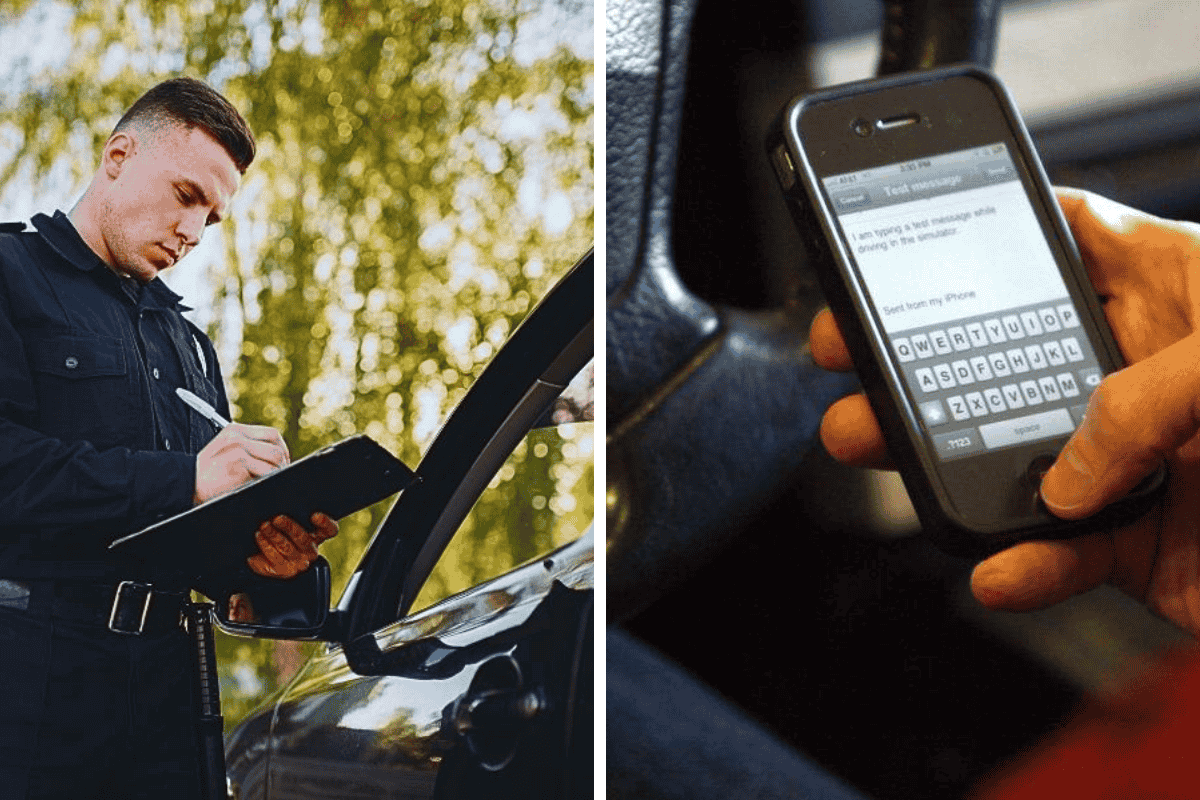
Traffic stops are common encounters with law enforcement in Minnesota, but they raise critical questions about privacy rights, especially when it comes to personal devices like cell phones. Modern smartphones store vast amounts of personal data—texts, photos, location history, and more—making them akin to a digital diary.
Under both the U.S. Constitution’s Fourth Amendment and Minnesota law, police generally cannot search your phone without a warrant or an exception during a routine traffic stop. This article breaks down the legal framework, key court rulings, exceptions, and practical advice for drivers in Minnesota.
The Fourth Amendment and Cell Phone Privacy
The Fourth Amendment protects against unreasonable searches and seizures, requiring warrants supported by probable cause. In 2014, the U.S. Supreme Court unanimously ruled in Riley v. California that police must obtain a warrant before searching a cell phone incident to arrest, even if the phone is on the arrestee’s person.
The Court recognized that cell phones hold far more intimate information than physical objects like wallets, likening a phone search to ransacking an entire home.
Minnesota courts have followed suit. In a 2012 case of first impression, State v. Barajas, the Minnesota Court of Appeals held that individuals have a reasonable expectation of privacy in a cell phone’s concealed contents, mandating a warrant or valid exception for any search. This applies directly to traffic stops, where a simple ticket for speeding or a taillight does not justify probing your phone.
Traffic Stops in Minnesota: Scope and Limitations
Minnesota Statute §169.905 limits questioning during traffic stops to the violation at hand, without broader fishing expeditions. Police can ask for your license, registration, and proof of insurance, and may order you out of the vehicle for safety (Pennsylvania v. Mimms, 1977). However, extending this to your phone crosses into protected territory.
For instance, if suspected of texting while driving—a petty misdemeanor under Minnesota Statute §169.475 subd. 2—officers may observe the violation but cannot demand to unlock and scroll your phone without consent or a warrant. Proving the offense relies on officer testimony, admissions, or external evidence, not a device search.
When Can Police Legally Search Your Phone?
Warrantless searches are presumptively unreasonable, but exceptions exist:
1. Consent
Officers often ask to see your phone casually. You are not required to unlock it or hand it over. Politely declining—”Officer, I respectfully do not consent to a search”—preserves your rights. Consent must be voluntary, not coerced.
2. Search Incident to Arrest
If arrested (e.g., for DUI or outstanding warrant), police can seize the phone but cannot search its digital contents without a warrant, per Riley. A brief pat-down for weapons is allowed, but data extraction requires judicial approval.
3. Exigent Circumstances
Emergencies like imminent harm, destruction of evidence, or hot pursuit permit warrantless searches. During a routine stop, these rarely apply—texting suspicions don’t qualify.
4. Search Warrant
Police can seek a warrant if probable cause links your phone to a crime (e.g., photos of drugs). Judges review affidavits for a “nexus” between the device and evidence. Minnesota Statute §626.085 reinforces warrants for electronic communications. In State v. Diamond (2018), the Supreme Court upheld forcing biometric unlocks (fingerprints) post-warrant, but not passwords under Fifth Amendment claims.
Phone records (not contents) can be subpoenaed more easily, as ruled in State v. Gail (2006).
Recent Developments and Minnesota-Specific Protections
Minnesota aligns with Riley, with no major deviations in recent cases (up to 2026). The 2024 Minnesota Consumer Data Privacy Act (effective 2025) bolsters general data protections but doesn’t alter criminal search rules. Courts continue emphasizing warrants; a 2018 appeals decision reversed a conviction for lacking phone-crime nexus.
Practical reality: For petty offenses like texting, warrants are unlikely roadside due to effort, but arrests escalate risks.
What Should You Do During a Traffic Stop?
- Stay Calm and Compliant: Pull over safely, hands visible, no sudden moves.
- Know Your Rights: Silence beyond basics—name, license. Invoke: “I do not consent to any searches.”
- Phone Handling: Lock it immediately. Don’t volunteer it.
- If Searched: Note details (time, officer name). Challenge illegally obtained evidence in court—suppression via motion to suppress.
- Seek Counsel: Contact a Minnesota criminal defense attorney immediately. Evidence from unlawful searches is inadmissible (fruit of the poisonous tree).
SOURCES:
- https://bkdefense.com/can-the-police-search-my-phone-if-they-think-i-am-texting-and-driving/
- https://en.wikipedia.org/wiki/Riley_v._California