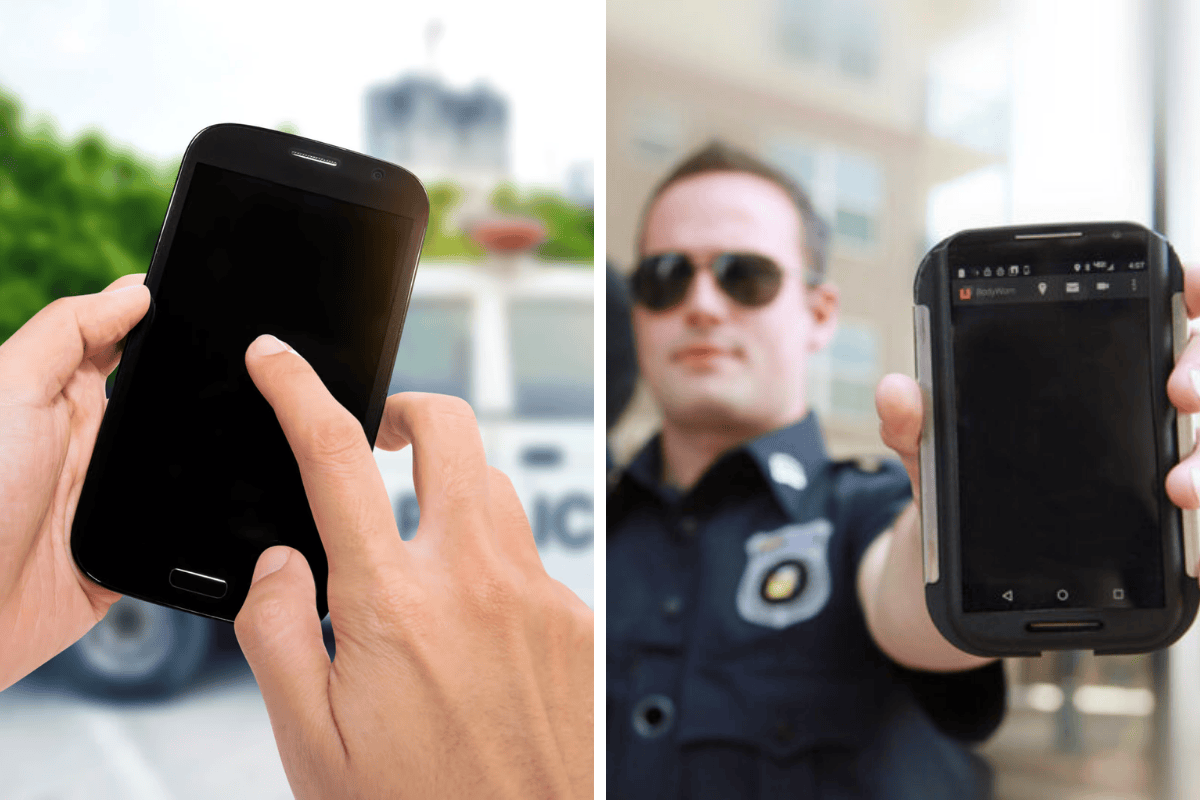
No, Utah police cannot search your phone during a traffic stop without a warrant or a valid exception like your consent. This protection stems from Utah’s pioneering 2019 Electronic Information or Data Privacy Act (Utah Code § 77-23c-102), the first state law mandating warrants for accessing electronic device data, reinforced by the U.S. Supreme Court’s 2014 Riley v. California ruling.
During routine stops for speeding or signals, officers lack automatic access to your phone’s contents, prioritizing Fourth Amendment safeguards against unreasonable searches.
Utah’s Strict Warrant Requirement
Utah Code § 77-23c-102(1)(a) explicitly bars police from searching stored or transmitted data on phones without a judicial warrant based on probable cause.
Even if stopped and arrested (e.g., for DUI), officers must secure a warrant before unlocking or reviewing texts, photos, or apps—unlike vehicle searches allowable incident to arrest. Traffic stops justify brief detentions for tickets or warnings, but phone demands exceed scope absent suspicion of serious crimes like trafficking.
Exceptions Allowing Access
- Consent: Voluntarily handing over or unlocking your phone waives protections—politely decline with “I do not consent to searches.”
- Exigent circumstances: Imminent evidence destruction or emergencies (e.g., missing child location) permit limited access.
- Plain view or incident to arrest: Visible crimes on screen or post-arrest seizures still require warrants for contents.
- Stolen device or public disclosure: Narrow carve-outs don’t apply to typical stops.
No routine traffic violation justifies a phone search; courts suppress unlawfully obtained evidence via motions.
Traffic Stop Protocols
Under Utah Code § 41-6a-1716, stops focus on violations like wireless device use while driving, but investigation ends there without escalation. Officers may ask you to exit for safety (per Pennsylvania v. Mimms), order brief waits, or pat for weapons with reasonable suspicion, but phone demands trigger Fourth Amendment scrutiny. Extensions beyond “de minimis” time need developing facts.
Penalties for Violations
Illegal searches lead to evidence suppression, dismissed charges, or civil rights lawsuits under 42 U.S.C. § 1983. Officers face discipline; Utah’s law deters fishing expeditions, unlike pre-2019 practices.
Comparison to Neighboring States
Utah leads nationally in digital privacy.
Practical Rights and Tips
- Stay calm: Provide license, registration, insurance; answer basic questions.
- Invoke rights: “I respectfully decline to consent to any searches.”
- Record if safe: Film interactions (legal in public).
- Post-incident: Note badge numbers; contact attorneys like those at utahcriminallaw.net for suppression motions.
- Lock phone: Use strong passcodes—courts limit forced biometrics without warrants.
Riley v. California Impact
The Supreme Court unanimously ruled cell phones’ vast data (unlike wallets) demands warrants, even incident to arrest—Utah codified this proactively. No “automobile exception” extends to digital contents during stops.
Distracted Driving Tie-In
Utah bans handheld phone use while driving (§ 41-6a-1716), so visible texting justifies stops, but not contents dives. Hands-free exemptions exist for adults.
SOURCES:
- https://www.utahcriminallaw.net/can-the-utah-police-search-your-phone-without-a-warrant/
- https://www.dmtlaw.com/blog/can-police-search-your-phone-during-a-traffic-stop/