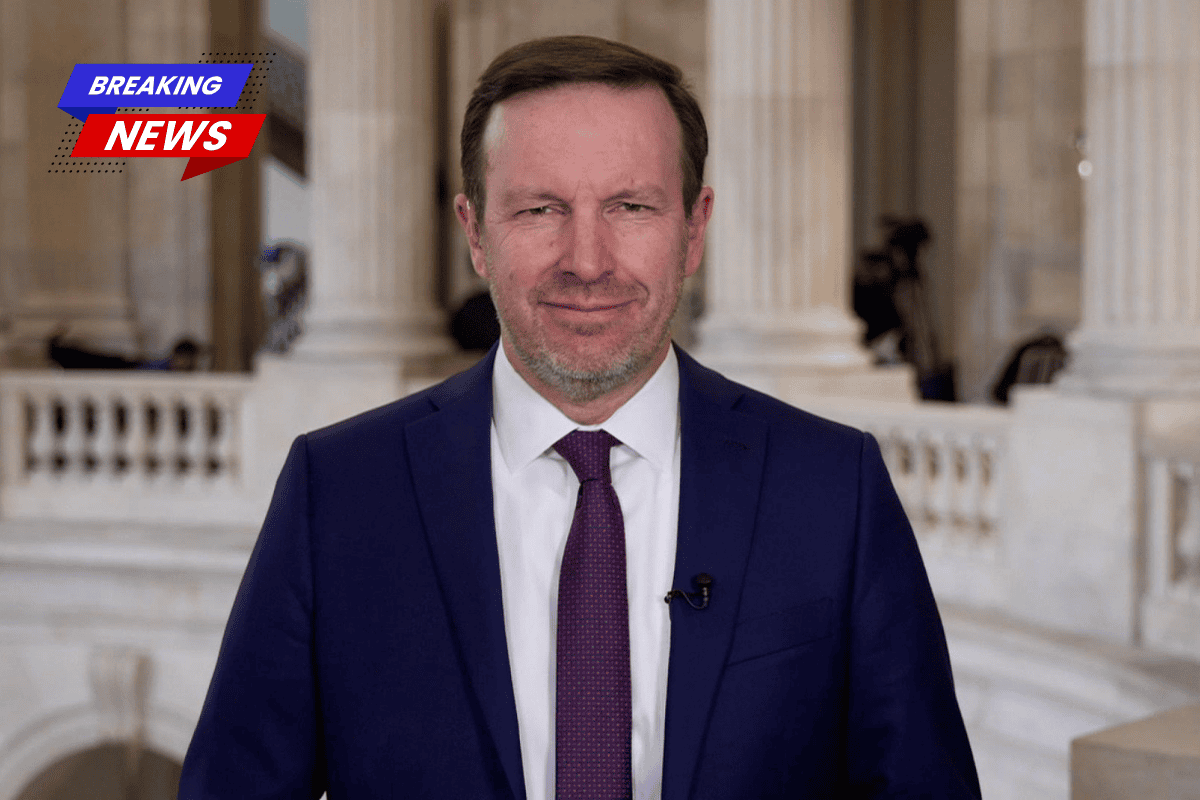
Recent comments from U.S. Senator Chris Murphy have added more political tension to the already serious conflict involving the United States, Iran, and Israel. The Democratic senator from Connecticut sharply criticised President Donald Trump’s handling of the war with Iran, calling it one of the most poorly managed conflicts in modern American history.
His remarks came during a conversation with reporters at the U.S. Capitol and were later aired on CNN. Murphy’s statements highlight growing political division in Washington over the war and its consequences for global security and the economy.
Senator Chris Murphy’s criticism of President Trump
Senator Chris Murphy strongly criticised President Donald Trump’s leadership during the ongoing conflict with Iran. While speaking to reporters, he described the war as deeply mismanaged and said the administration lacked a clear strategy.
Murphy said the United States was fighting what he called the “most incompetent and incoherent war in the last 100 years.” According to him, the administration keeps changing its goals and objectives, which creates confusion for both military planners and the public.
He also expressed concern for American soldiers and military leaders involved in the conflict. Murphy said they are being asked to carry out difficult missions without a consistent plan from political leadership. His harshest comment came when he described Trump as a “senile old man” who, in Murphy’s words, is losing control of the situation.
These remarks reflect a broader debate in the United States, where lawmakers from different parties are arguing about whether the war was necessary and how it is being managed.
Background of the conflict with Iran
According to the report referenced in the statement, the conflict began on February 28 when the United States and Israel launched a strike that killed Iran’s Supreme Leader, Ali Khamenei, along with several senior officials. This action quickly escalated tensions in the region and led to a series of retaliatory attacks.
Since then, heavy bombings have reportedly killed around 1,300 people in Iran. In response, Iran has carried out attacks on Israeli targets as well as U.S. military bases across the Middle East.
One of the most significant developments has been Iran’s move to effectively close the Strait of Hormuz. This narrow waterway is one of the world’s most important shipping routes for oil. A large portion of global oil supply passes through this channel every day, so any disruption there can immediately affect energy markets worldwide.
Impact on global oil markets and shipping
The fighting has already had major effects on global trade and energy prices. Oil prices have surged close to 100 dollars per barrel since the war started. Rising oil costs have also pushed gasoline prices higher in many countries, including the United States.
Shipping in the region has become extremely dangerous. Reports indicate that at least 16 tankers and cargo ships have been struck since the conflict began. Many of these incidents happened in the Strait of Hormuz, though some ships were also attacked in the Persian Gulf and the Gulf of Oman.
Despite the risks, President Trump recently urged oil tanker operators to continue using the route. He reportedly told them to “show some guts” and keep moving through the Strait of Hormuz despite the dangers.
Casualties and military losses
The war has already caused casualties on multiple sides. According to the information mentioned in the report, about 1,300 Iranians have been killed in bombing campaigns since the conflict began.
The United States has also suffered losses. Seven U.S. service members have reportedly been killed, while dozens more have been injured during attacks on American military installations in the region.
These numbers may continue to change as the conflict develops. Military analysts warn that if attacks on shipping lanes and military bases continue, the war could expand further and involve more countries.
Political divisions inside the United States
Murphy’s comments show how divided American politics has become over the war. Some lawmakers support the administration’s actions, arguing that strong military force is necessary to counter Iran’s influence in the Middle East.
Others, like Murphy, believe the decision to launch the initial strike was reckless and has created a dangerous regional crisis. Critics say the administration did not fully consider the consequences, especially the risk to global shipping and oil supply.
Debates like these are common during major international conflicts, but the intensity of the language used by some politicians shows how serious the disagreement has become.
What could happen next
The future of the conflict remains uncertain. If attacks on shipping and military bases continue, tensions could rise even further. The Strait of Hormuz remains a critical point of concern because any long-term closure would disrupt global oil supply and trade.
At the same time, political debate in Washington may shape how the United States responds going forward. Lawmakers may push for new military strategies, diplomatic negotiations, or limits on the president’s authority to continue the war.
For now, the situation remains volatile. The conflict is affecting not only the countries directly involved but also global energy markets, international shipping, and political stability across the Middle East.