
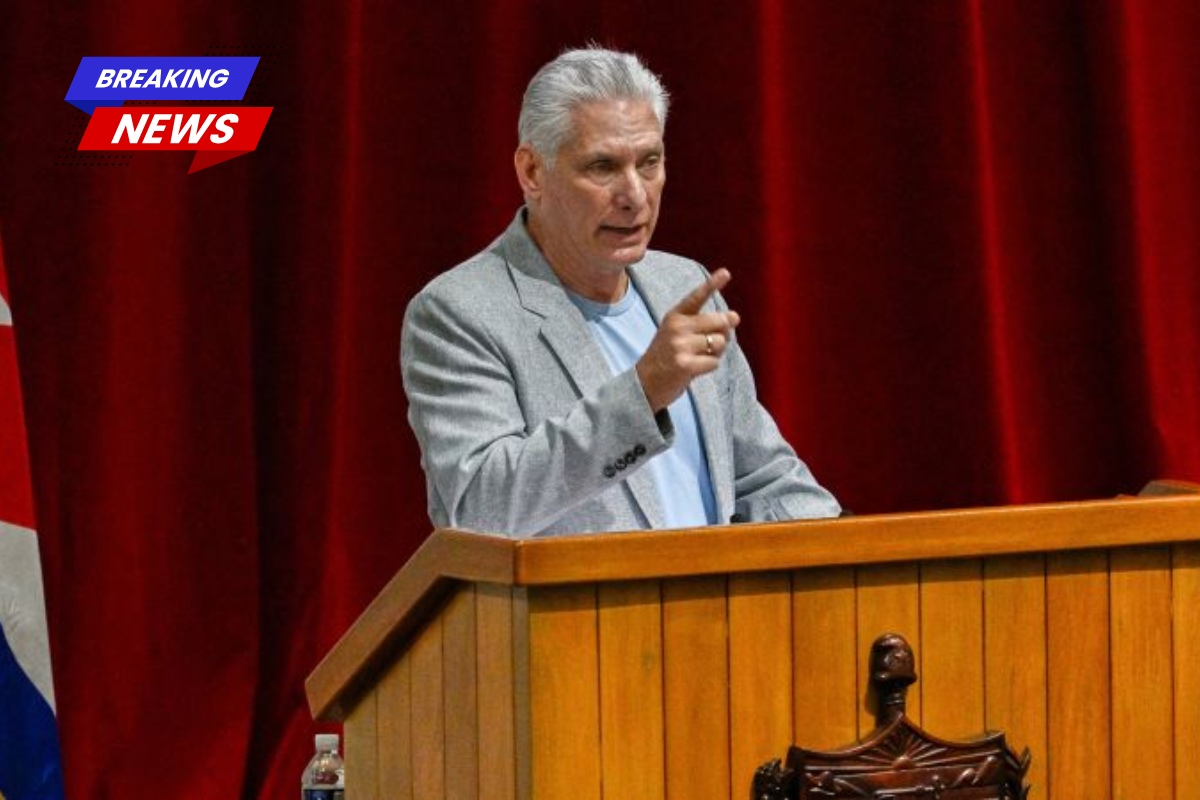
Cuba’s President Miguel Díaz-Canel has issued a stark warning that any U.S. military attack on the island would lead to a “bloodbath” with catastrophic consequences for regional stability. The announcement follows reports that Cuba has acquired over 300 military drones capable of striking U.S. targets, including Guantanamo Bay and Key West, Florida.
Rising Tensions and Drone Claims
U.S. intelligence, cited by Axios, suggests that Cuba’s drone buildup could threaten military sites and vessels. Officials described it as a “growing threat.” Díaz-Canel, however, emphasised that Cuba poses no threat to the U.S. and has no aggressive intentions, while asserting the right to defend itself against any attack.
“The threats of military aggression against Cuba from the world’s greatest power are well-known,” Díaz-Canel wrote on X. “If it were to materialise, it would trigger a bloodbath with incalculable consequences, plus the destructive impact on regional peace and stability.”
U.S.-Cuba Relations Under Pressure
Relations have worsened in 2026 after U.S. sanctions restricted Cuba’s access to oil and gas, causing widespread blackouts. Cuban officials say the energy crisis has plunged citizens into darkness, sparking protests.
Recently, CIA Director John Ratcliffe visited Havana, warning that the U.S. expects fundamental changes in Cuba’s policies. Meanwhile, the U.S. Department of Justice is reportedly considering indicting former President Raúl Castro for the 1996 downing of four planes operated by Miami-based exile group Brothers to the Rescue.
Cuba’s Response
Cuba maintains that it will defend itself but does not intend aggression. Chargé d’Affaires Lianys Torres Rivera said the country is prepared to respond if attacked. Díaz-Canel stressed that threats from the U.S. cannot justify war against the Cuban people.
The Stakes
The Cuban drone buildup, U.S. sanctions, and potential legal actions against Castro highlight a growing flashpoint in U.S.–Cuba relations. Analysts warn that miscalculations could escalate into a serious regional crisis, with humanitarian consequences for Cuban civilians already struggling under energy shortages.






