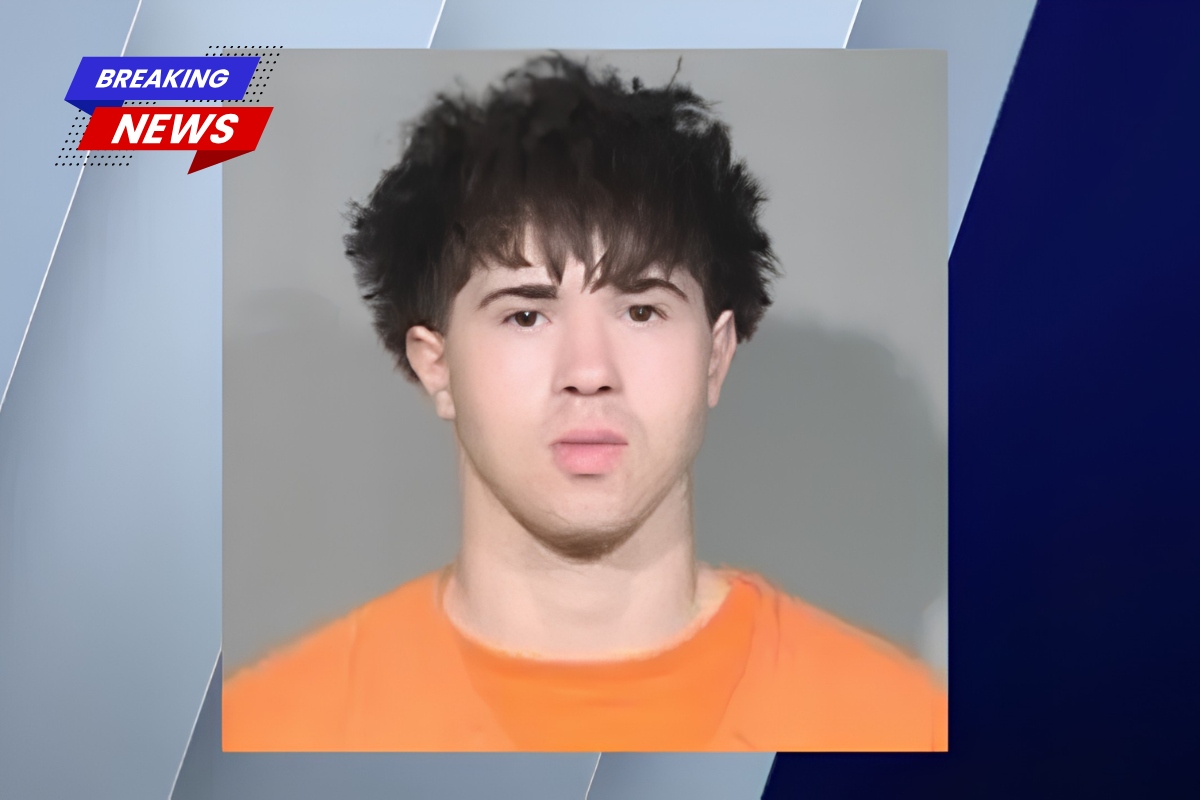
Aaron Brown Myers, a 52-year-old off-duty security guard from Washington state, has been convicted of second-degree murder and assault after he shot and killed 17-year-old Hazrat Ali Rohani outside a sporting goods store in Renton, a Seattle suburb.
Myers believed the teenager was armed and about to commit a robbery, but in reality, Rohani was simply returning a malfunctioning BB gun to a Big 5 Sporting Goods store.
The Fatal Incident
On the afternoon of the shooting, Myers was in his car waiting for his son to finish a martial arts class when he saw Rohani and two other teens carrying what he thought was a Glock handgun. Myers, who was off-duty, believed the teens were preparing to rob the store. In reality, the teens were just returning a BB gun.
Myers, armed with a real Glock, exited his vehicle and confronted the teens, holding them at gunpoint. According to prosecutors, Rohani and the other teens repeatedly told Myers that the weapon was not real, but Myers ignored their pleas and proceeded to escalate the situation.
As Rohani, who went by “Ali,” dropped the BB gun and raised his hands in surrender, Myers opened fire. Prosecutors said Myers shot Rohani multiple times as he turned to walk away, with the defendant continuing to shoot as the teen fell to the ground. In total, Myers fired seven shots, six of which struck Rohani in the back.
The Prosecution’s Argument
King County Prosecutor Elaine Lee told jurors that Myers made assumptions based purely on the appearance of the BB gun, labeling the teens as criminals without any real evidence. She argued that Myers took “self-appointed authority” to detain the teens, leading to the tragic and unnecessary loss of life.
“Myers made decisions based purely on assumptions,” Lee said. “He immediately labeled them as criminals and acted on that assumption without verifying the situation.”
The Defense’s Claim
Myers’ defense attorney, Mark Middaugh, argued that his client was acting to prevent violence, given what he believed to be a threat. He claimed the BB gun appeared real, and Myers felt compelled to intervene in the situation.
“He didn’t want anyone to get hurt,” Middaugh said, emphasizing that Myers was trying to prevent a potential crime. However, the jury did not find this defense convincing and sided with the prosecution.
Legal Consequences
Following his conviction, Myers faces a sentence ranging from 20 to 28 years for the second-degree murder charge, with an additional 10 years for firearm enhancements. He is scheduled for sentencing on July 21.